Bring back your corner of the internet
The web has become bland and uniform. It's time to bring back the weird, wonderful, and deeply personal websites that once made the internet magical. With AI, the limit aren't skills anymore but imagination.
Remember when visiting someone's website felt like stepping into their living room? When every click revealed another piece of their personality, quirky design choices, and unique way of seeing the world?
Growing up, one of the things I loved about the internet was how radically different each website was from the others.
And I don't mean company websites, but personal websites.
Newsletter and blog platforms like Medium, Substack, and Beehiiv didn't exist at the time. People built their websites from scratch (HTML, CSS and some JavaScript). Every pixel was crafted to reflect their thoughts and personality.
Picture this: neon green text on black backgrounds, animated GIFs that served no purpose other than joy, custom cursors, and background music that auto-played (yes, we actually did that).
These weren't just websites. They were digital extensions of their creators.
Since they had invested time and creativity in building these digital spaces, each site became a unique fingerprint.
That felt magical.
You weren't just reading a post from somebody. You were accessing their "corner of the internet". You were getting to know them.
"Corners of the internet" refers to specific websites, online communities, or digital spaces that are unique, niche, or offer a particular kind of experience, often one that is more personal, quirky, or less mainstream than the larger, more popular parts of the internet.
But with the rise of platforms that promise better discoverability and easier publishing, something beautiful was lost. Every page now feels like it was stamped from the same template.
Don't get me wrong, these tools have democratized publishing and helped millions of people share their ideas. But in gaining convenience, we've lost personality.
I often find myself reading blogs through email newsletters because it's convenient. But I miss the anticipation of visiting a website that might surprise me, where the author's personality leaked through every design choice.
The web used to be weird, wonderful, and deeply personal.
Now it's efficient, discoverable, and... bland.
But here's the thing: I think now is the perfect time to change that.
My experiment: Building weird again
I wanted an excuse to test Claude Code but didn't want to experiment on our production codebase. So I used my personal website as a playground: the perfect place to get weird.
There were two pages I'd been wanting to build for months, but work always got in the way. I thought, maybe AI could help me finally make them real.
Spoiler alert: It worked beautifully.
Within a few hours, I had not just functional pages, but pages with personality.
Here's what I built:
The Intelligence Page
Transforms my blog posts into a living, breathing network. Imagine your thoughts as nodes in a graph—each post connected to related ideas, creating a visual "second brain" that you can explore and navigate.
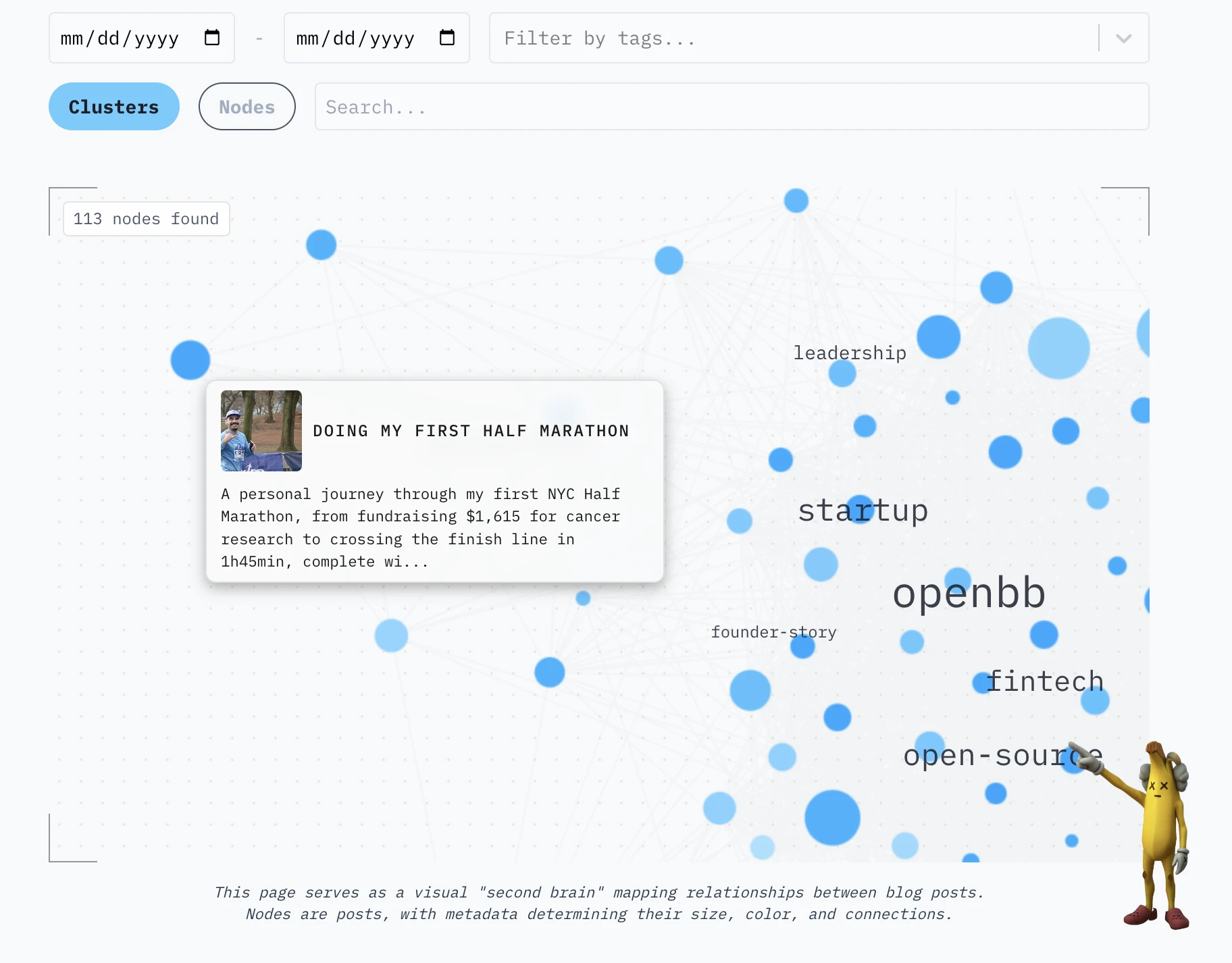
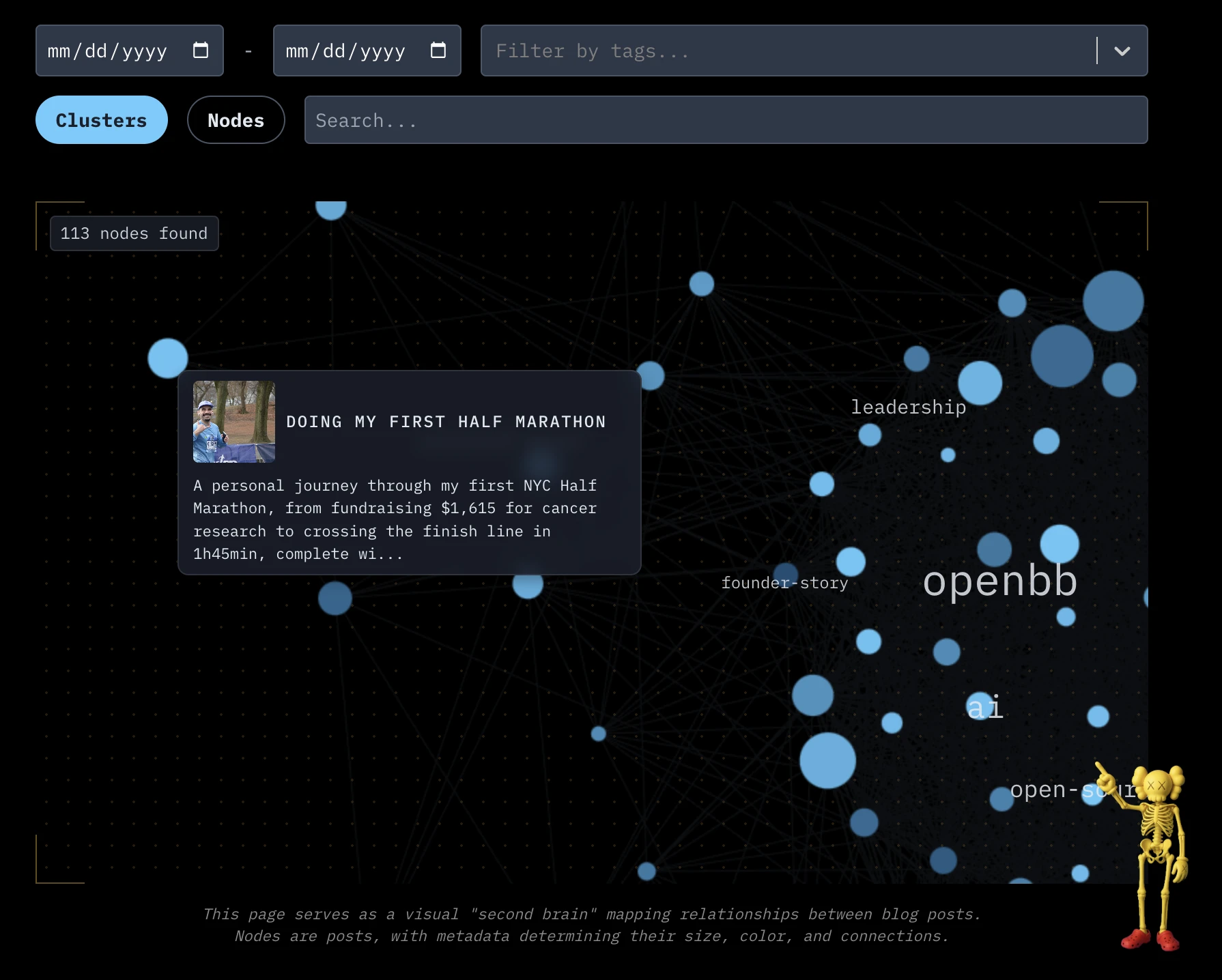
- But here's where it gets fun: I added Kawspeely (a Fortnite character I edited with GPT-4o) who points visitors to this graph of nodes (posts). In dark mode, it becomes Kaws Skeleton. Both wear red Crocs because... why not?
The Chat Page
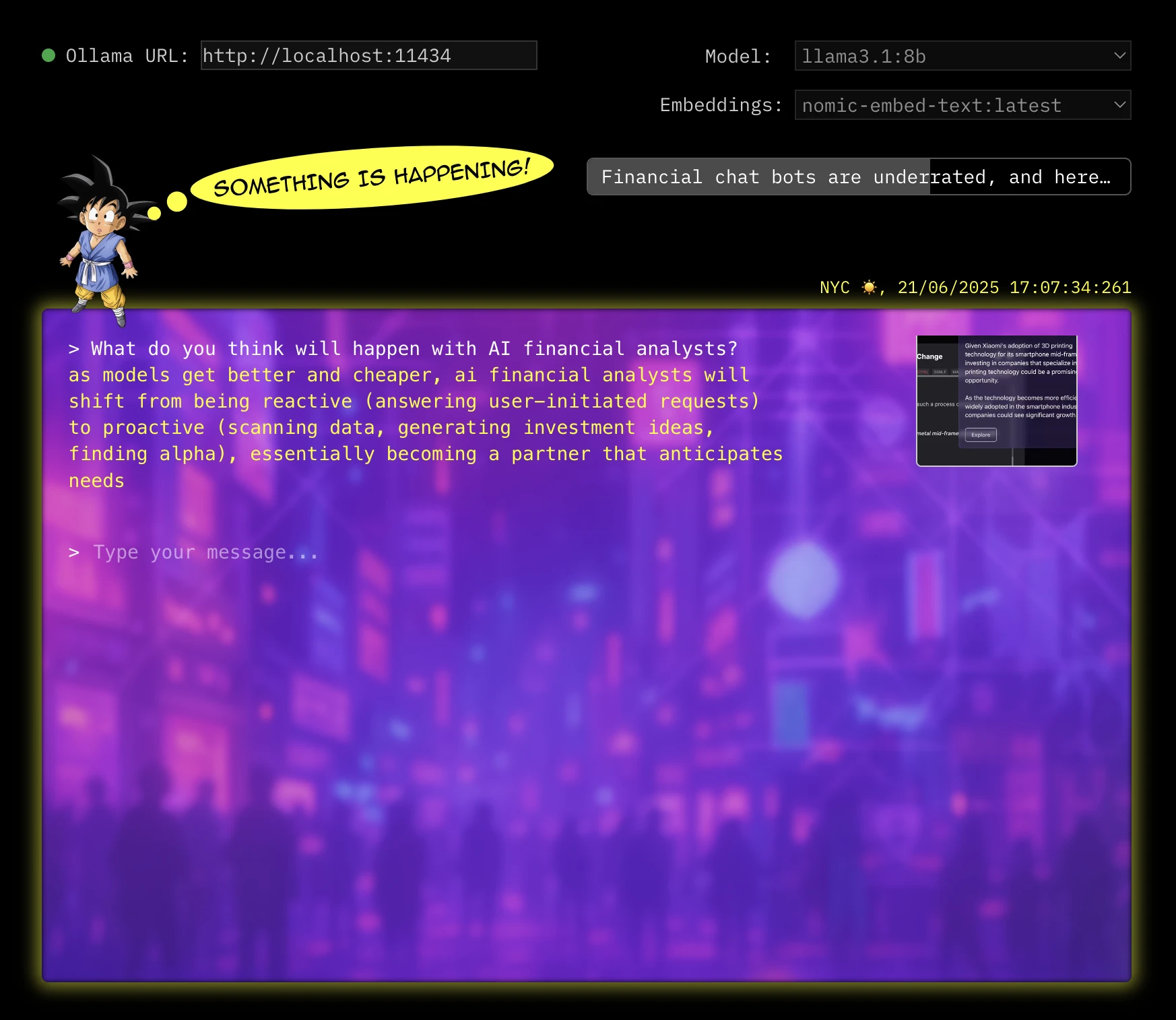
Lets visitors talk to an LLM that is running on their machine through Ollama, but has access to all my blogs through RAG. It's like having a conversation with my thoughts, even when I'm not there, and all the computation happens in the user machine.
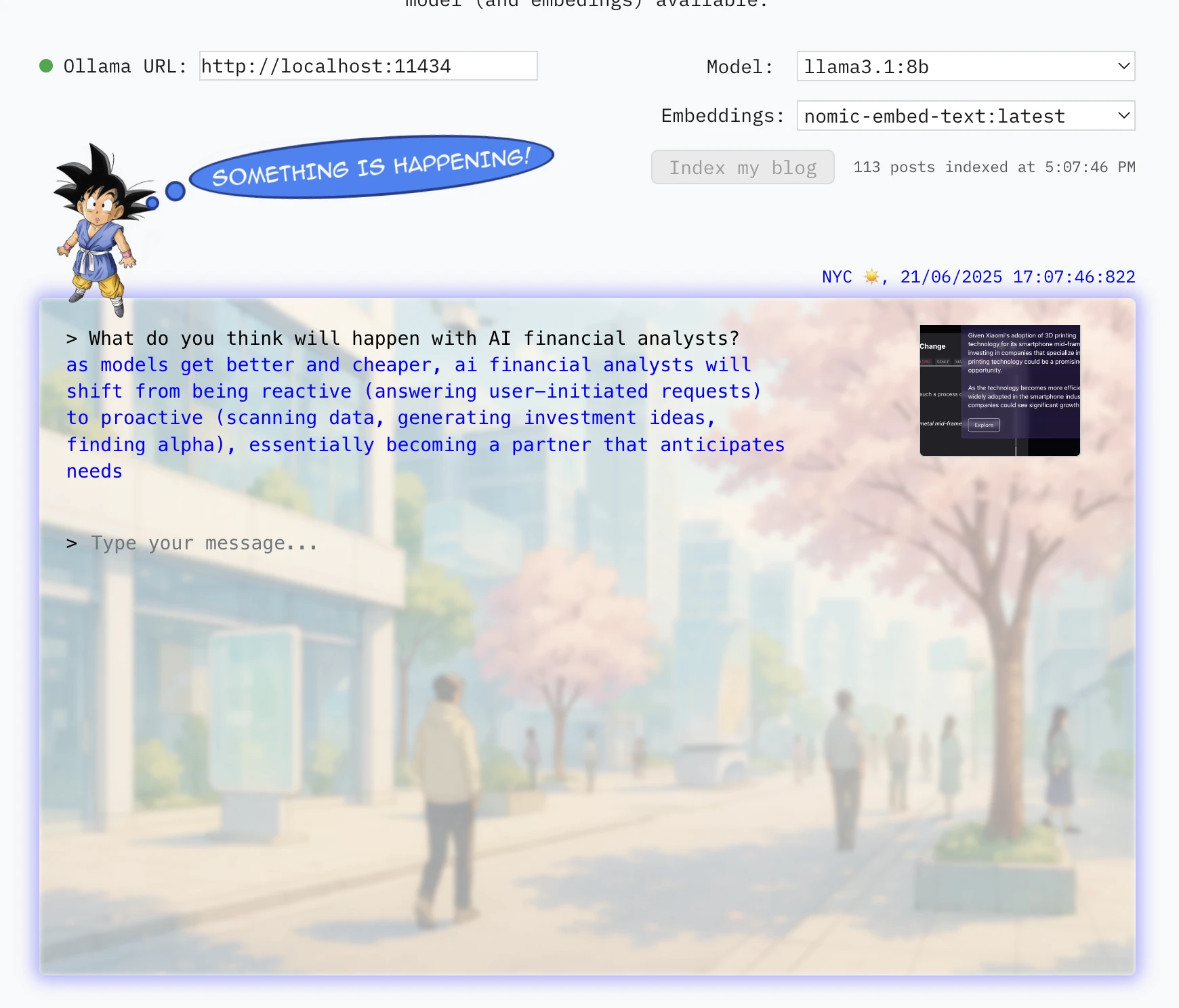
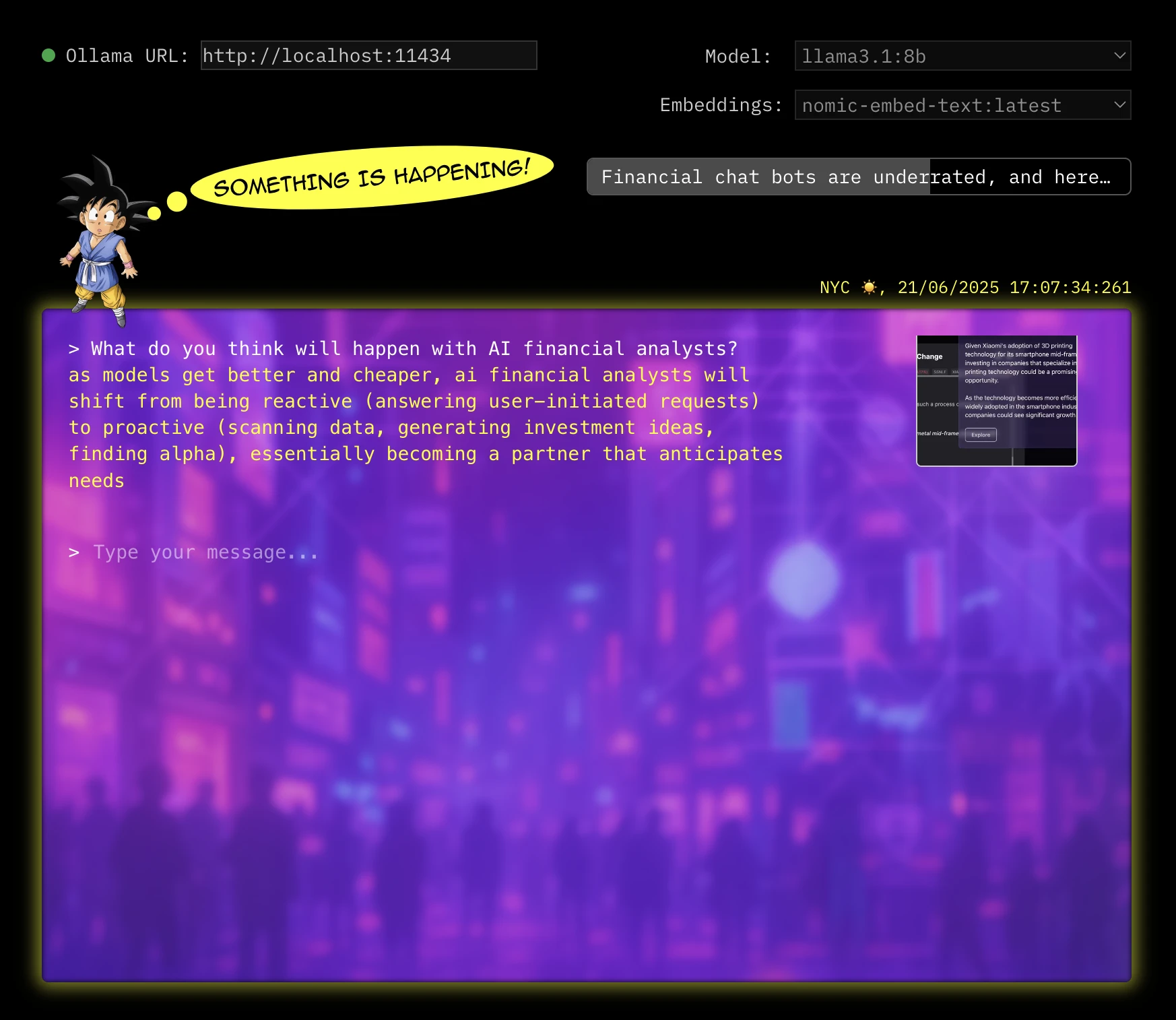
- The interface features a kid Goku animation that reacts to the indexing of the blogposts with manga-style effects.
- When you clear the chat, an eraser sweeps across the screen in light mode—or Rick's portal gun appears in dark mode.
- Podcast audio below explaining what is going on generated by NotebookLM.
Why now is the perfect time
This experiment made me realize something profound: the barriers that once kept us from building beautiful, personal websites have disappeared.
Remember when you needed to know HTML, CSS, JavaScript, server management, and deployment? When you had to hand-code every animation and debug browser compatibility issues for hours?
Those days are over.
With tools like Claude Code, Replit, Lovable, and Cursor, there's no excuse not to reclaim your corner of the internet.
AI can help you build the weird, wonderful website you've always imagined but never had the technical skills to create.
I keep thinking about these viral tweets that perfectly capture the moment:
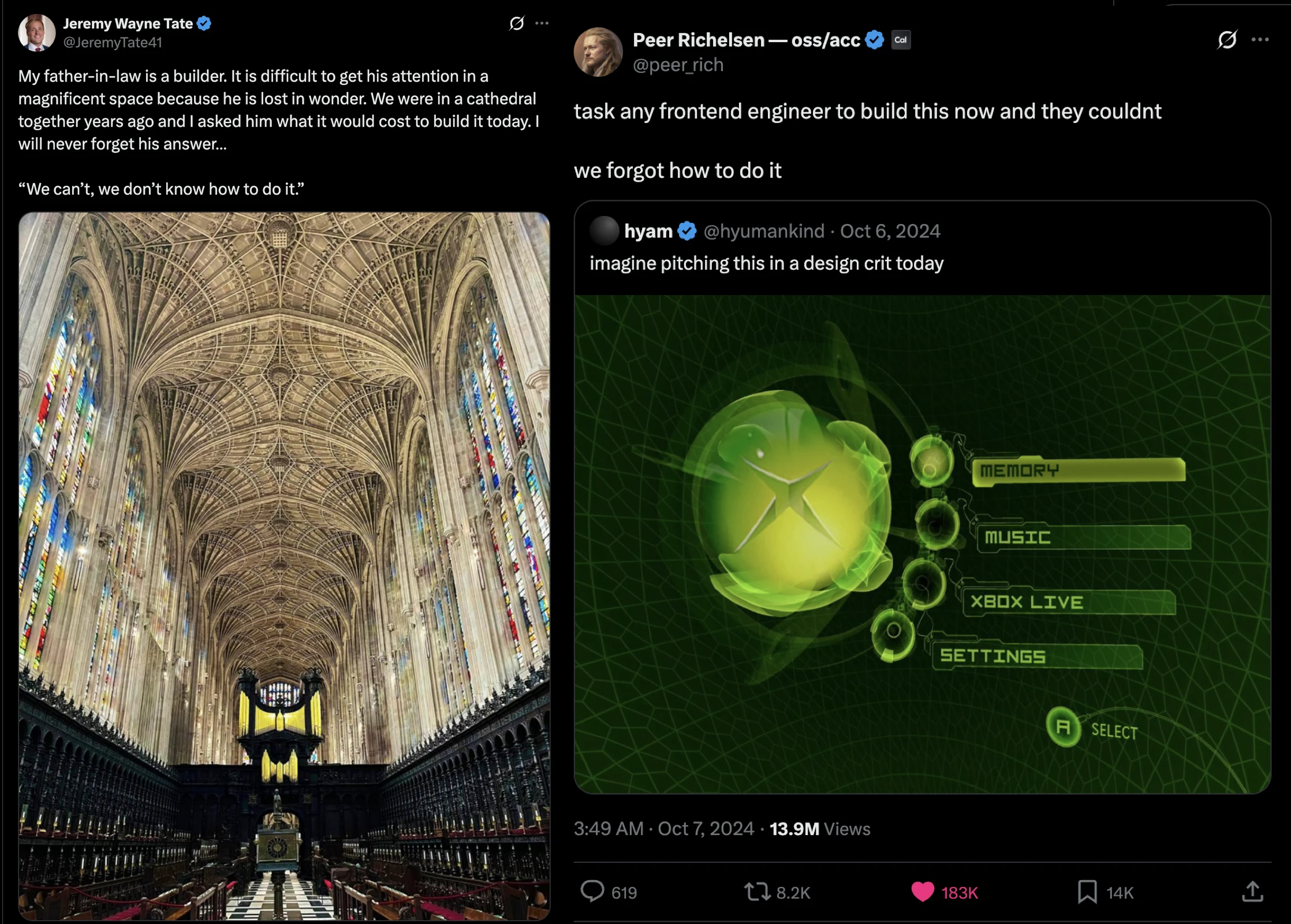
The web became obsessed with conversion rates, SEO optimization, and uniform user experiences. We optimized the soul out of our digital spaces.
But now, with AI as our creative partner, we can build beautiful things again.
The ceiling isn't technical skill, it's imagination.
The question isn't "Can I build this?" anymore. It's "What do I want to build?"
Some corner of the internet inspo
- Ryo Lu from Cursor: https://ryo.lu/
- Pieter Levels: https://pieter.com/
- Eva: https://kibty.town
- Tyler Denk: https://mail.bigdeskenergy.com/
Your turn
Here's my challenge to you: build something weird.
Not for your company. Not for your personal brand. Build something that makes you smile when you look at it. Something that would make teenage-you proud.
Getting Started:
- Pick an AI coding tool (Claude Code, Cursor, Replit, Lovable)
- Start with one small, strange idea
- Don't worry about mobile responsiveness or SEO
- Add something that serves no purpose other than joy
- Deploy it and share it
The web is waiting for your weird.
Let's make it beautiful again.