My learning system for keeping up with AI
· 21 min read
I've spent the last few months of spare time trying to understand how LLMs work and keeping up with the frontier. This describes my entire consumption routine.
I've spent the last few months of spare time trying to understand how LLMs work and keeping up with the frontier. This describes my entire consumption routine.
A few weeks ago at NY Tech Week I gave a talk on centralizing dashboards and agentic workflows in OpenBB Workspace. At the end I talked about how I'm seeing more analysts and quants using Claude Code and Codex to drive their work - and so we need to adapt the workspace to make it (even more) agent first.
That is why we announced Workspace MCP: it exposes the workspace (dashboards, widgets, data, apps, skills) as a set of MCP tools, so an agent can read data, build dashboards, and assemble whole apps.
If agents are going to drive this workspace for real analysts, I need a way to measure how well they navigate it. That led me to build WorkspaceBench: a vanilla harness, a simulator of OpenBB Workspace, realistic tasks, and graders that evaluate the agent's output.
In order to build this, I got inspired by:
I wanted to bring some of these concepts to an actual financial workspace.
I can't recall last side project that took me as much time as this one. A lot of iteration and killing it and starting from scratch.
Initially I gave the reasoning and strategy to Fable, and let it come up with the how - i.e. how tasks are defined, what tools are used, initial dashboard setup, etc.. after a few iterations I actually liked the staircase of results I was seeing from the models on the tasks, and so thought we were almost done...
Except that when I went to dig into how the tasks were set up, expecting that my mental model for how it should look had been implemented 1:1 - it was actually not there at all. Not only was there a lot of fluff (like variables that didn't add anything to what we wanted to test), but I felt that many tasks were not super representative of what a user does in the workspace. E.g. some tasks were phrased as "use add_generative_widget markdown_note widget with text 'The revenue of AAPL is X'" - which is really stupid when you think about it. Instead I was expecting something like "Add a note to the dashboard with the revenue of the company in the dashboard". This means that the model has to reason about which company we are looking at, which widget contains the revenue data, and then the format on how that is output.
During this time period OpenAI released a post criticizing SWE Bench pro which really hit home for me. Reminds me of the acronym LATFD ("look at the f*cking data"). And the longer I avoided doing it, the more I felt like I was building on a sand foundation.
Don't get me wrong, Fable was still a major driver of what I've done here. But I almost scratched everything and started from start with a stronger foudnation and only gave the model certain degrees of freedom - and always checked the underlying tasks to ensure that it was on the right track.
This post will walk you through everything that was done, including: the workspace simulator, the datasets we used, what a task file is made of, what are we evaluating, the final results and what's next.
I hope you enjoy this more technical deep-dive into creating a financial workspace benchmark from scratch. I'm sure there are better ways to create benchmarks, but in this post I'll walk you through my thinking process and how I build it from scratch.
Proprietary data, client data, and the context from using these.
This experiment started after reading Prime Intellect's Systematic Reward Hacking and Prime Sprints post. Their setup made reward hacking feel small enough to test directly: give a model a visible task, add a hidden reward component the model is never told about, and watch whether RL learns the proxy instead of the intended behavior.
I wanted to try the same style of experiment with a continuous (length-based) hack instead of a binary keyword hack. But the question was not simply whether reward hacking would happen. I was deliberately creating a conflict between the prompt and the reward.
I made the full experiment public here: DidierRLopes/reward-hacking. It includes the environment, hosted training configs, cached run data, generated figures, and the notebook used for this post.
The more interesting question was whether better prompting could protect against it:
What if the user asks for a direct answer, but the training reward quietly pays the model for being longer?
Long running agents as a category will likely be won by the labs and opportunity for startups is to use SLMs around customer use-cases/workflows with all the context they are sitting on.
My journey of using codex to beat ChipWits on Steam.
Last month, I started spending more time reaching out to users on the free tier of OpenBB. If you got a message from me, this post explains how I got to you :)
I had to do a 5min presentation on Alpha for Future Alpha.
The case for a firm-owned workspace in the age of AI.
MCP adoption is real.
The most expensive part of a research workflow isn't the analysis. It's rebuilding the same process from scratch every single time. See how Skills change that.
Primitives beat prompts. Every time. BI tools are the most underrated foundation for GenUI in finance.
It researched the SOTA, cited related work, drew architecture diagrams, and produced a 6-page IEEE-style paper.
Software that builds itself over time is closer than you think.
When agents can work in a loop while you do something else, time is removed from the equation. Welcome to the era of on-demand software.
AI is shrinking teams. Now every role has to earn its place.
No financial terminal in their current state will survive. (sorry for the clickbaity title eheh)
Bringing Claude Code Skills into the OpenBB Workspace to create custom reports right where your data lives.
As AI collapses the enterprise application stack, the context layer becomes the most valuable part of the technology stack in financial services.
Opus 4.5 run with my vision of a better Pokemon vault website and I just sit there and watched it do it end-to-end.
Creating a skill to generate a financial report with a specific branding
I materialized my knowledge of how to build OpenBB apps, and days of building alongside users and clients, into a SKILL that you can give your agents. So you can start building apps in minutes.
Technical debt is about to hit levels we've never seen.
Why AI won't replace your apps, but your home screen
I shipped a working app in 15 minutes by rambling at Claude, and that's not the scary part.
The Pokemon TCG market is inefficient. I built a tool to exploit it.
Skills might be the right abstraction for agentic workflows.
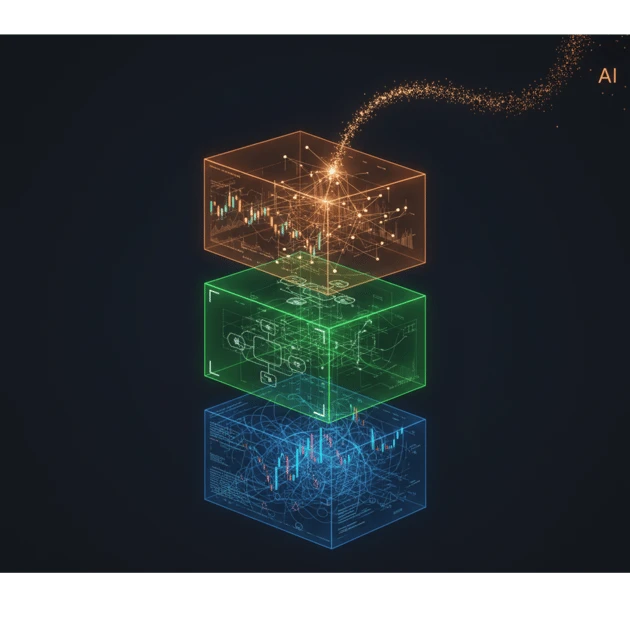
Stop adding business logic to your datasets.
From weekend POC to production: the 24-month gap nobody talks about.
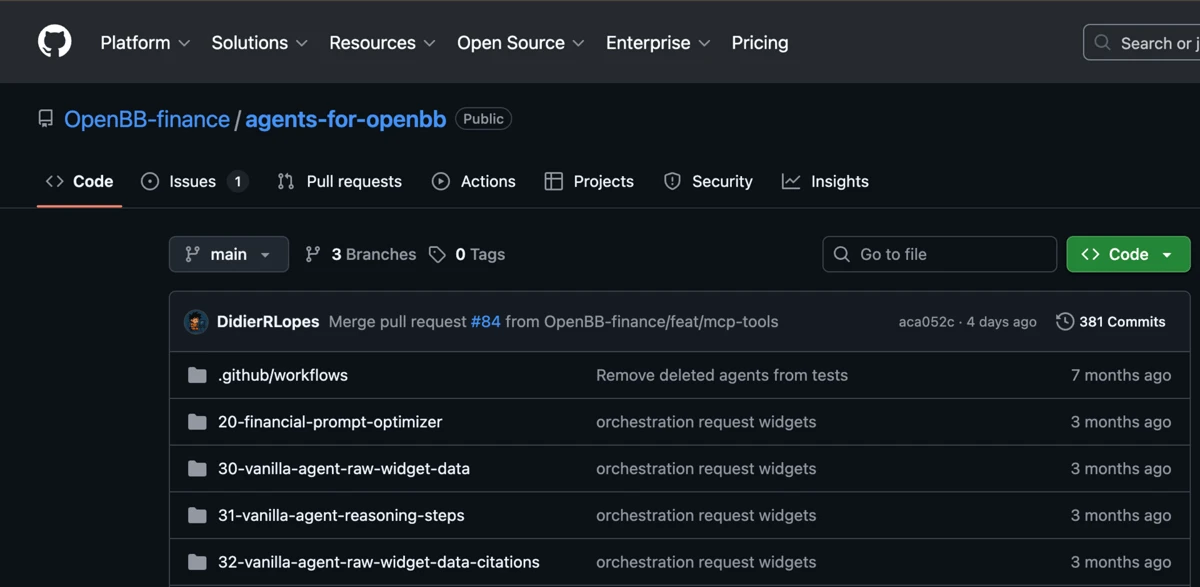
How I quickly hot-swap my financial agent with different LLM providers - fully open source.
A few weeks ago, we were at the HQ of one of our largest clients (close to 70bn AUM) for a week and although I had this post in draft for a couple of months, these words resonate even more with me now as we experienced this FDE work first-hand.
In the world of hedge funds, everyone's talking about AI. But recently, Ken Griffin, one of the industry's most respected voices, made a bold claim: generative AI isn't delivering alpha for hedge funds. Instead, it's mainly boosting workflows and productivity.
He's not entirely wrong but he's not telling the whole story either.
Here's the thing: the problem isn't that AI lacks the capability to find alpha. The problem is that most firms aren't giving AI the environment it needs to succeed.

How the explosion of data and AI is breaking the old financial terminal monopoly and creating space for open, modular, AI-native interfaces that serve users, not vendors.

Mapping the evolution of AI agents in finance from ChatGPT wrappers to derived data insights - and why the real value is shifting from interfaces to intelligence.
The hardest part of building an OpenBB app isn't writing Python, it's getting the widgets.json spec right, since this spec was invented by us.
Every app requires developers to define widget types, inputs, and configuration options in exactly the right format. The documentation is strong, but it is long-form, which forces you to dig around for the parts you need. That slows down iteration, especially when you just want to get an idea live in OpenBB Workspace.
The rise of health tracking devices has given us unprecedented insight into our daily wellness metrics. But what if you could use that data not just for personal optimization, but for relationship optimization?
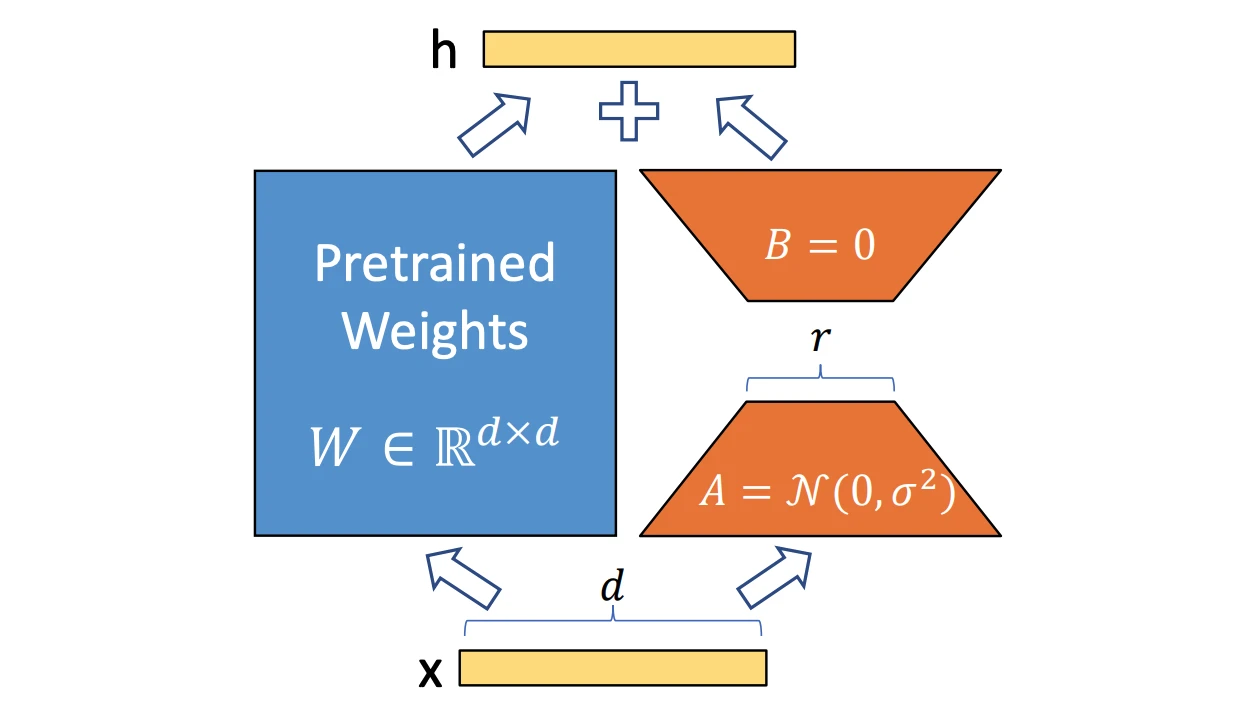
Ever wondered what it would be like to have an AI that writes exactly in your style? I did. And in this post, I share what I did about it. This is a very practical guide on how to fine-tune an LLM using LoRA with MLX on Apple Silicon.
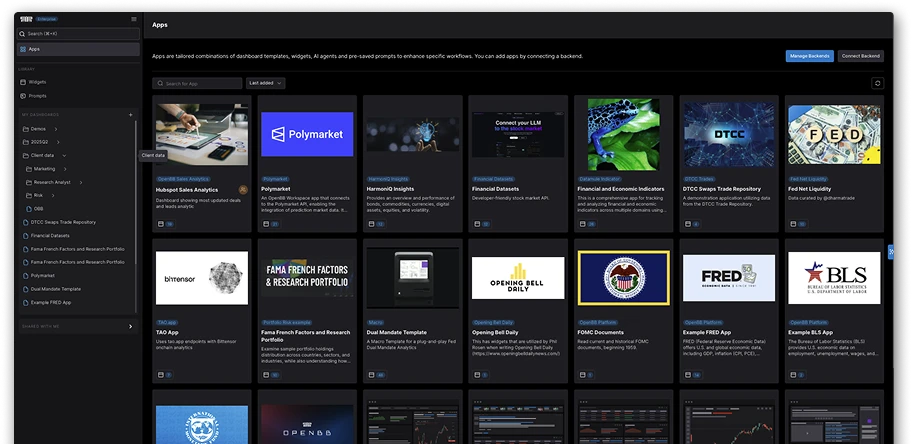
These are my top 10 OpenBB apps, highlighted on our new solutions page. Not slides - literal workflows.
Learn how to squeeze performance out of Claude Code.

The Model Context Protocol (MCP) forces a strategic choice on financial services companies - become a Client, building AI user experiences, or a Server, providing specialized data and tools. This post explores the implications of this divide.

The term 'vibe coding' undermines the strategic work of delegating tasks to AI. This post argues for a shift in perspective towards 'outcome-driven development' as a more accurate description of the future of software engineering.
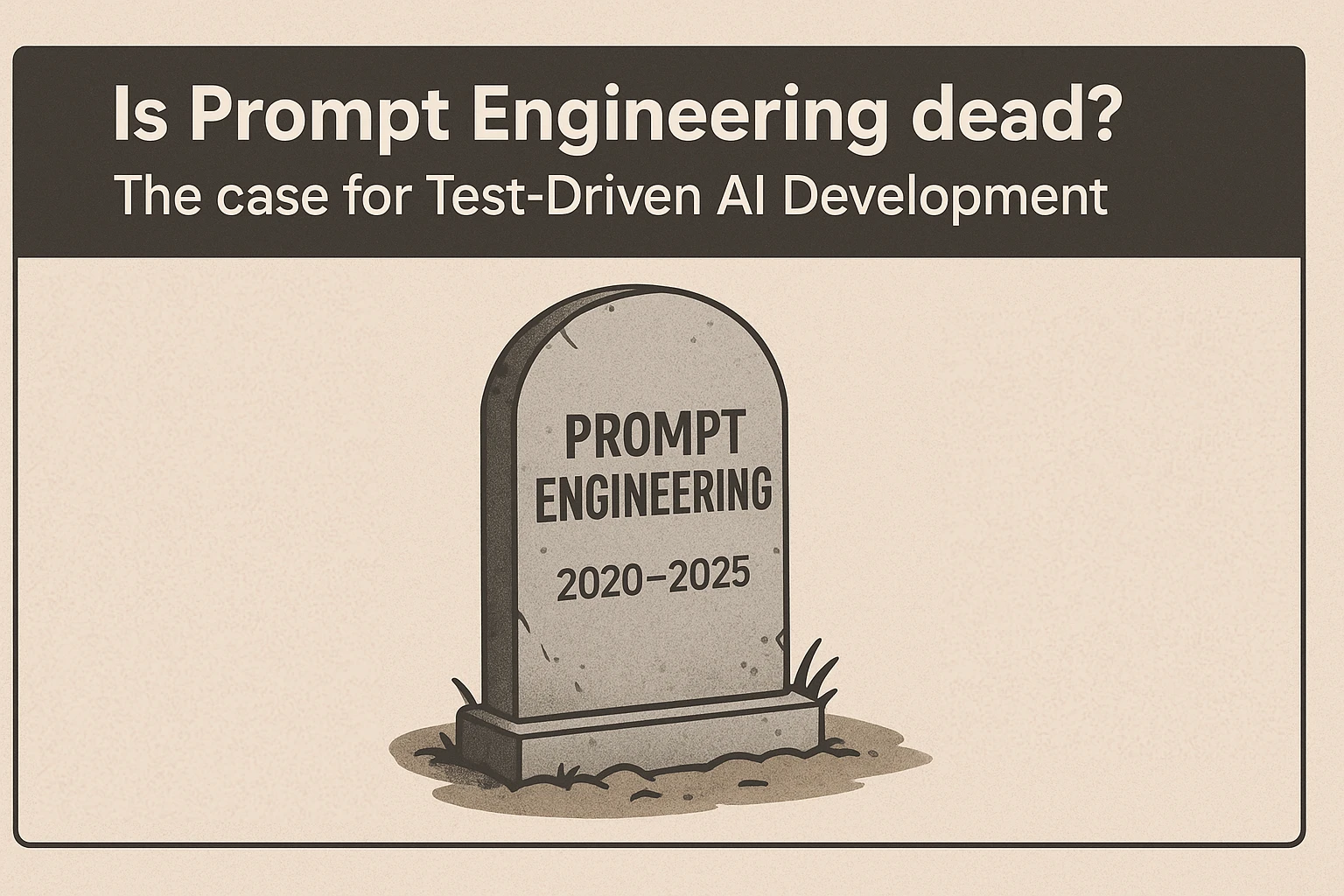
This post explores Test-Driven AI Development, where AI writes its own tests and prompts, potentially making manual prompt engineering obsolete. It covers how self-improving AI systems can be built and the implications of this paradigm shift.
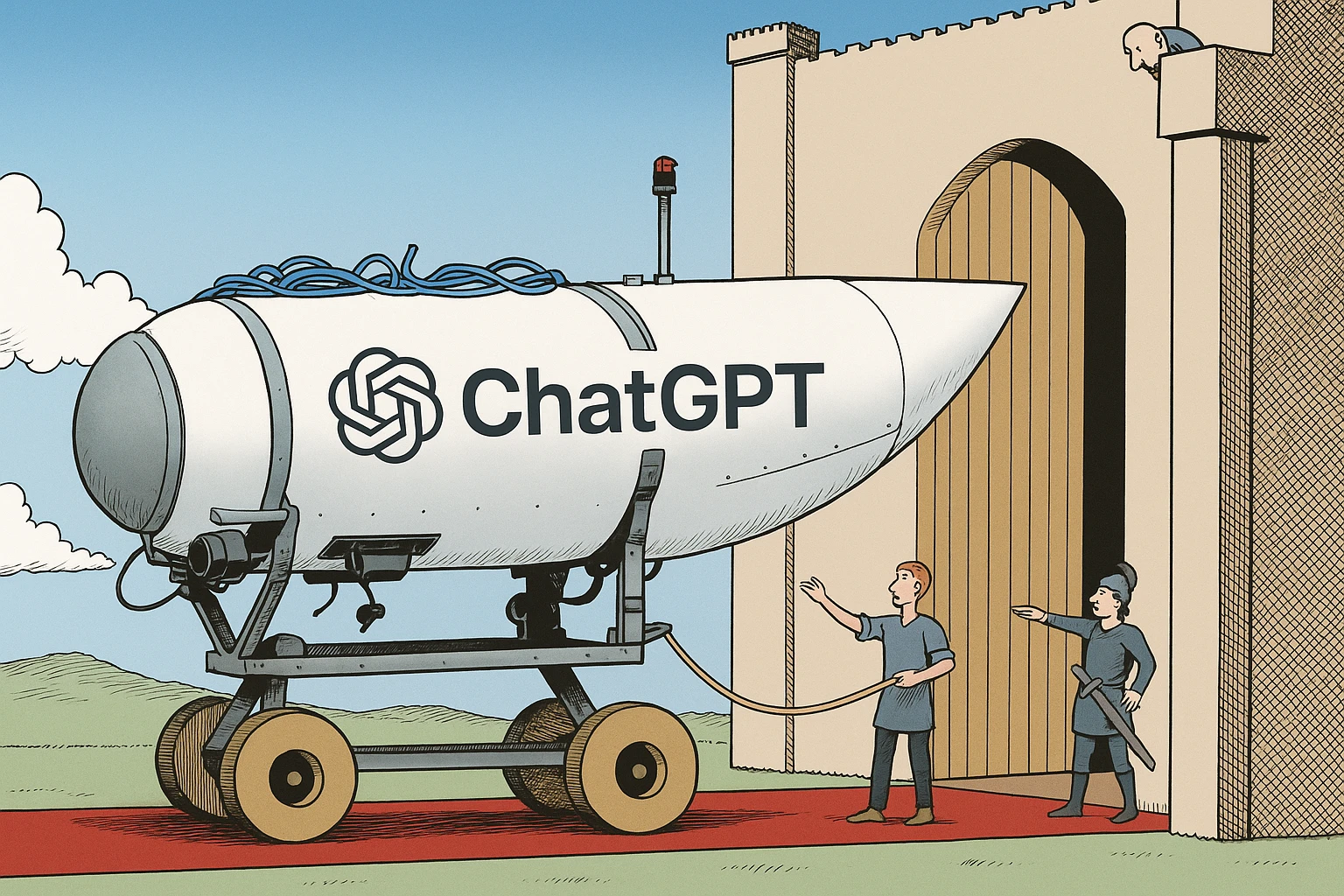
The financial industry's rush to adopt AI without proper data security is creating an 'OceanGate moment' - a disaster waiting to happen. This post explores the risks of reckless AI implementation and charts a safer path forward through on-premise and local model deployment.
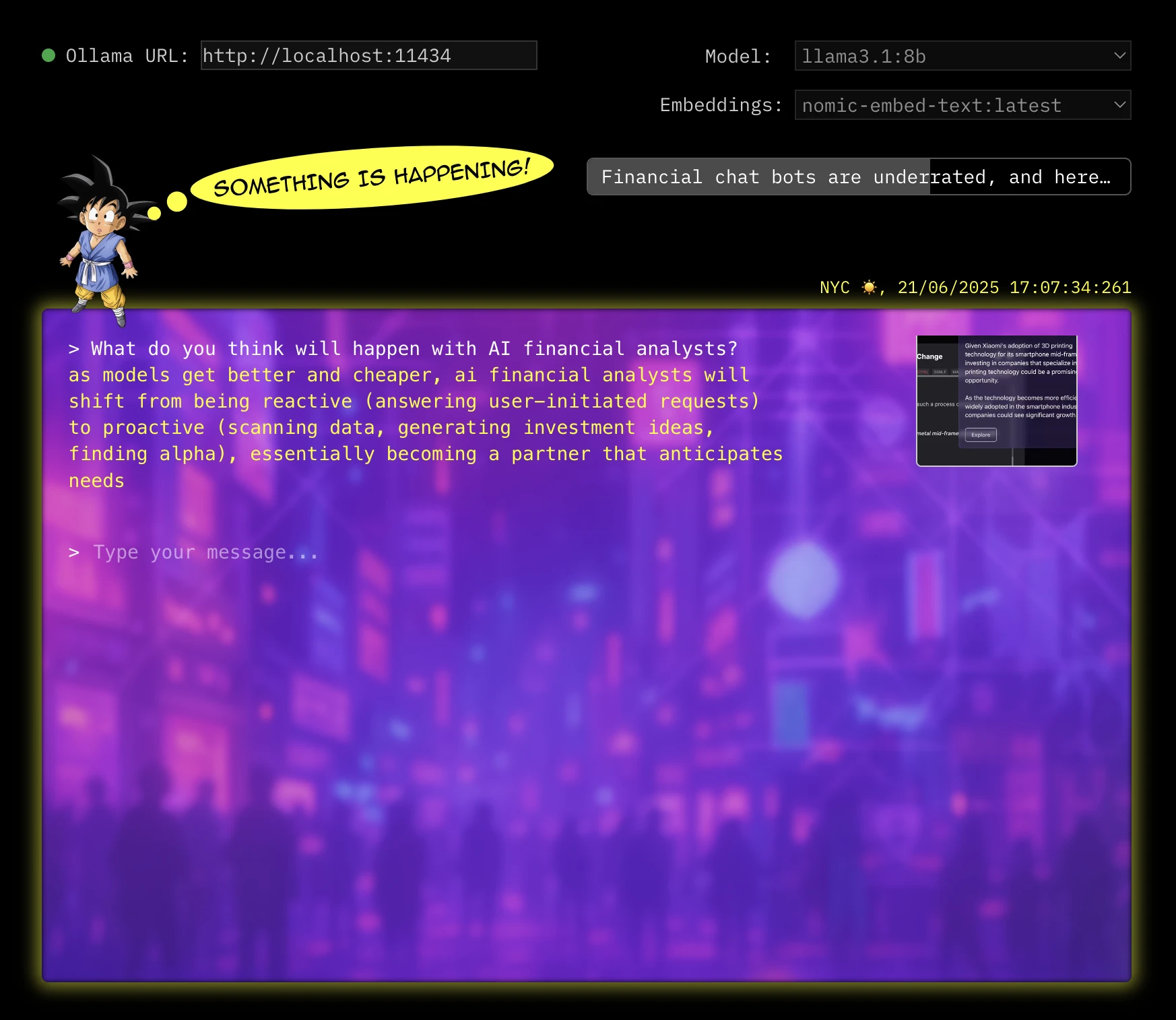
The web has become bland and uniform. It's time to bring back the weird, wonderful, and deeply personal websites that once made the internet magical. With AI, the limit aren't skills anymore but imagination.

Why the obsession around humanoid robots?
Replit is the ultimate coding environment for non-coders.

It's no longer a matter of IF, but a matter of WHEN. AI companions are coming.

Thoughts on Dia browser's AI integration, exploring its similarities with OpenBB Workspace and the role of AI assistants in finance tools.
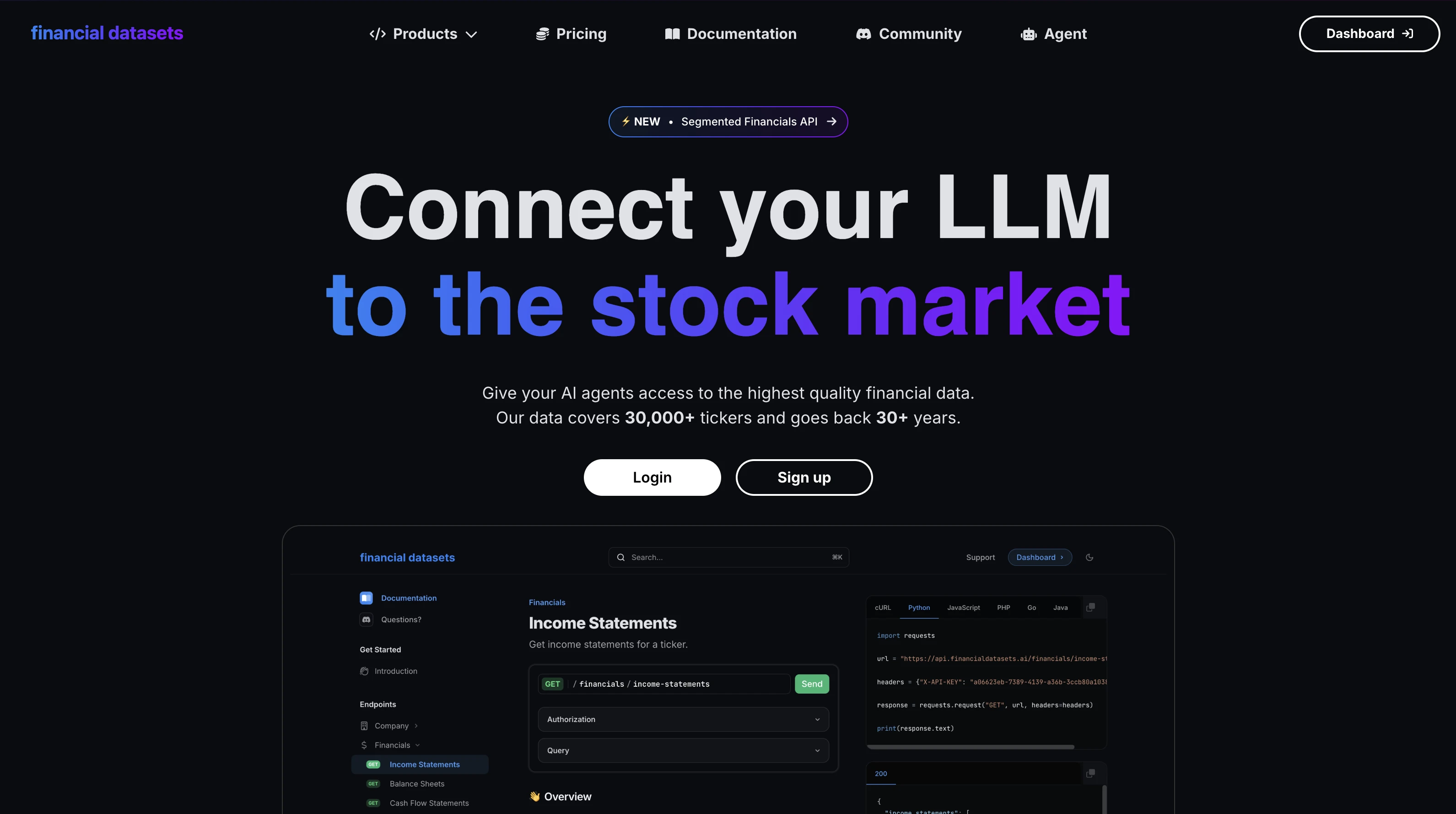
This post explores Financial Datasets, a data vendor focused on top-tier developer experience and data quality, with an API built for AI agents.
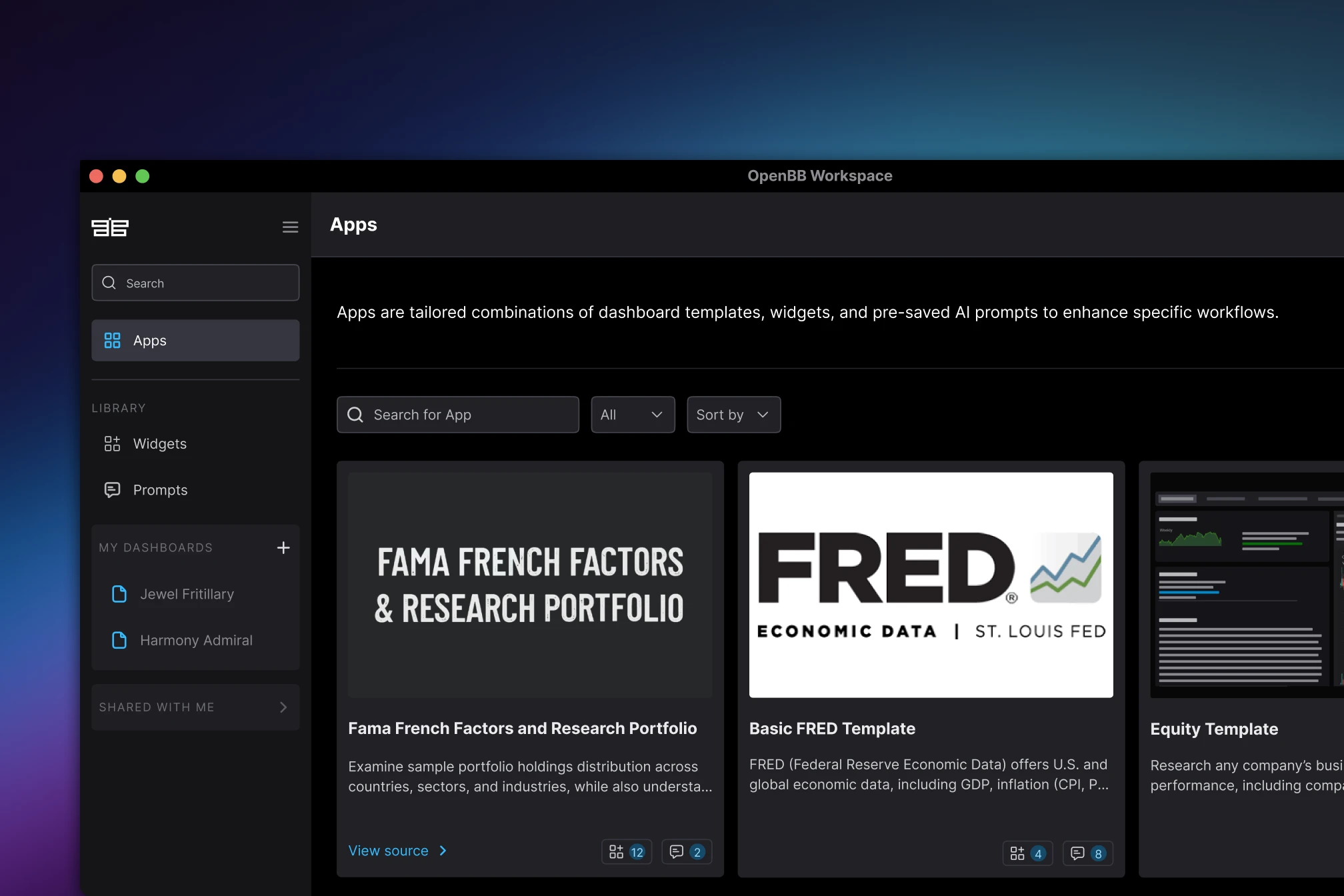
OpenBB Apps introduces a customizable platform where financial organizations can build tailored workflow solutions with dashboard templates, data widgets, and AI agents - putting firms in complete control of their data and tech stack.
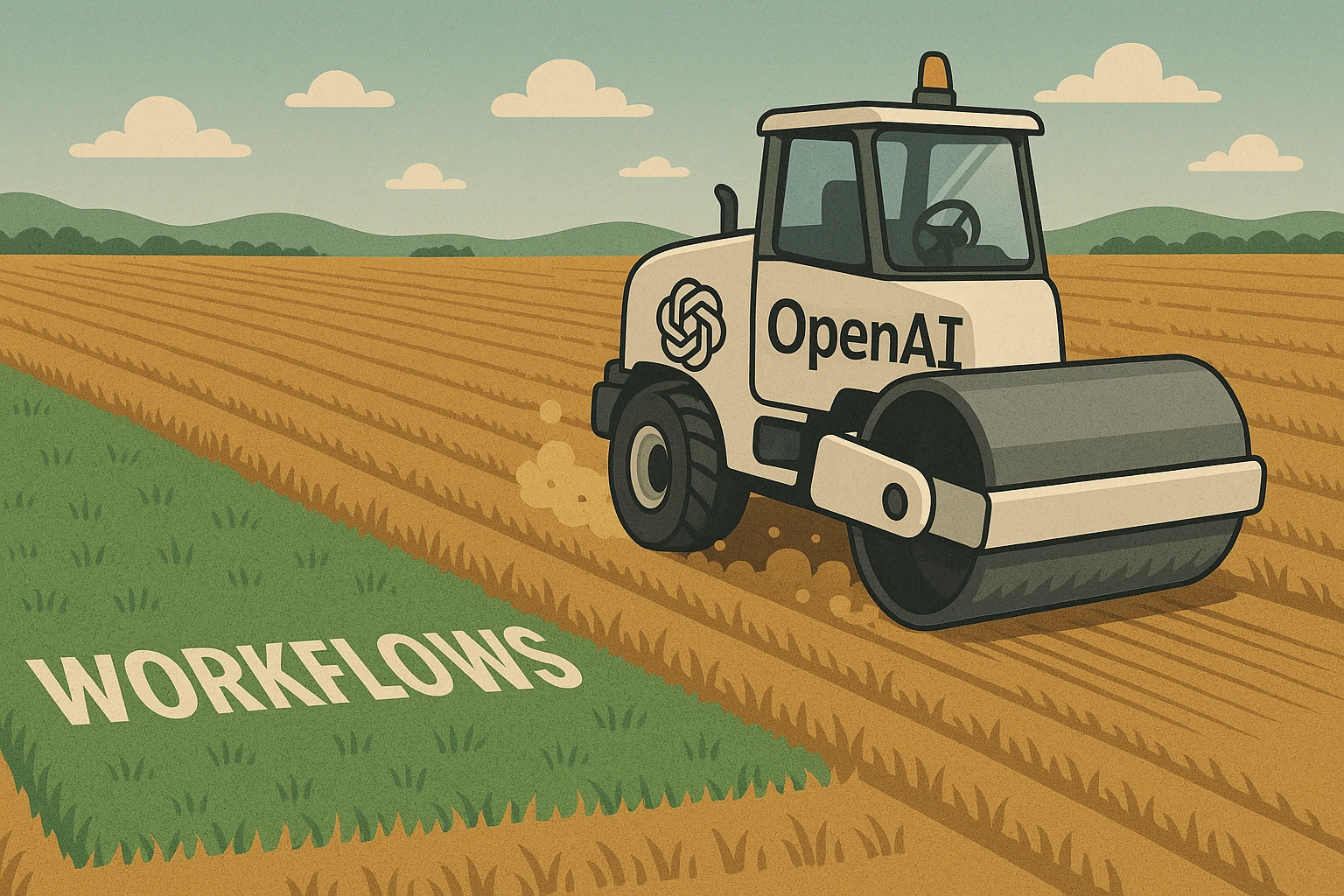
The secret to building defensible AI companies isn't better AI - it's better workflows. An insider's perspective on why some AI companies thrive while others will become obsolete with each new model release.
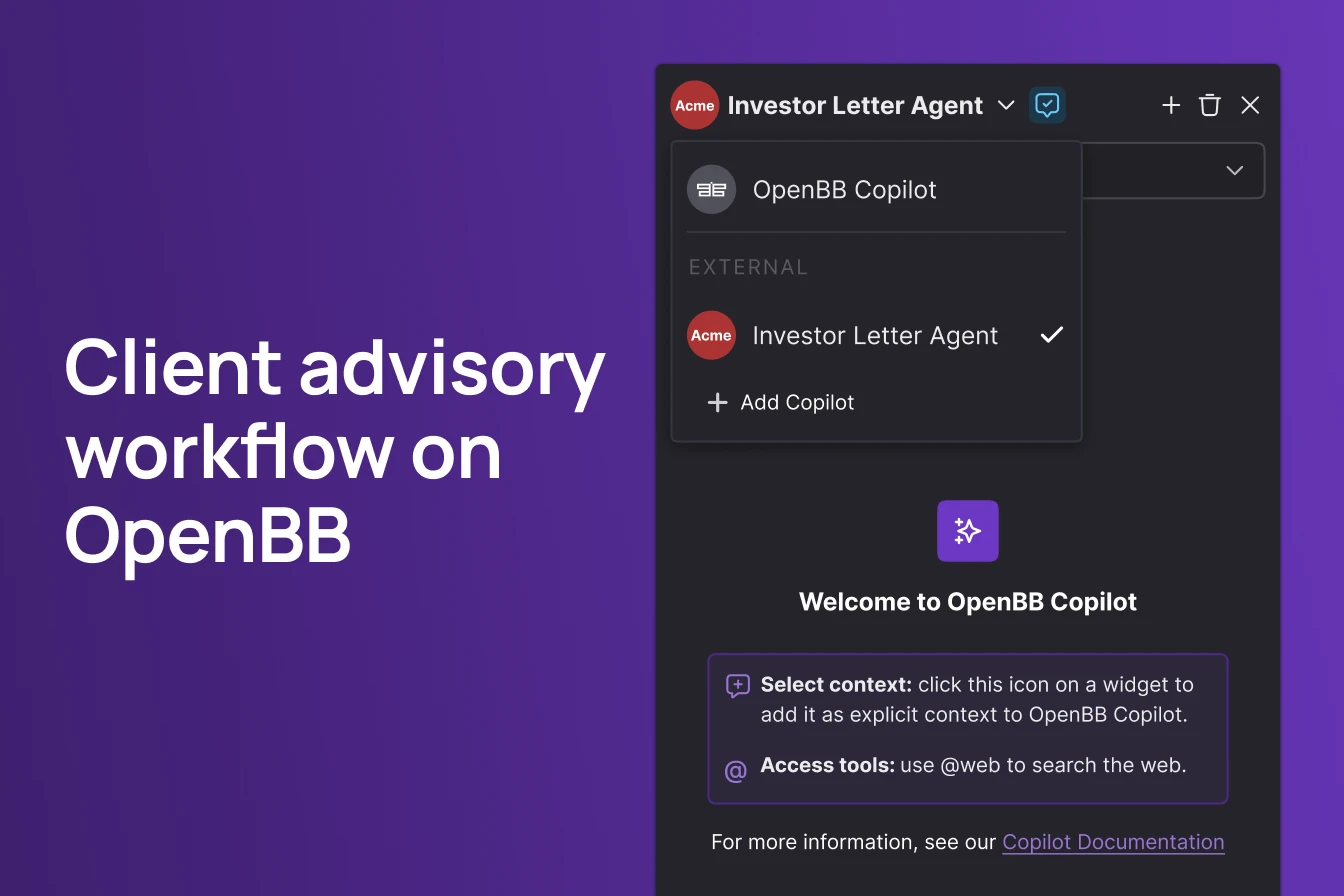
In this blog post, I'll show you how an AI agent can transform your funds performance, macro data, news around your holding companies, and more into a draft investor letter that has the same writing style as your team.
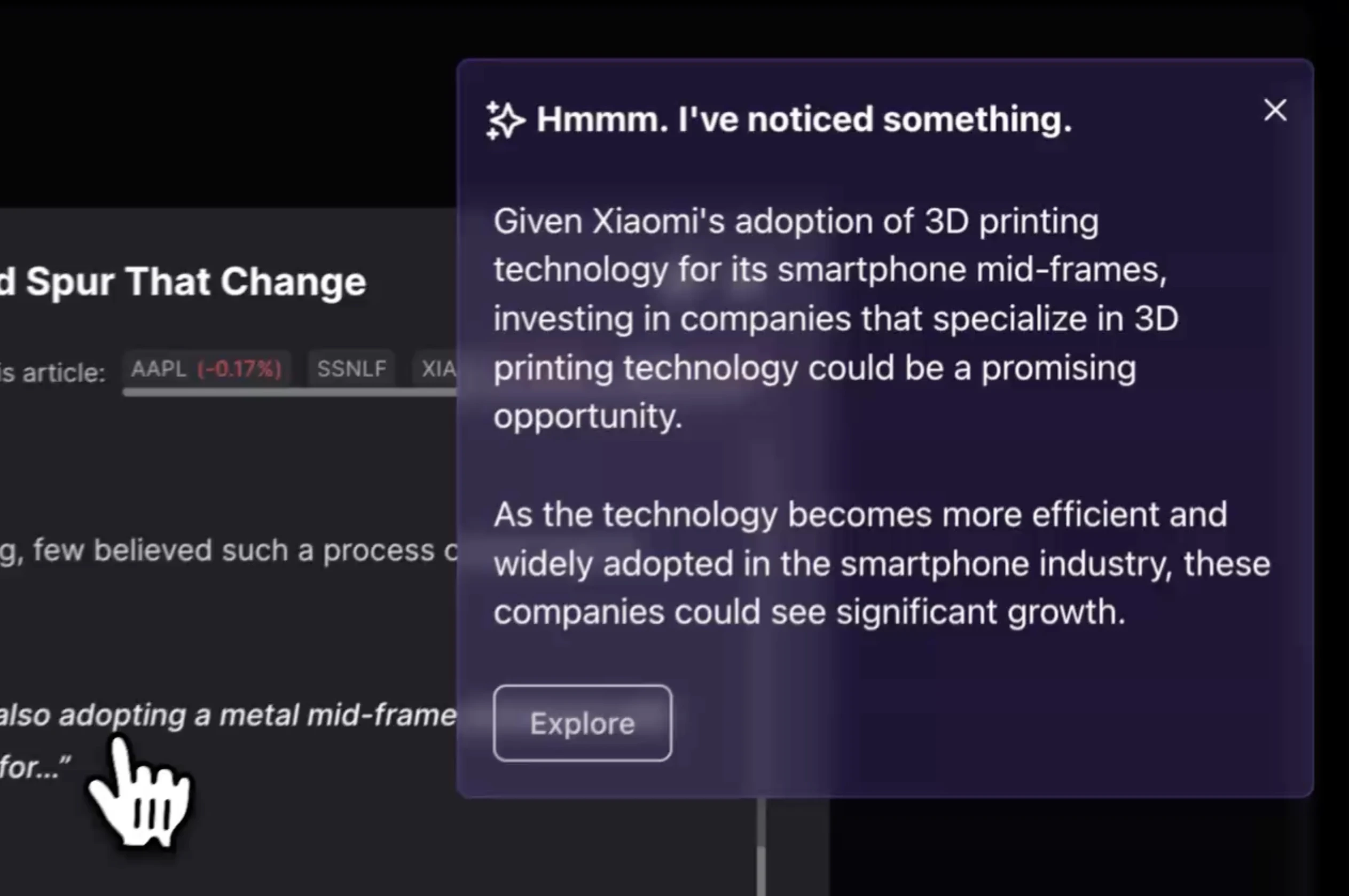
How AI is evolving from reactive to proactive in financial services, and why this shift will transform how investors discover opportunities and generate alpha.

Building on OpenBB's presentation at the Anote AI Day Summit, this post explores how intelligent function calling serves as the cornerstone of our AI-native workspace for data analytics.
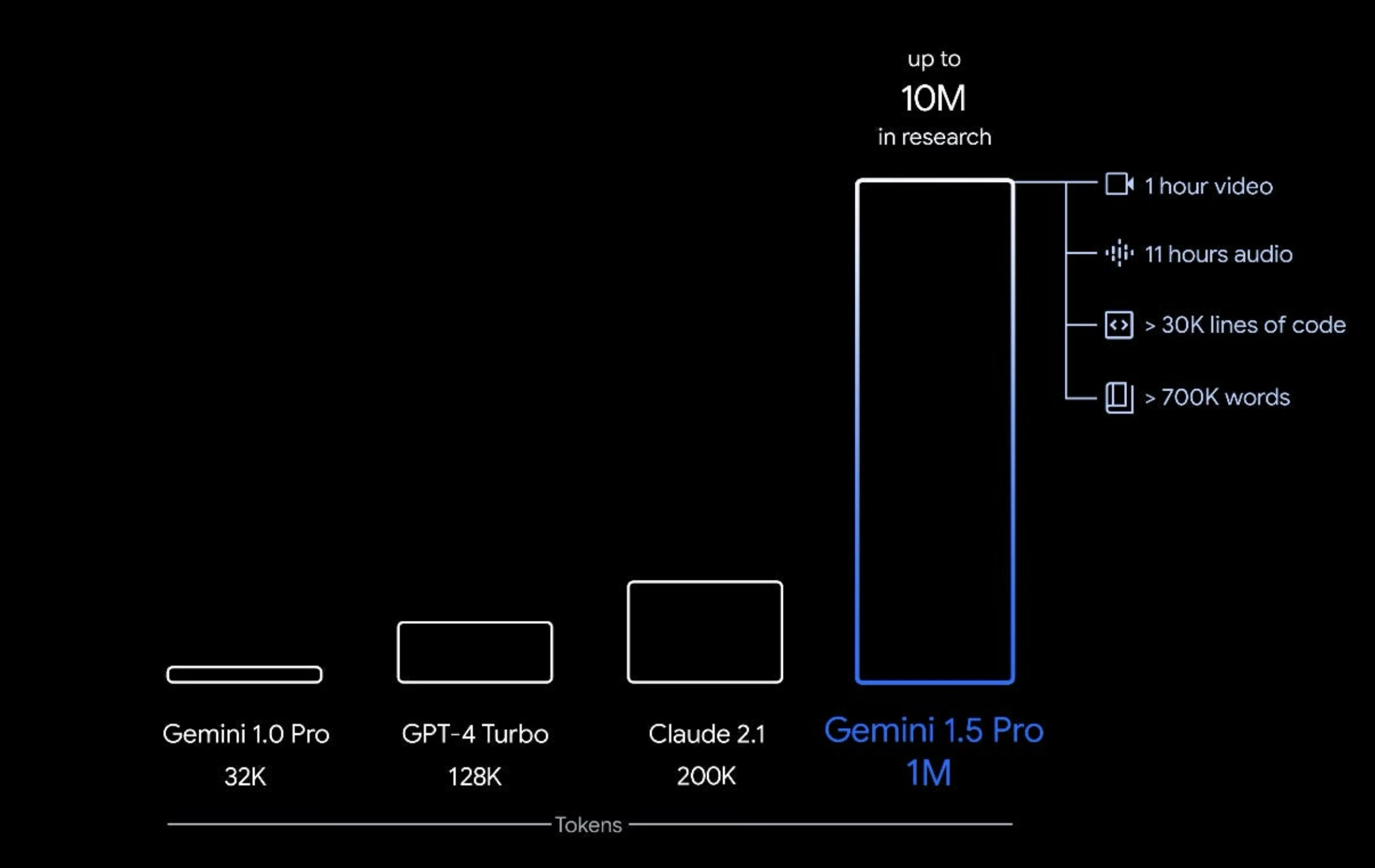
A practical exploration of using Gemini's long context window capabilities to analyze multi-page documents, featuring a Streamlit app for testing and iterating prompts.
Learn how to move beyond traditional RAG approaches for document analysis and leverage the power of large context windows for more accurate information retrieval.
The open source code is available here.
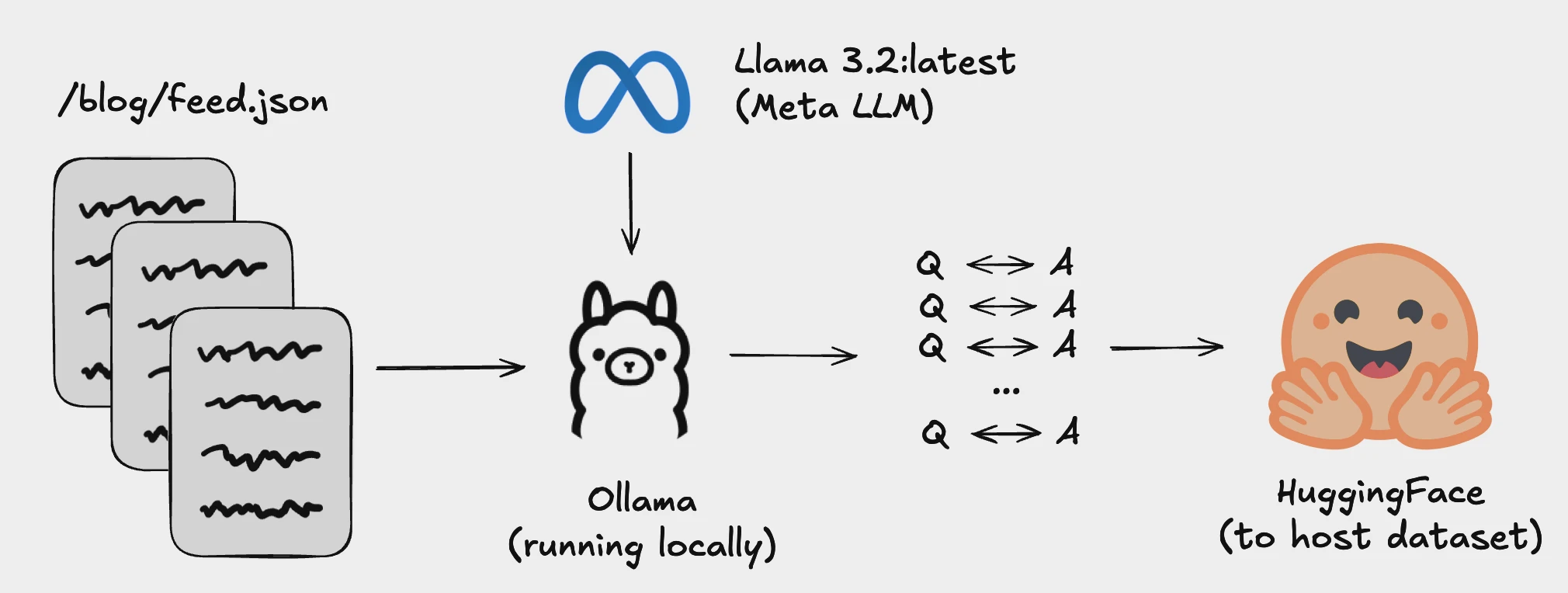
This project converts blog feed content into a structured Question-Answer dataset using LLaMA 3.2 (via Ollama) for local processing. The generated dataset follows a conversational format and can be automatically pushed to Hugging Face.
The open source code is available here.
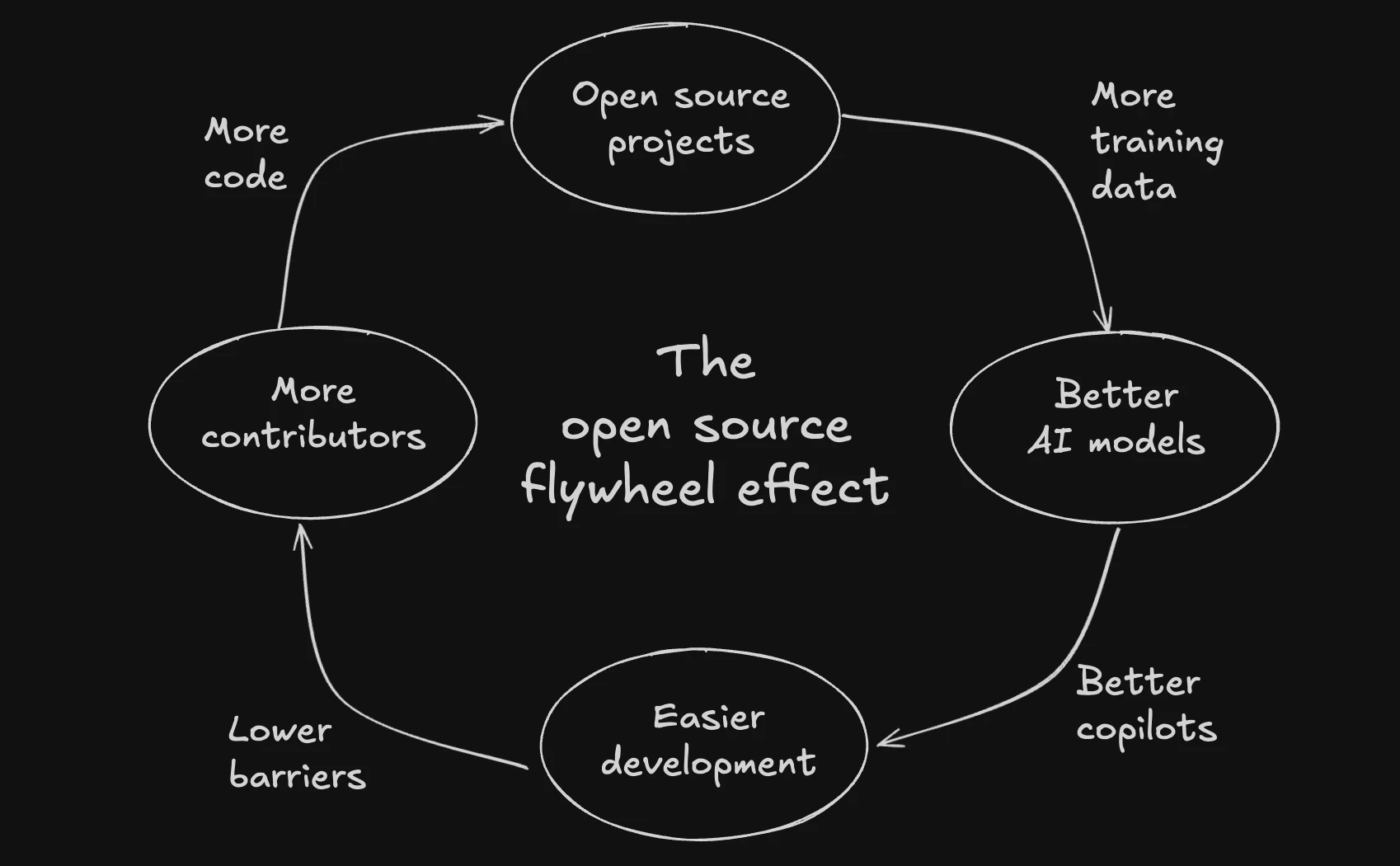
AI is transforming software development at a groundbreaking pace, creating a reinforcing cycle that makes open source unstoppable.
As development costs plummet and AI tools make codebases more accessible than ever, the traditional moats of proprietary software are evaporating.
Here's why I believe that the future of software is inevitably open.
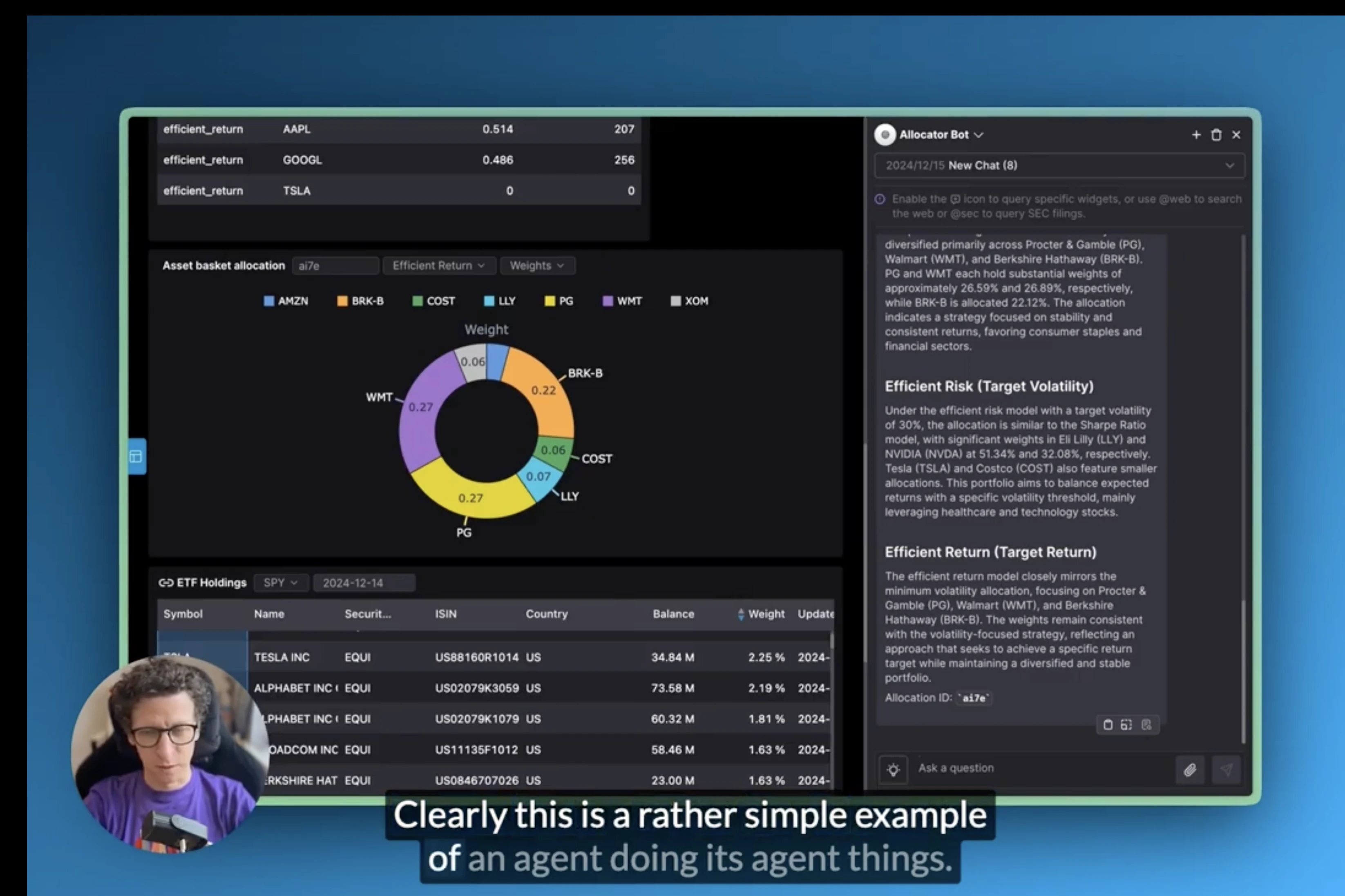
AI is revolutionizing software development costs and shifting value creation in the financial industry. I talk about the growing importance of data infrastructure, the rise of customizable solutions, and how OpenBB Workspace enables firms to build specialized AI-powered financial tools.
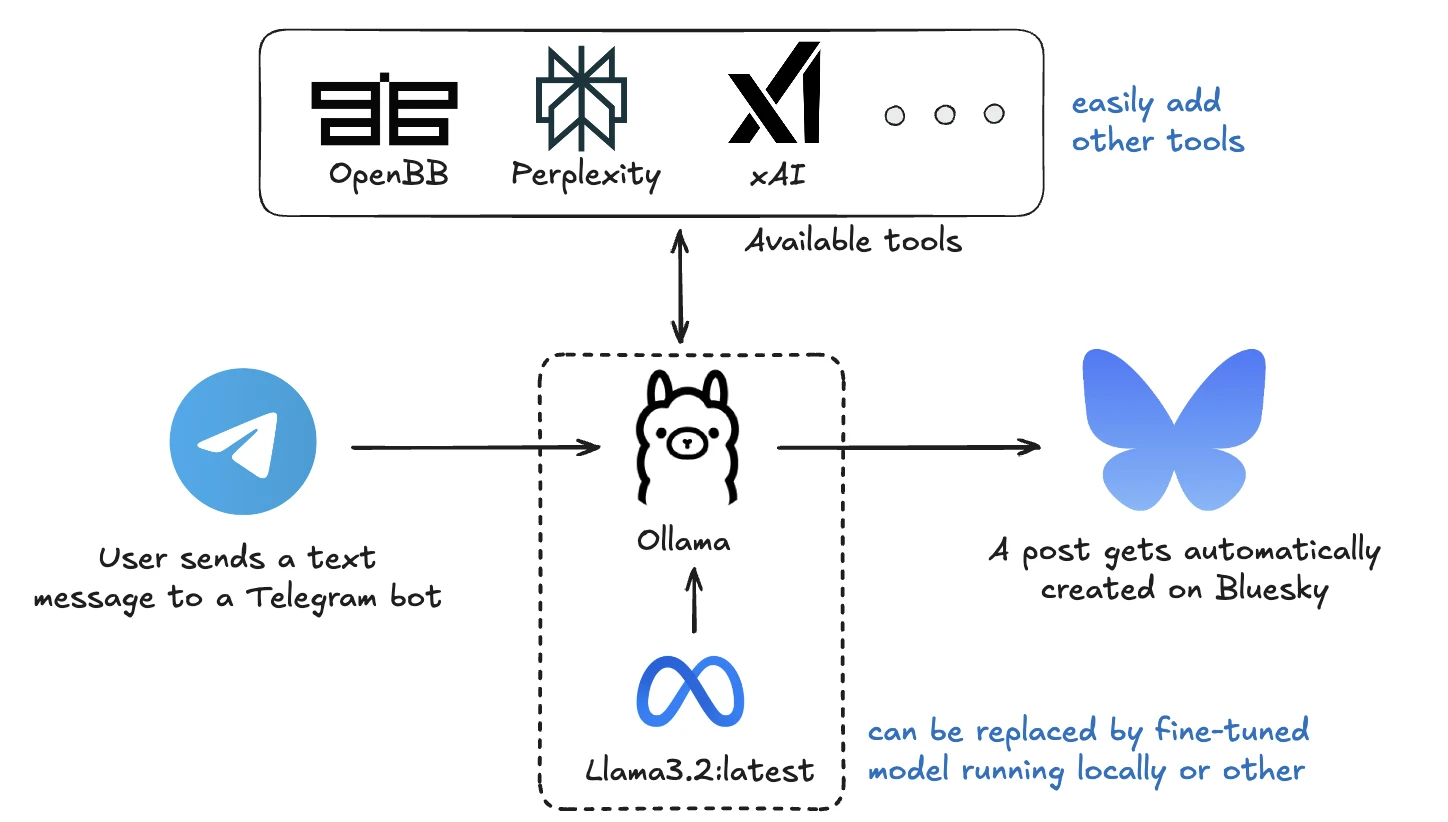
A practical guide to building an AI agent that processes Telegram messages through a local LLM, gathers context from various sources (OpenBB, Perplexity, Grok), and automatically posts content to Bluesky.
The open source code is available here.
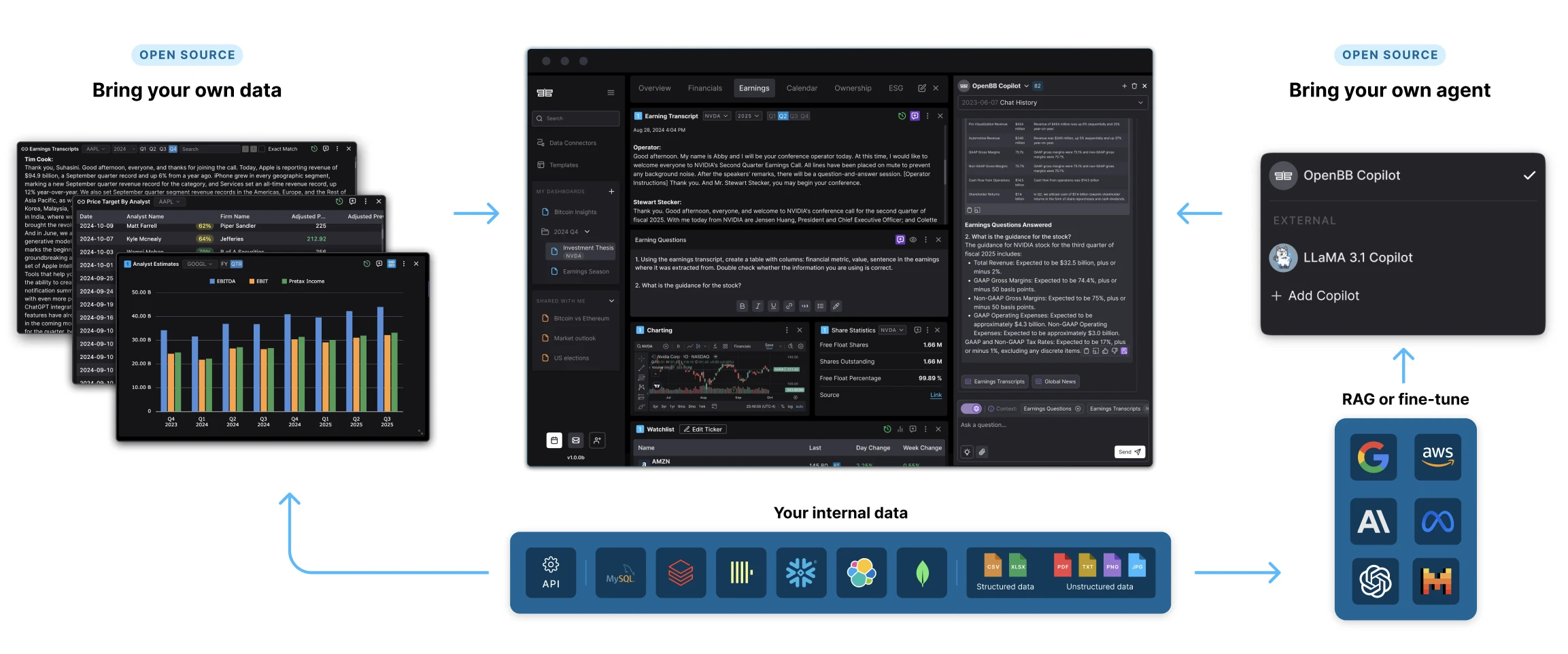
Why the future of financial analysis isn't about chatbots, but about intelligent workspaces that combine your data, tools, and AI exactly when you need them.
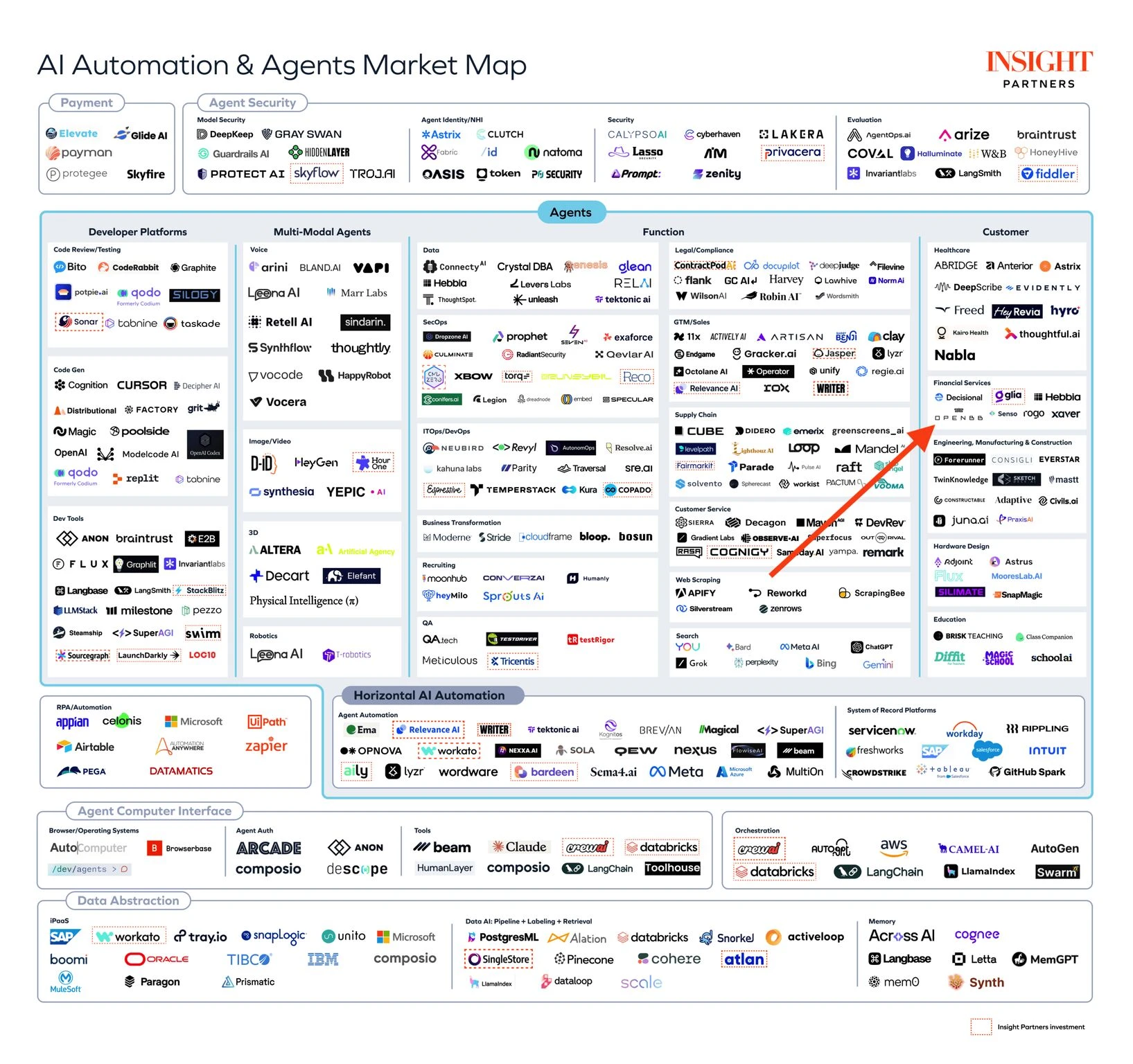
Why I believe AI agents need the same comprehensive workspace tools as human analysts, moving beyond simple chat interfaces to enable true financial research and analytics.
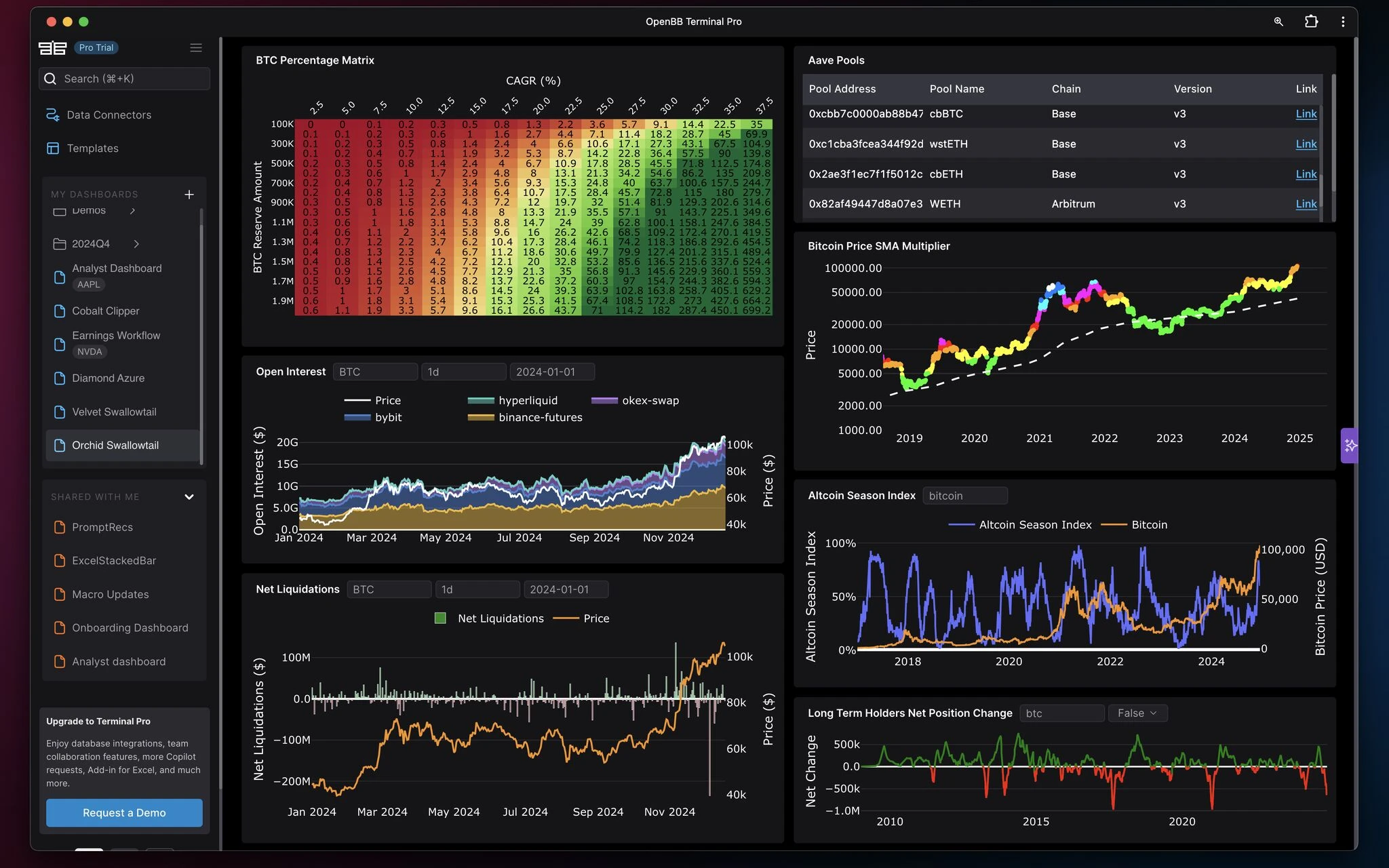
My friend Matt, from VanEck, built a backend with data from Coingecko, Velodata, Artemis, CCdata, Glassnode, MSTR Tracker, Telegram and Google - all in OpenBB.
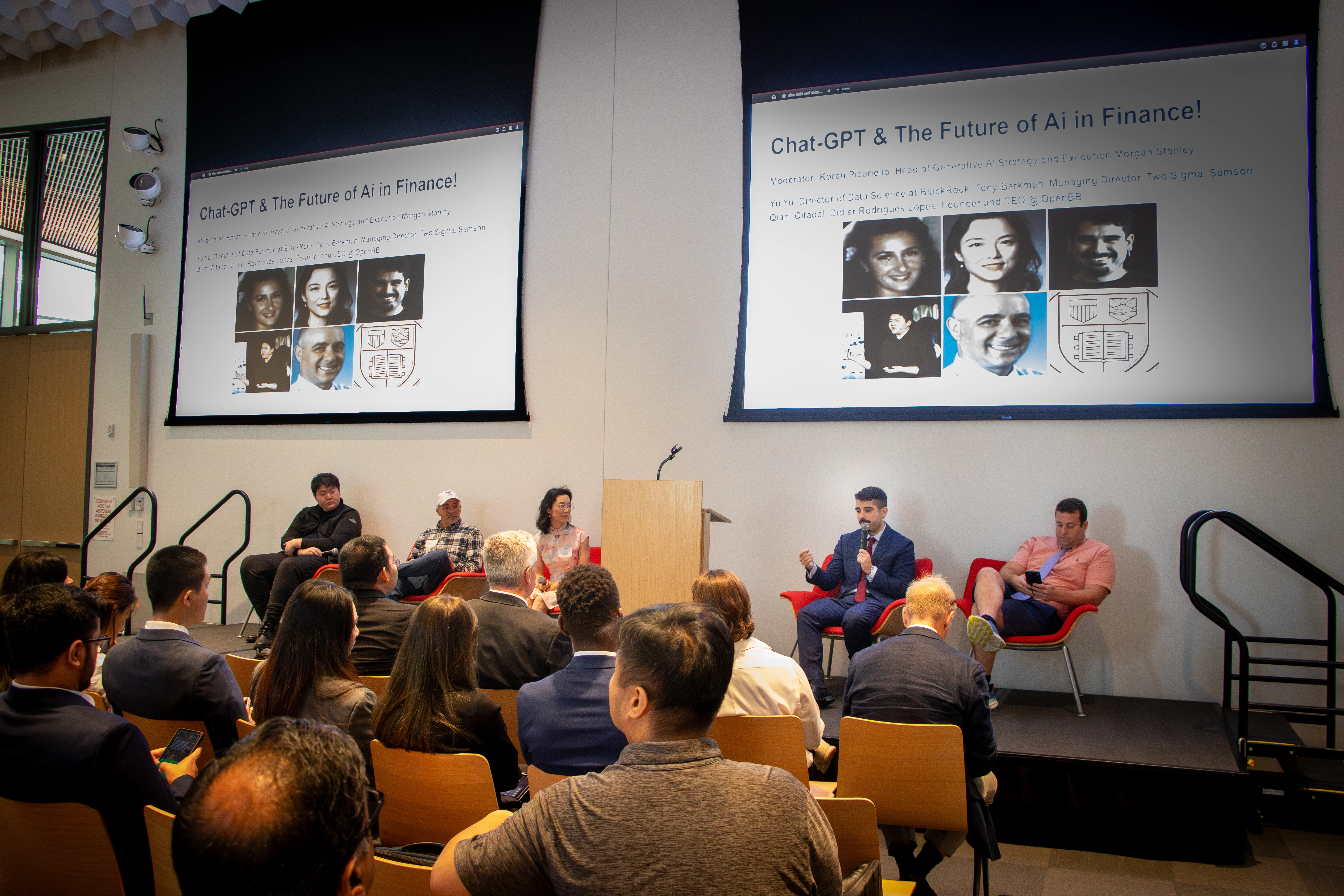
I took the stage at the Cornell Quant Conference alongside Yu Yu (BlackRock) Tony Berkman (Two Sigma), and Samson Qian (Citadel), to discuss ChatGPT & The Future of AI in Finance.
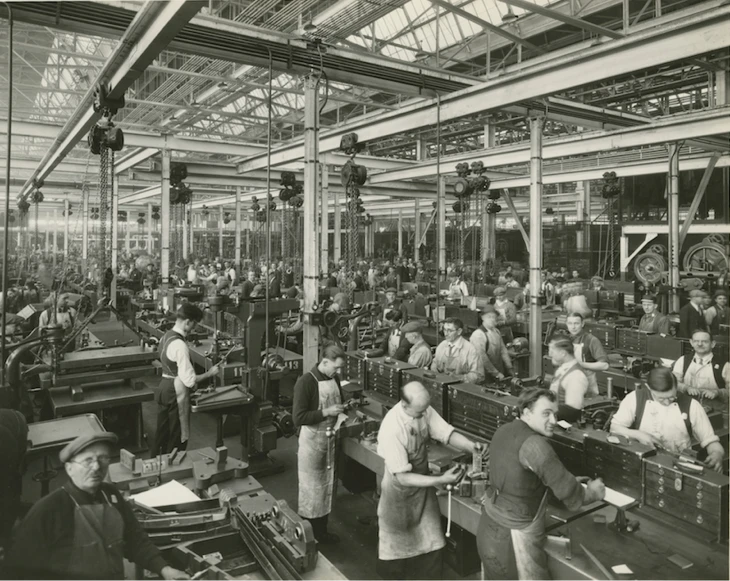
It's not a matter of if, but a matter of when. AI will replace analysts' jobs, and we actually believe that's a good thing. In this blog post, we explain why and how you can prepare for this revolutionary change in the world of finance.
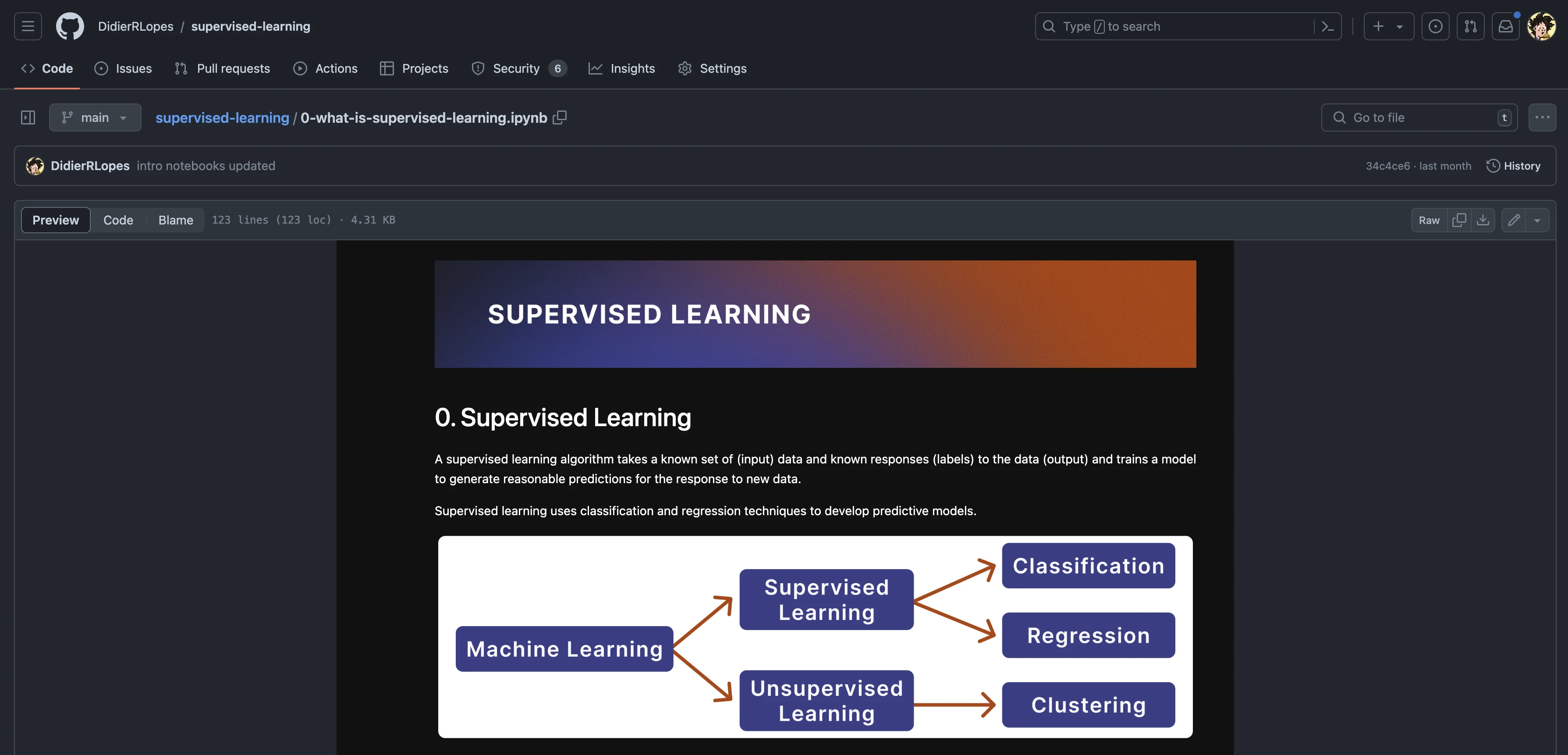
AI will change education forever. Here's how I leveraged Perplexity, Cursor and ChatGPT to teach Supervised Learning and assess coursework.
The open source code is available here.
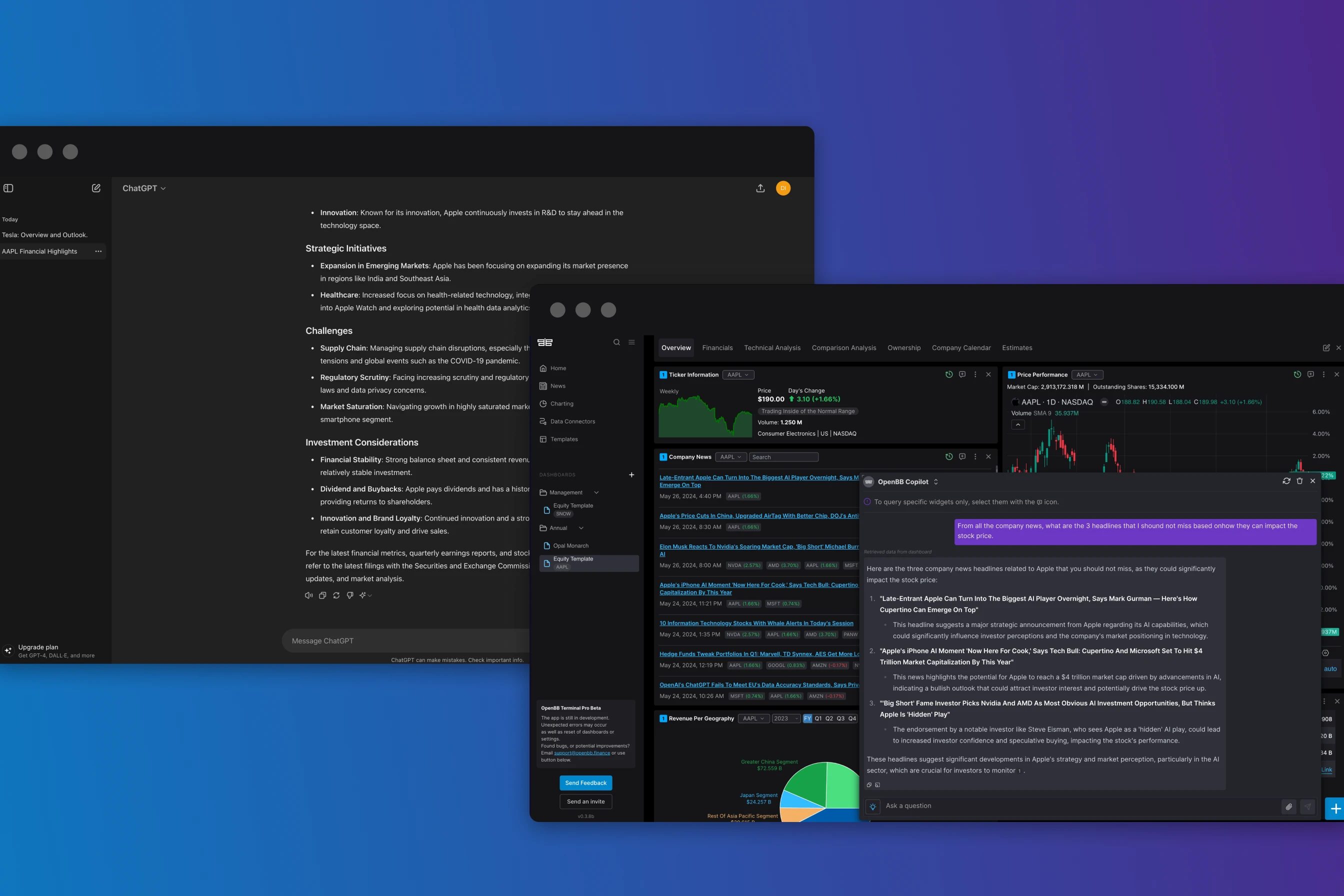
Financial assistants structured like ChatGPT are great for quick searches but fall short for comprehensive investment research. They are limited by their one-dimensional approach, which hinders efficient data retrieval and long-term usability. Read on to discover how OpenBB Terminal Pro addresses these issues with a three-dimensional solution.
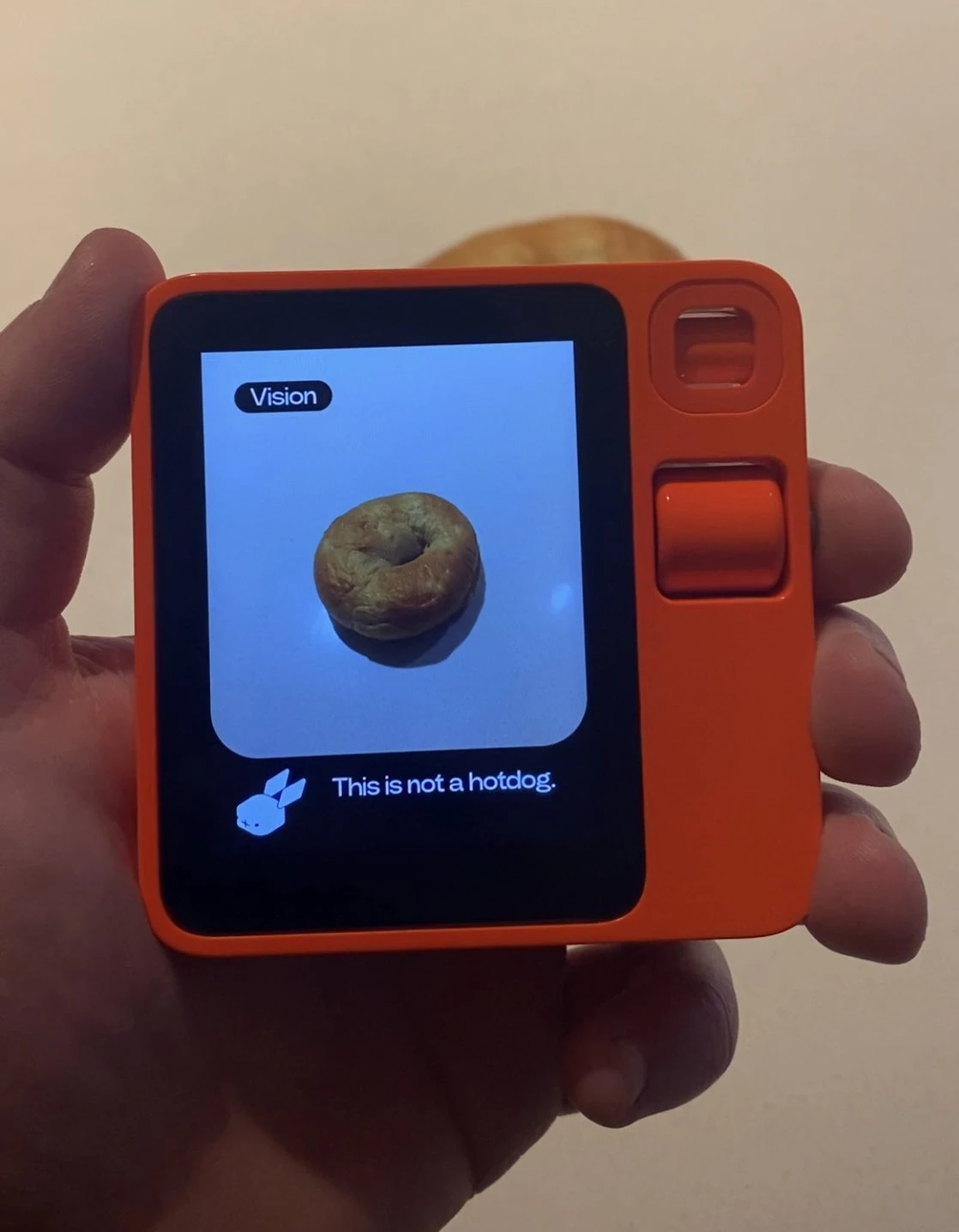
I can see a future where people use rabbit r1 for very particular use cases where phone is suboptimal. For instance, when multiple people want to interact with said phone (e.g. selecting music at a party without having to give phone away) and that is not ideal due to personal information on phone, or when the phone isn't ideal because it has too many distractions and user wants to focus on doing something (e.g. practicing a presentation using recording session and then asking for feedback).
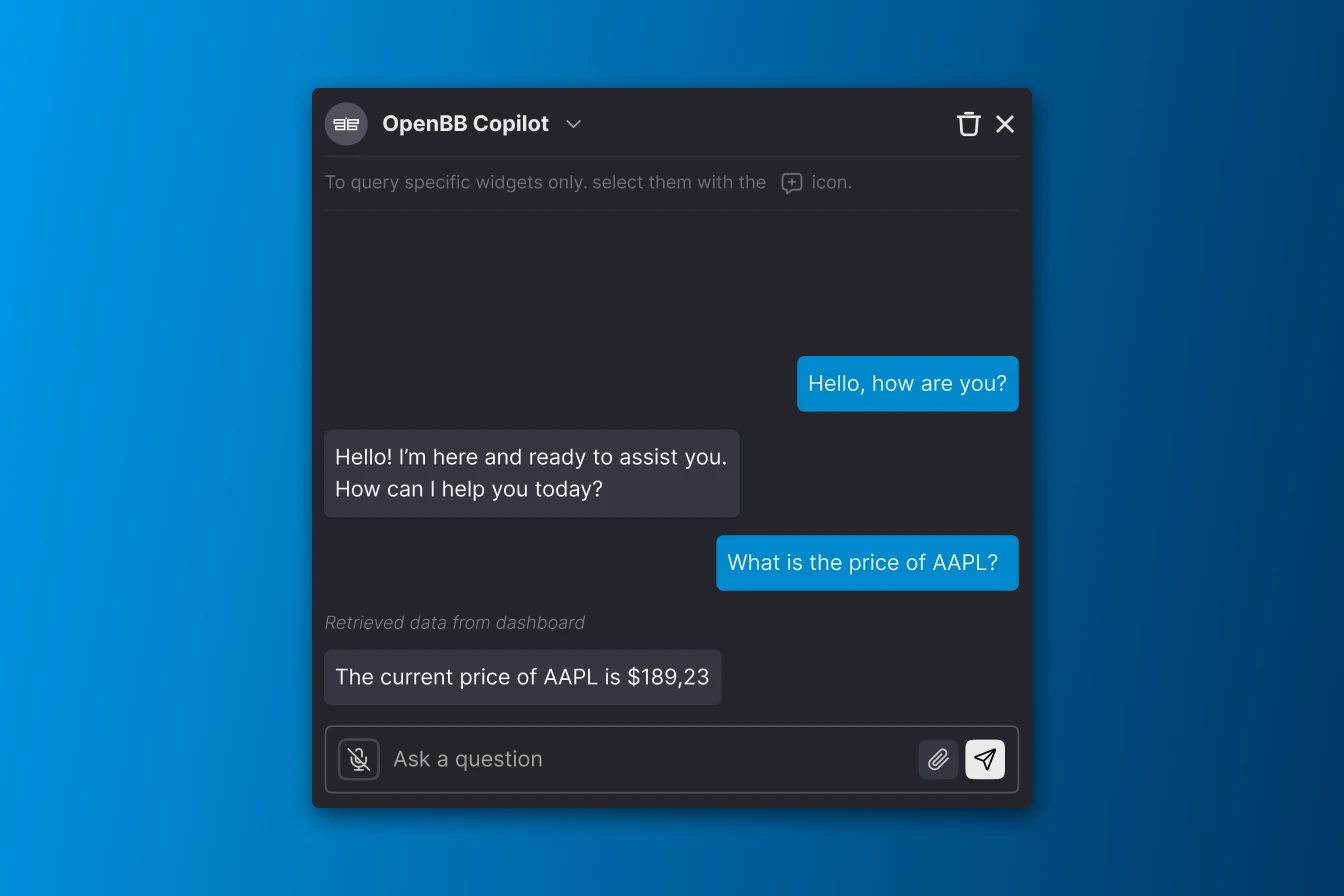
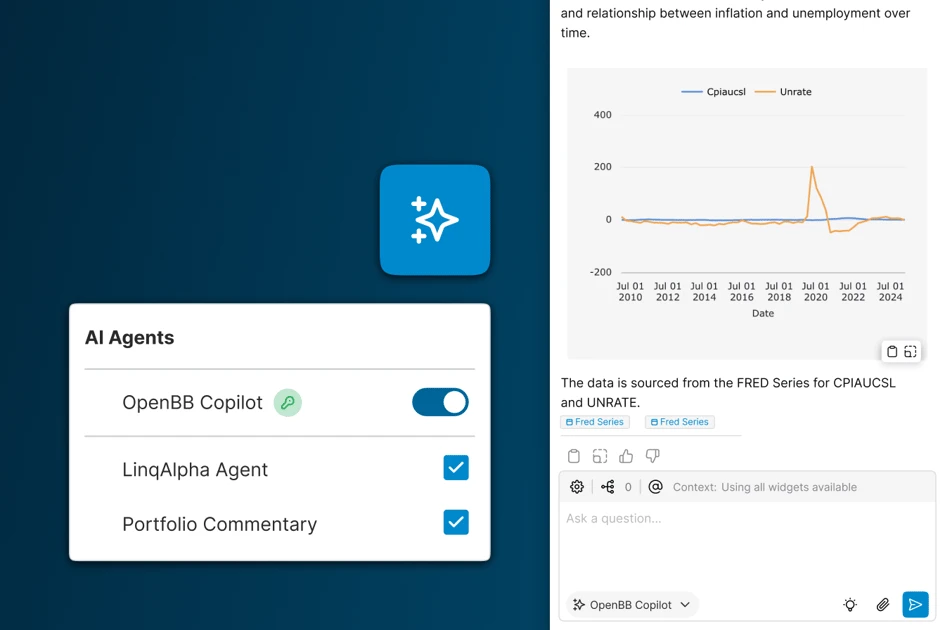
For the past few weeks, we’ve been working on the OpenBB Copilot, an ever-present financial analyst at your fingertips with the OpenBB Terminal Pro.
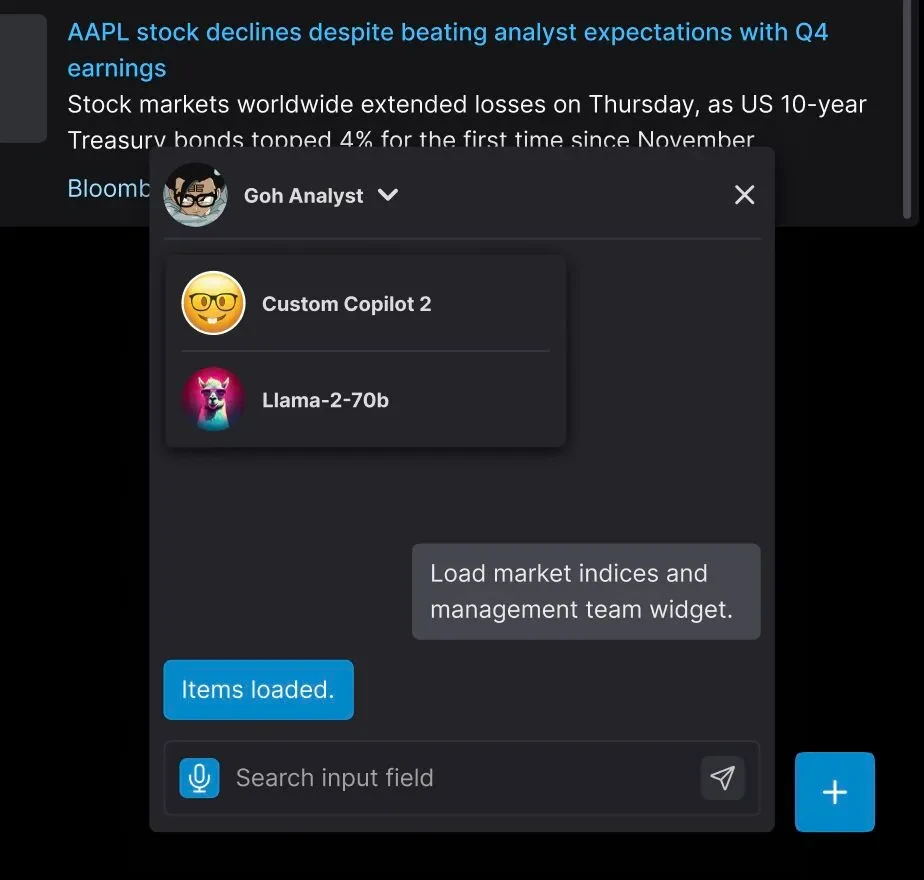
Companies will own multiple fine-tuned LLMs/SLMs for specific tasks.
Our Platform aims to empower the OpenBB Copilot, an AI-powered financial analyst, to perform tasks ranging from knowledge retrieval to fully autonomous analysis. The architecture involves task decomposition, tool retrieval, and subtask agents, showcasing impressive results in both deterministic and non-deterministic workflows. Read on to explore its capabilities and don't forget to watch the demos.
The open source code is available here.
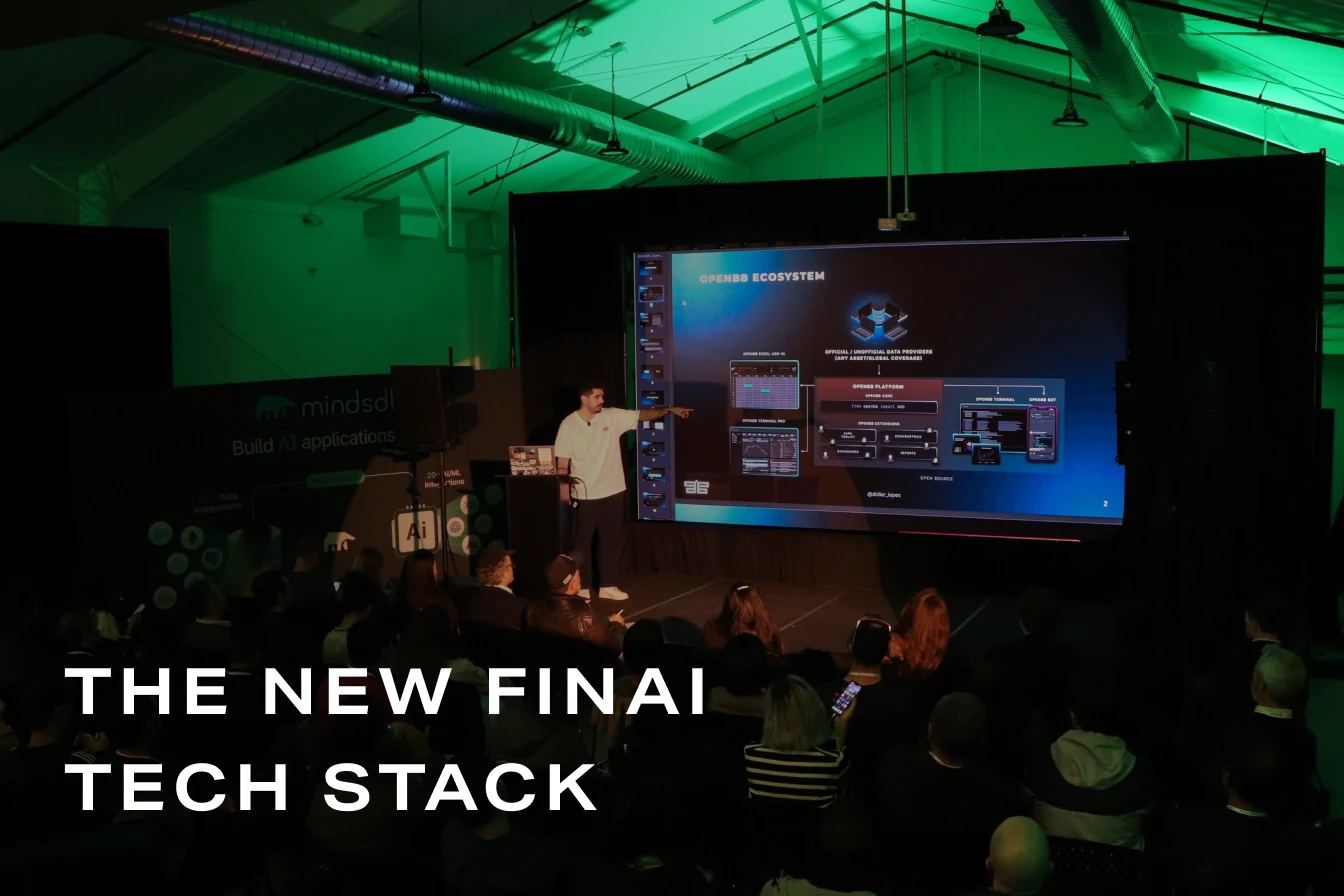
This blog post delves into how our collaboration with MindsDB, Nixtla, LlamaIndex, and Langchain is revolutionizing the financial world. Read on to learn all about the event "The New FinAI Tech Stack" held last week in SF, California.
With the launch of the OpenBB Terminal Pro approaching, we're excited to announce the hiring of Michael Struwig, a Ph.D. with expertise in AI and quantitative finance. Michael will help us to further our AI capabilities, reinforcing our commitment to innovation in the open-source finance space.
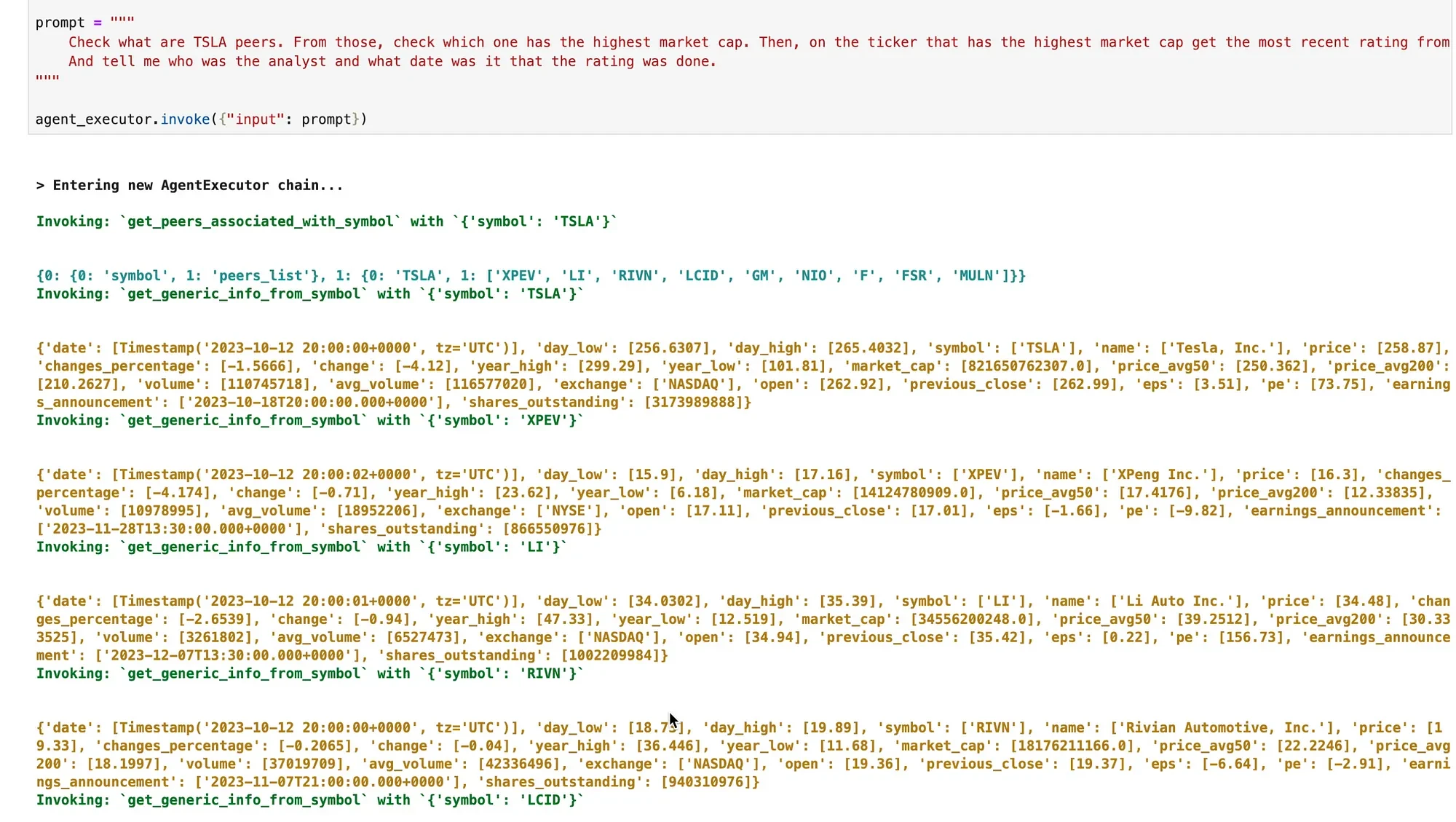
This blog post discusses our $500k investment in building the best platform for AI using financial data. We focus on the rebranding of OpenBB SDK to OpenBB Platform, its features, and the potential payoff of this bet in 2024.
The open source code is available here.
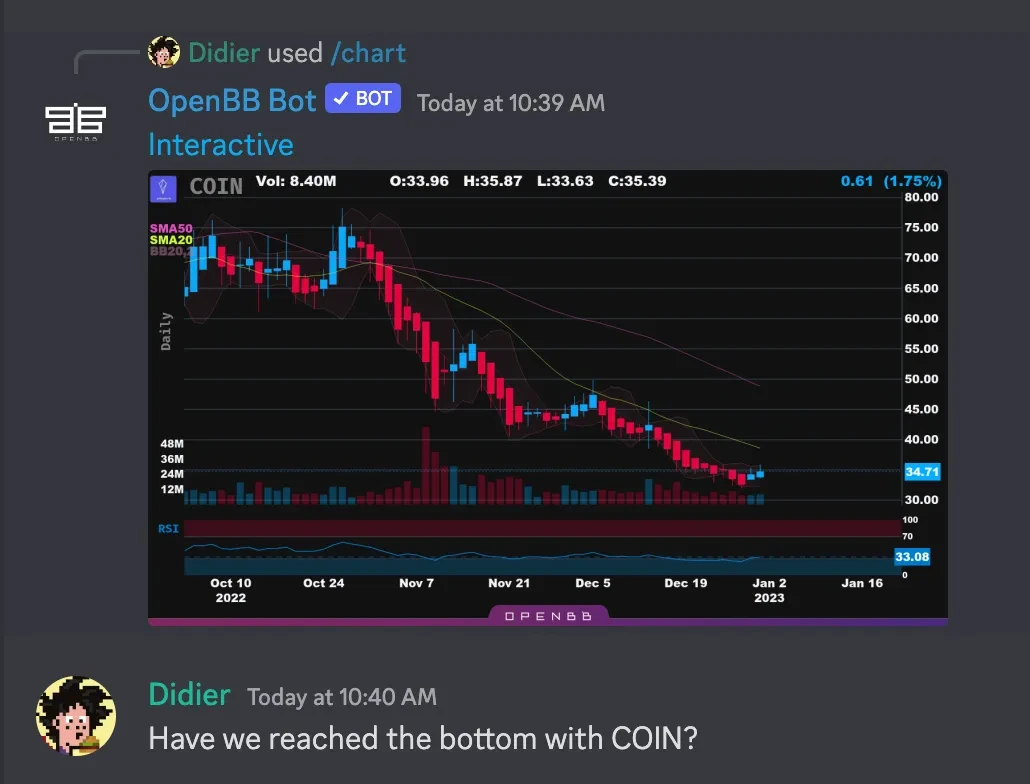
In this blog post, we discuss the underrated potential of financial chat bots, our collaboration with OptionsFamBot, and why chat bots are becoming increasingly popular.
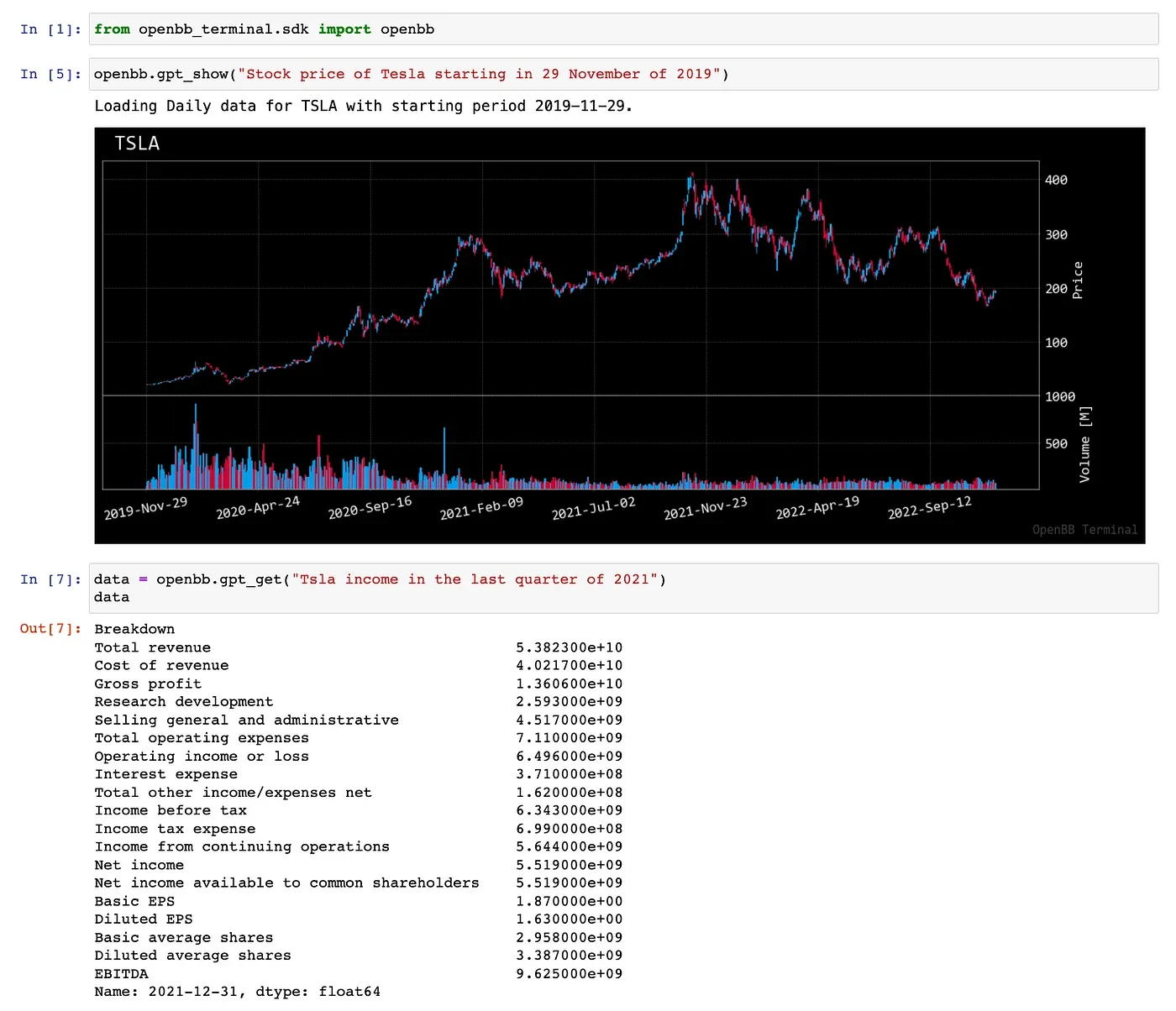
The future of finance is being reshaped by open source and AI. This post discusses the potential of these technologies in disrupting the financial industry, the advantages of open source, and the role of AI in user interface.
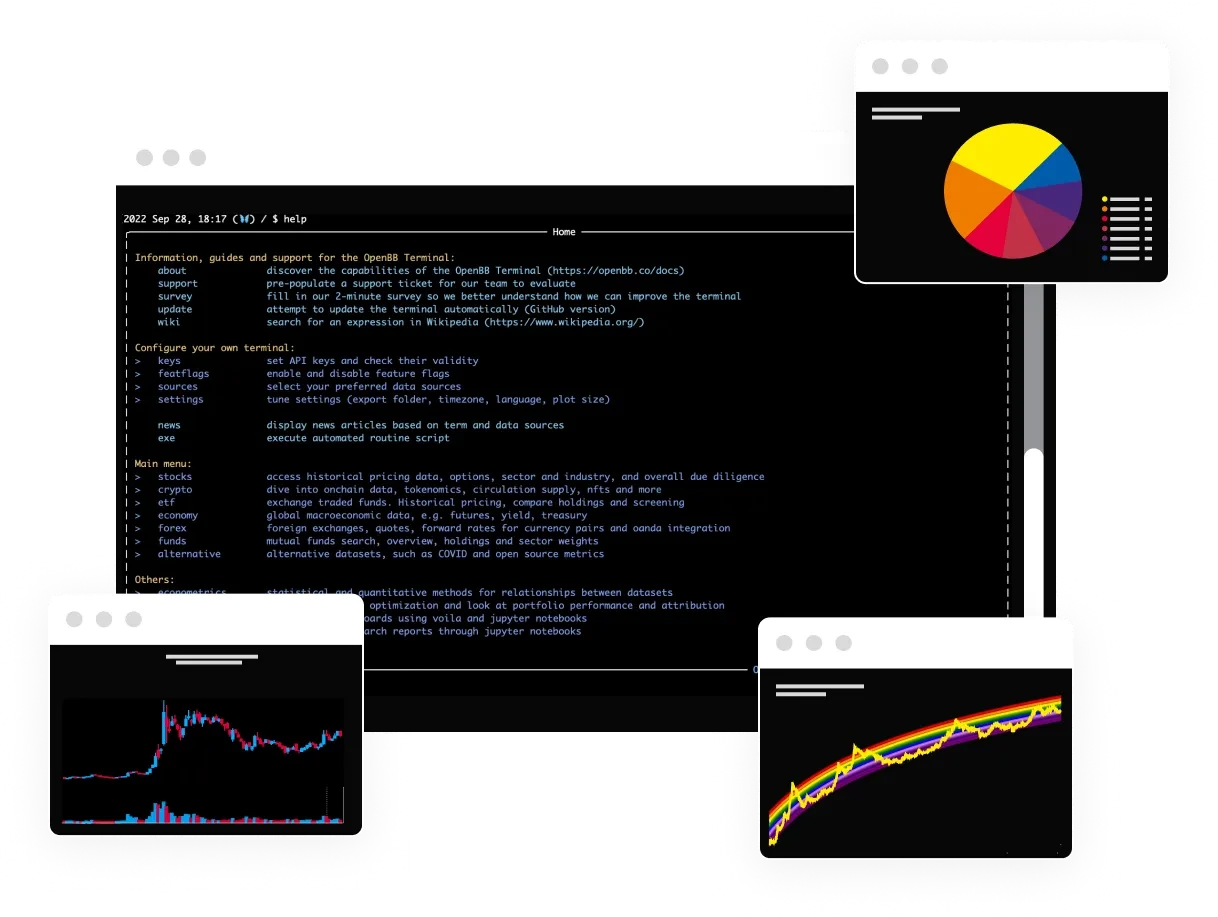
OpenBB Terminal 2.0 has been released. This blog post discusses the new features and improvements, including the release of OpenBB SDK, a state-of-the-art AI/ML toolkit for the financial industry, and the vision for a community-driven investment research platform.
The open source code is available here.