OpenBB is shutting down and going open source
· 4 min read
And I’m sharing the entire OpenBB roadmap I had with you soon.
And I’m sharing the entire OpenBB roadmap I had with you soon.
A few weeks ago at NY Tech Week I gave a talk on centralizing dashboards and agentic workflows in OpenBB Workspace. At the end I talked about how I'm seeing more analysts and quants using Claude Code and Codex to drive their work - and so we need to adapt the workspace to make it (even more) agent first.
That is why we announced Workspace MCP: it exposes the workspace (dashboards, widgets, data, apps, skills) as a set of MCP tools, so an agent can read data, build dashboards, and assemble whole apps.
If agents are going to drive this workspace for real analysts, I need a way to measure how well they navigate it. That led me to build WorkspaceBench: a vanilla harness, a simulator of OpenBB Workspace, realistic tasks, and graders that evaluate the agent's output.
In order to build this, I got inspired by:
I wanted to bring some of these concepts to an actual financial workspace.
I can't recall last side project that took me as much time as this one. A lot of iteration and killing it and starting from scratch.
Initially I gave the reasoning and strategy to Fable, and let it come up with the how - i.e. how tasks are defined, what tools are used, initial dashboard setup, etc.. after a few iterations I actually liked the staircase of results I was seeing from the models on the tasks, and so thought we were almost done...
Except that when I went to dig into how the tasks were set up, expecting that my mental model for how it should look had been implemented 1:1 - it was actually not there at all. Not only was there a lot of fluff (like variables that didn't add anything to what we wanted to test), but I felt that many tasks were not super representative of what a user does in the workspace. E.g. some tasks were phrased as "use add_generative_widget markdown_note widget with text 'The revenue of AAPL is X'" - which is really stupid when you think about it. Instead I was expecting something like "Add a note to the dashboard with the revenue of the company in the dashboard". This means that the model has to reason about which company we are looking at, which widget contains the revenue data, and then the format on how that is output.
During this time period OpenAI released a post criticizing SWE Bench pro which really hit home for me. Reminds me of the acronym LATFD ("look at the f*cking data"). And the longer I avoided doing it, the more I felt like I was building on a sand foundation.
Don't get me wrong, Fable was still a major driver of what I've done here. But I almost scratched everything and started from start with a stronger foudnation and only gave the model certain degrees of freedom - and always checked the underlying tasks to ensure that it was on the right track.
This post will walk you through everything that was done, including: the workspace simulator, the datasets we used, what a task file is made of, what are we evaluating, the final results and what's next.
I hope you enjoy this more technical deep-dive into creating a financial workspace benchmark from scratch. I'm sure there are better ways to create benchmarks, but in this post I'll walk you through my thinking process and how I build it from scratch.
Today we're launching OpenBB Workspace Lite, a self-serve, self-hosted edition of OpenBB Workspace for small teams who want to run the same product in their own environment, without starting with enterprise overhead.
Bring your existing web apps into OpenBB Workspace and make them part of the workflow. The new iframe widget lets Streamlit dashboards and internal tools share parameters, export data into the Workspace, and connect to AI agents.
Proprietary data, client data, and the context from using these.
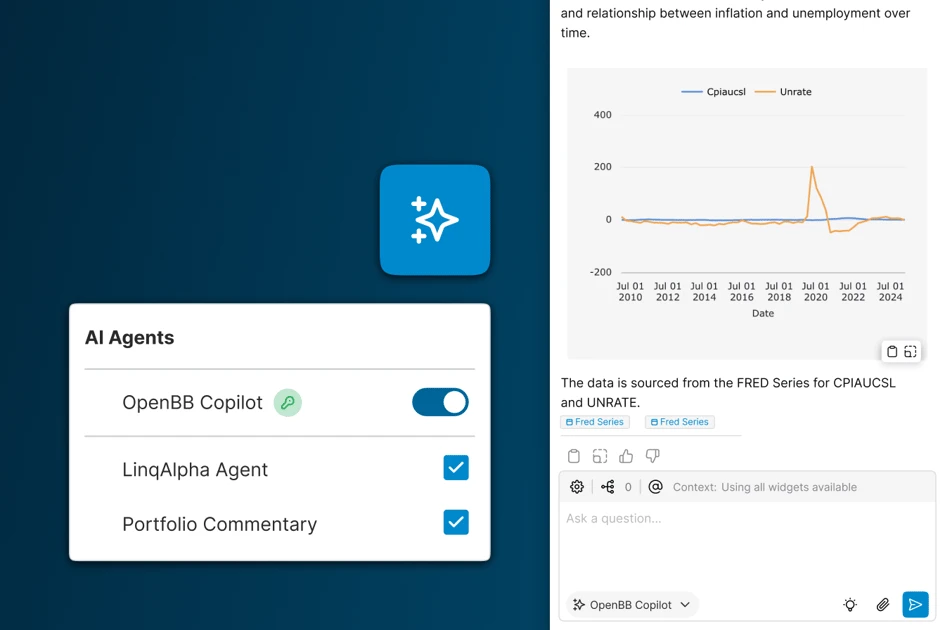
Workspace MCP lets Claude Code, Codex, and any MCP-compatible agent do real financial work inside your environment, on your data, governed from the start.
Announcing a free data and analytics marketplace on OpenBB
Last month, I started spending more time reaching out to users on the free tier of OpenBB. If you got a message from me, this post explains how I got to you :)
I had to do a 5min presentation on Alpha for Future Alpha.
I love Streamlit as much as the next guy - but not for prod.
The case for a firm-owned workspace in the age of AI.
MCP adoption is real.
The most expensive part of a research workflow isn't the analysis. It's rebuilding the same process from scratch every single time. See how Skills change that.
Primitives beat prompts. Every time. BI tools are the most underrated foundation for GenUI in finance.
Software that builds itself over time is closer than you think.
When agents can work in a loop while you do something else, time is removed from the equation. Welcome to the era of on-demand software.
No financial terminal in their current state will survive. (sorry for the clickbaity title eheh)
Bringing Claude Code Skills into the OpenBB Workspace to create custom reports right where your data lives.
As AI collapses the enterprise application stack, the context layer becomes the most valuable part of the technology stack in financial services.
I materialized my knowledge of how to build OpenBB apps, and days of building alongside users and clients, into a SKILL that you can give your agents. So you can start building apps in minutes.
Technical debt is about to hit levels we've never seen.

Stop adding business logic to your datasets.
From weekend POC to production: the 24-month gap nobody talks about.
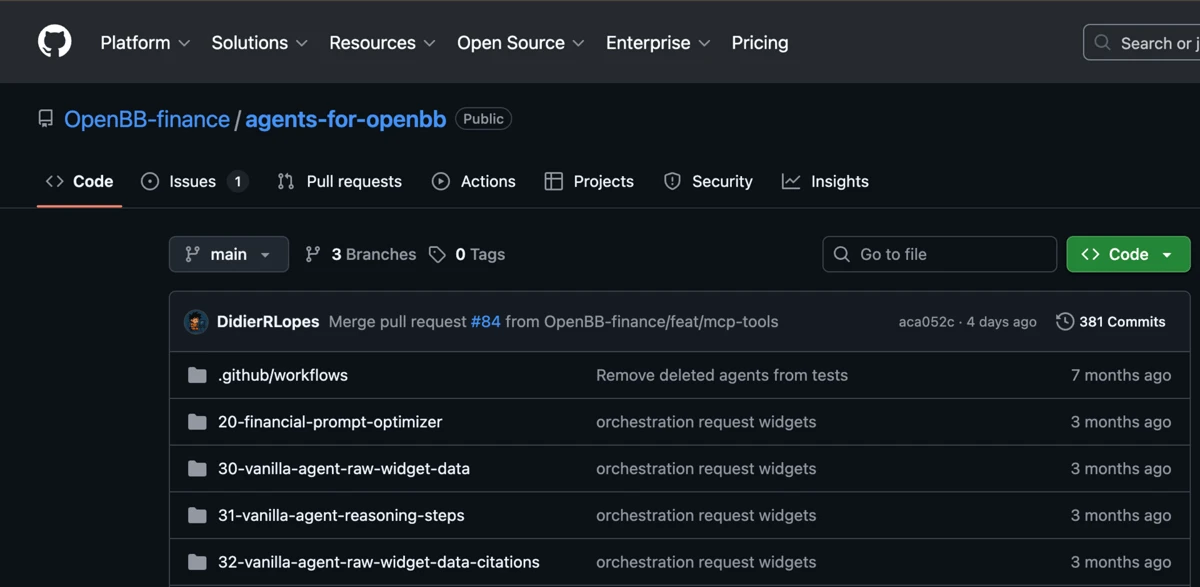
How I quickly hot-swap my financial agent with different LLM providers - fully open source.

How the explosion of data and AI is breaking the old financial terminal monopoly and creating space for open, modular, AI-native interfaces that serve users, not vendors.

Mapping the evolution of AI agents in finance from ChatGPT wrappers to derived data insights - and why the real value is shifting from interfaces to intelligence.
The hardest part of building an OpenBB app isn't writing Python, it's getting the widgets.json spec right, since this spec was invented by us.
Every app requires developers to define widget types, inputs, and configuration options in exactly the right format. The documentation is strong, but it is long-form, which forces you to dig around for the parts you need. That slows down iteration, especially when you just want to get an idea live in OpenBB Workspace.
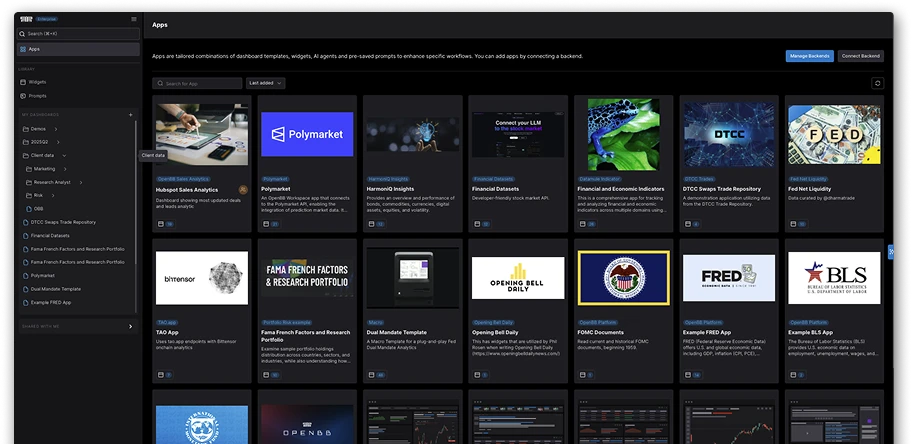
These are my top 10 OpenBB apps, highlighted on our new solutions page. Not slides - literal workflows.
A hands-on experiment using Google's Veo3 AI to create a professional 1-minute video ad with zero video editing experience. Covers the complete workflow from script writing using the Hero's Journey framework to JSON-structured prompting techniques that unlock better AI video generation results.
How a simple protocol could change the way firms build, integrate, and scale with OpenBB.
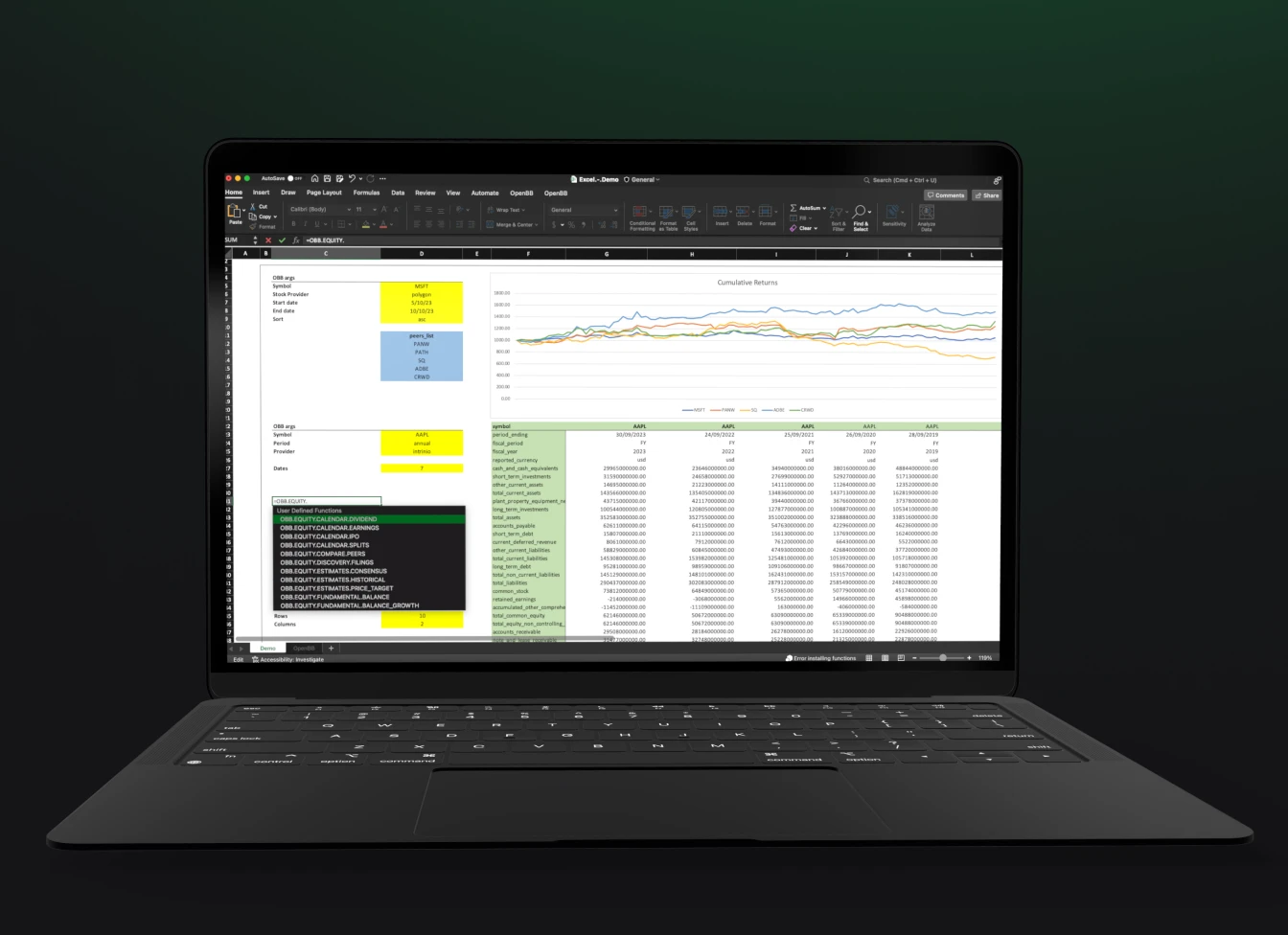
This post introduces a new integration that allows users to embed dynamic OpenBB widgets directly into Excel.

The Model Context Protocol (MCP) forces a strategic choice on financial services companies - become a Client, building AI user experiences, or a Server, providing specialized data and tools. This post explores the implications of this divide.

Thoughts on Dia browser's AI integration, exploring its similarities with OpenBB Workspace and the role of AI assistants in finance tools.
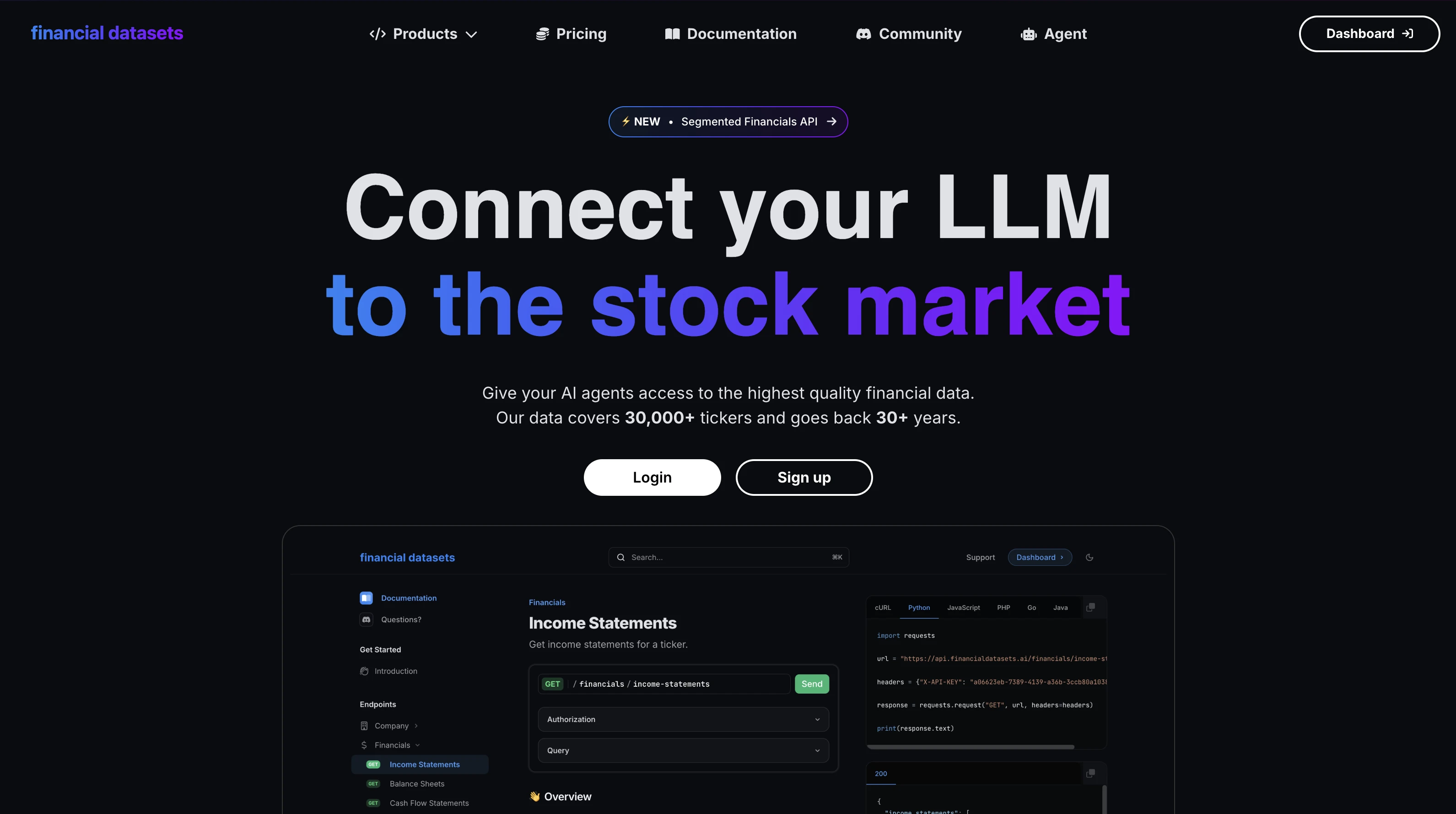
This post explores Financial Datasets, a data vendor focused on top-tier developer experience and data quality, with an API built for AI agents.
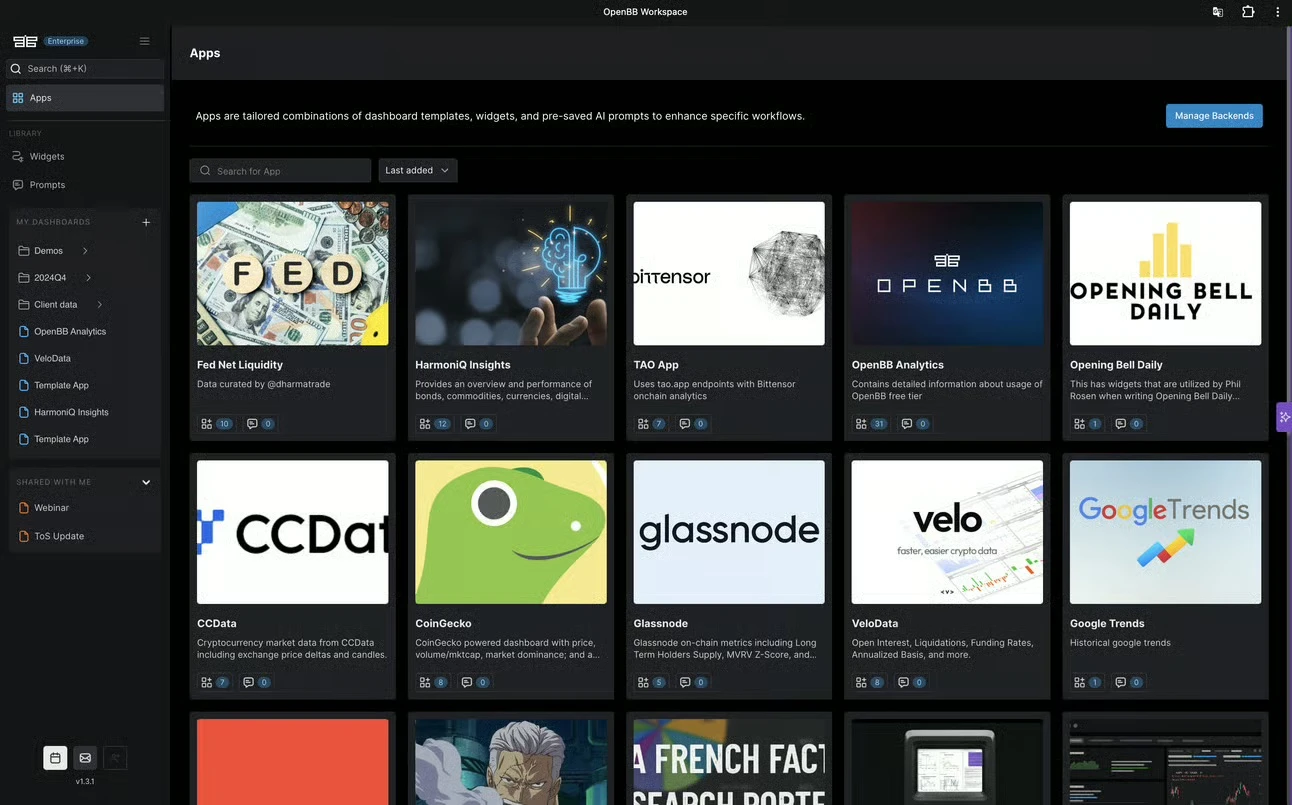
OpenBB isn't just software - it's foundational infrastructure that lets firms shape their own financial workspace, moving beyond one-size-fits-all solutions toward modularity and extensibility.

This post explores how SEC filings can be used to uncover and track financial and economic indicators. It showcases an open-source OpenBB app that visualizes this data, providing valuable insights for investment research and market trend analysis.
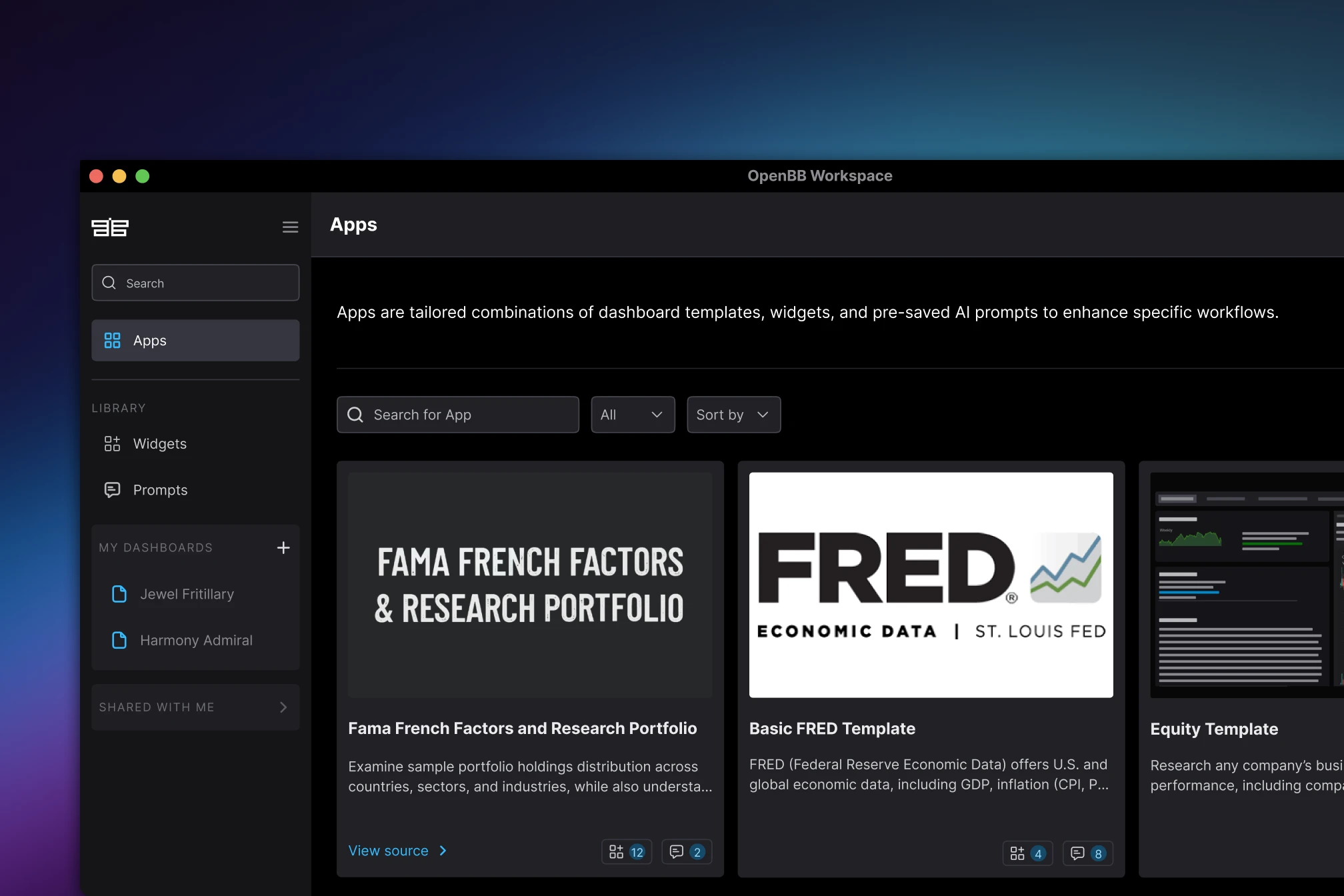
OpenBB Apps introduces a customizable platform where financial organizations can build tailored workflow solutions with dashboard templates, data widgets, and AI agents - putting firms in complete control of their data and tech stack.
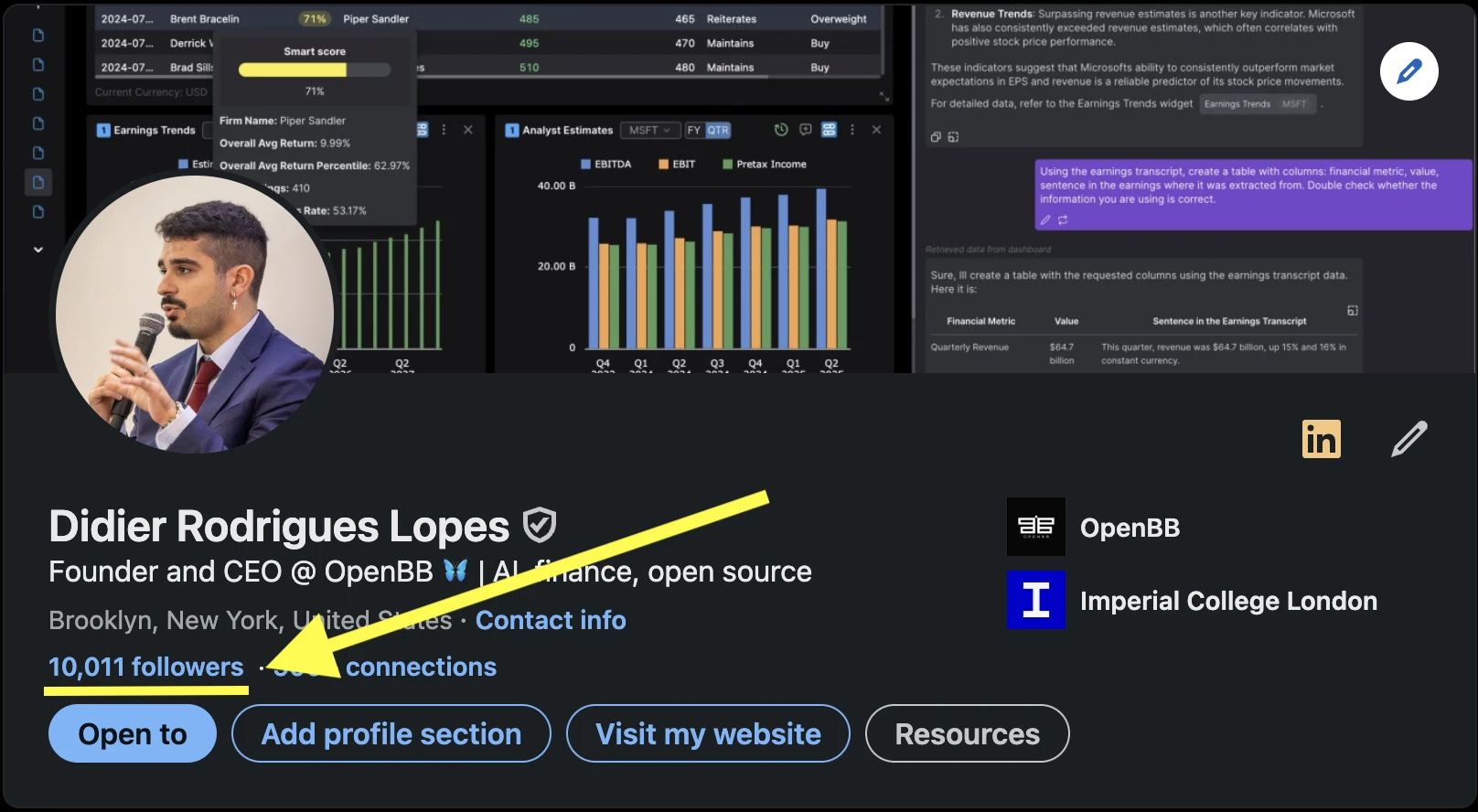
A personal reflection on my 6-year journey to 10,000 LinkedIn followers and how sharing my work publicly led to unexpected opportunities and the creation of OpenBB.
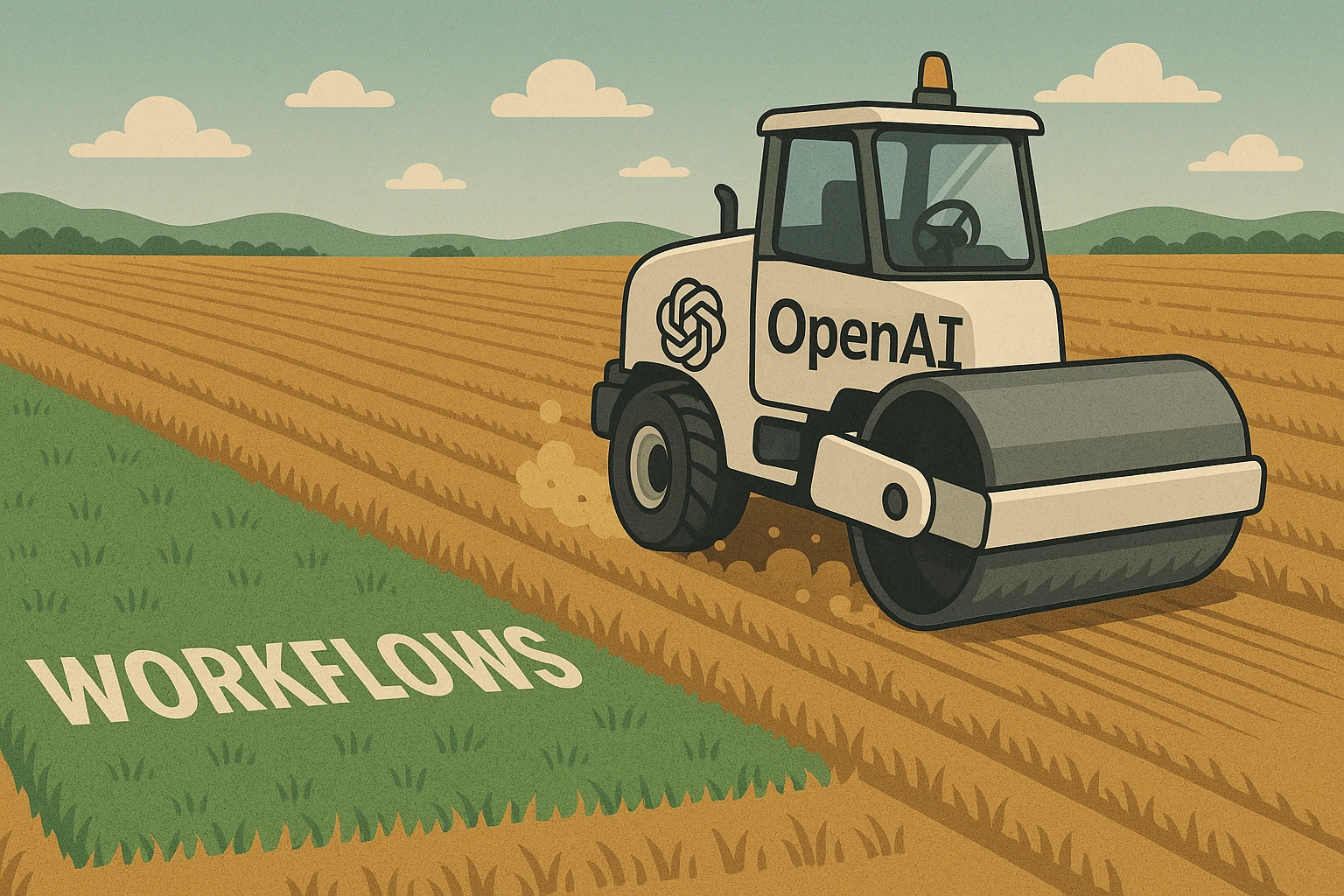
The secret to building defensible AI companies isn't better AI - it's better workflows. An insider's perspective on why some AI companies thrive while others will become obsolete with each new model release.
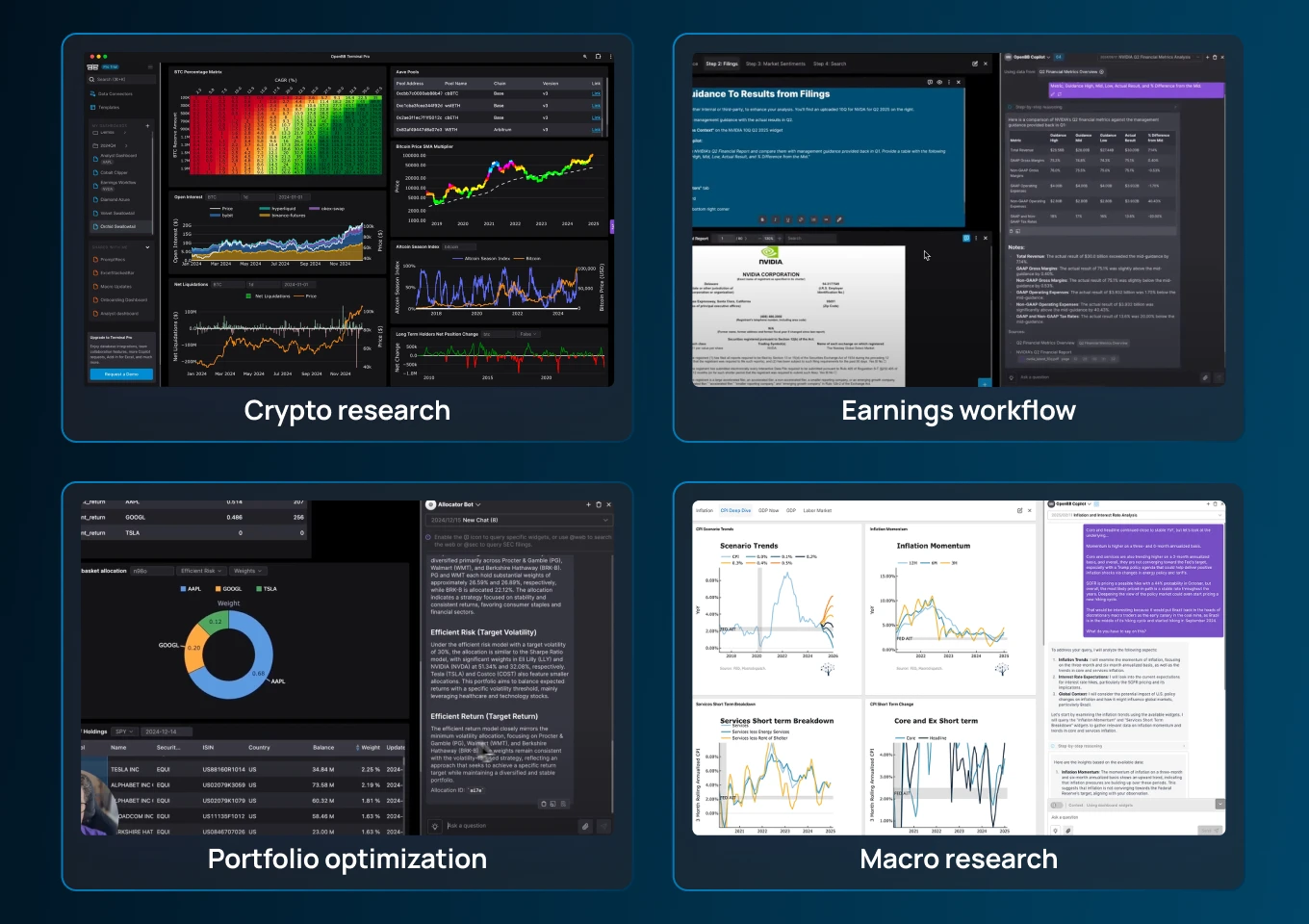
Exploring why relying on a single data vendor for financial research is unrealistic in today's complex market landscape, and how AI-driven platforms like OpenBB are transforming how professionals interact with diverse data sources to find alpha and gain competitive advantage.
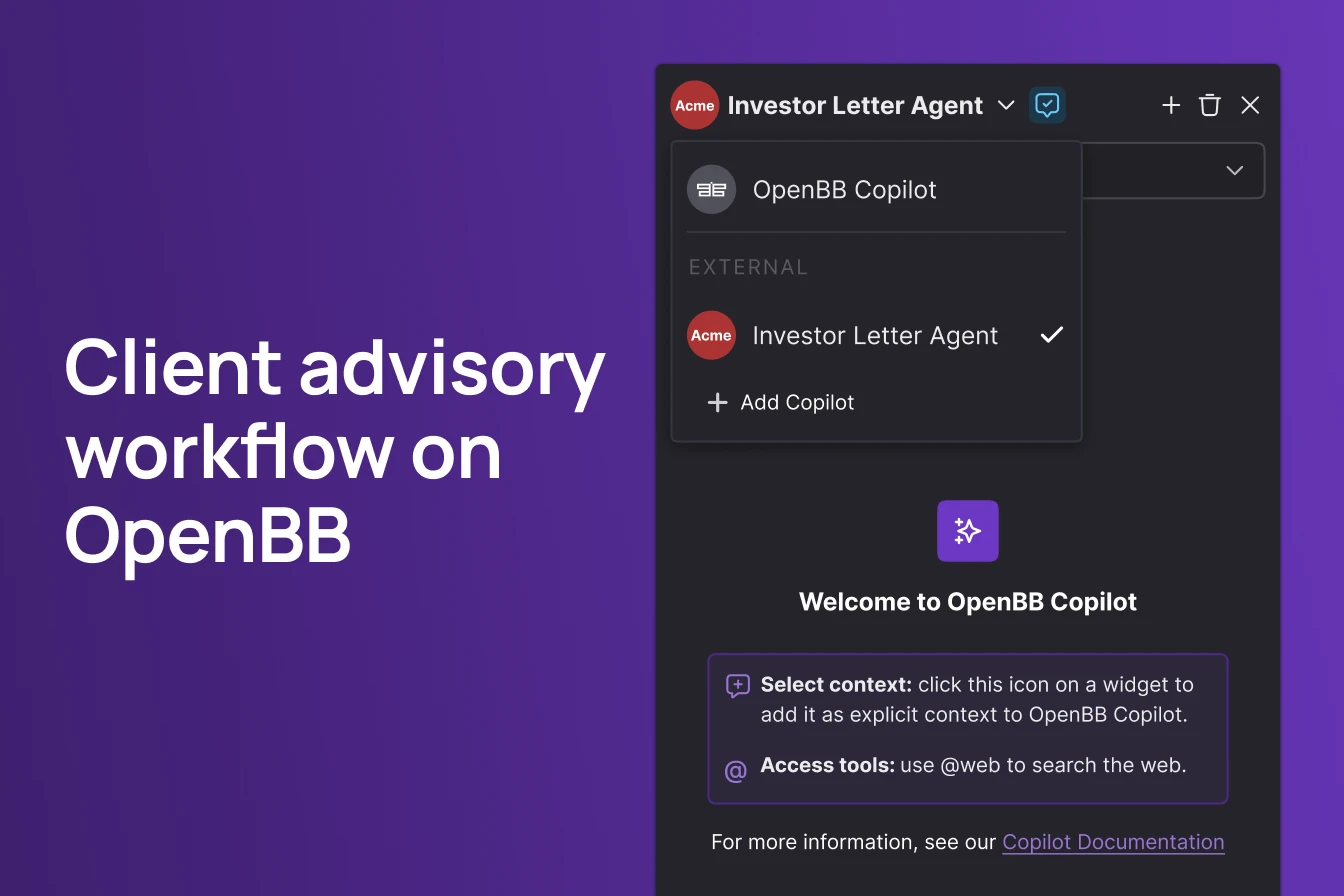
In this blog post, I'll show you how an AI agent can transform your funds performance, macro data, news around your holding companies, and more into a draft investor letter that has the same writing style as your team.
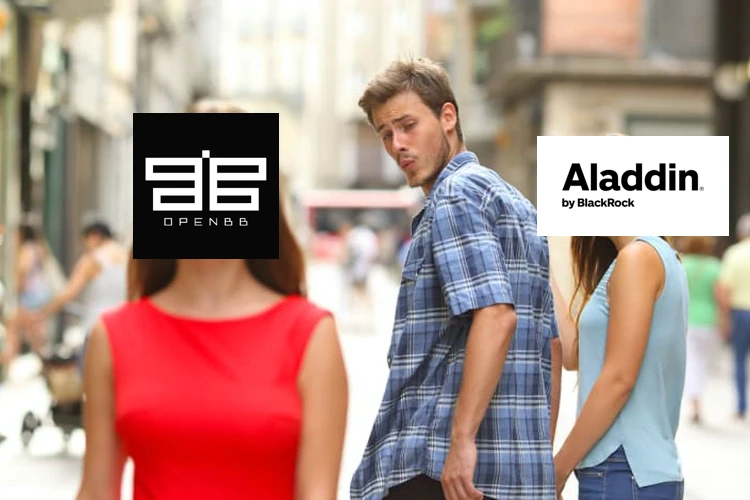
At the recent AI Engineering Summit, BlackRock unveiled their Aladdin Copilot - a platform remarkably similar to what we've built at OpenBB, but with a key difference.
While they've invested massive resources into building a closed system, we've created an open-source solution that achieves the same goals: multi-application support, seamless agent integration, explainable AI, and enterprise-grade security. Here's a deep dive into how the world's largest asset manager validated our approach to AI-powered financial workflows.
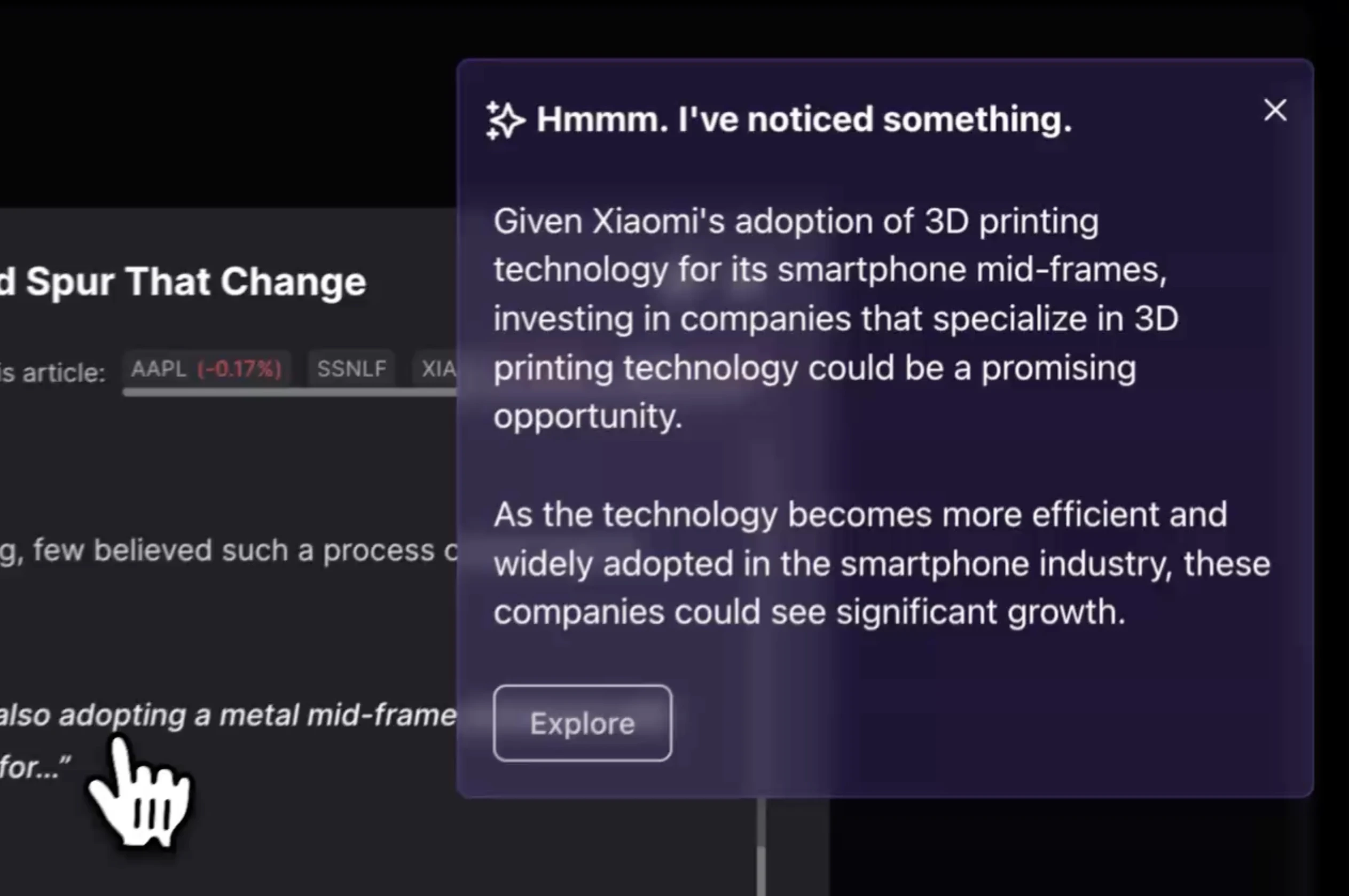
How AI is evolving from reactive to proactive in financial services, and why this shift will transform how investors discover opportunities and generate alpha.
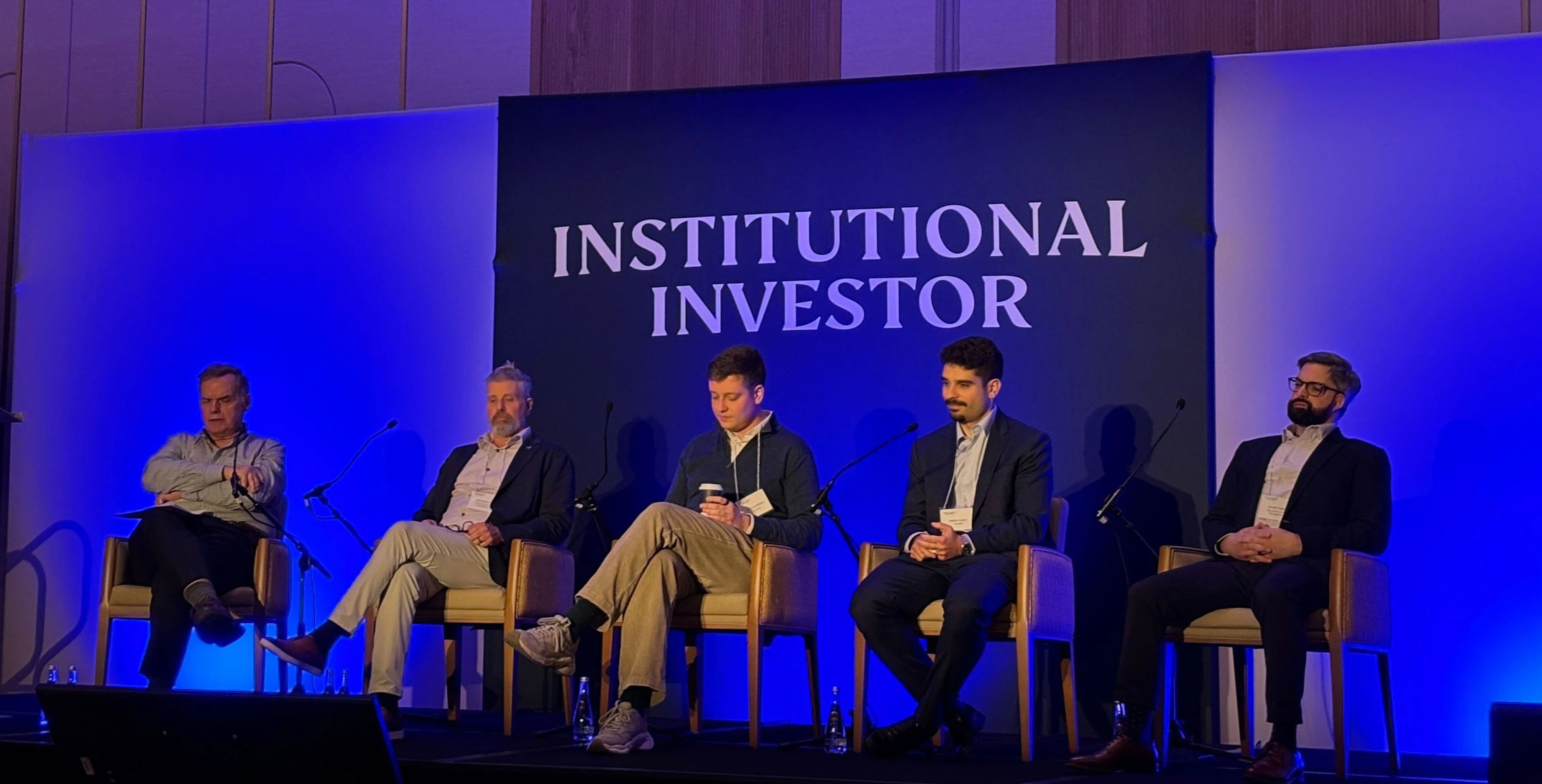
Key insights from financial services technology leaders on AI adoption, including build vs. buy strategies, data privacy concerns, technology adoption divides, and the challenges of moving from prototypes to production-ready solutions.
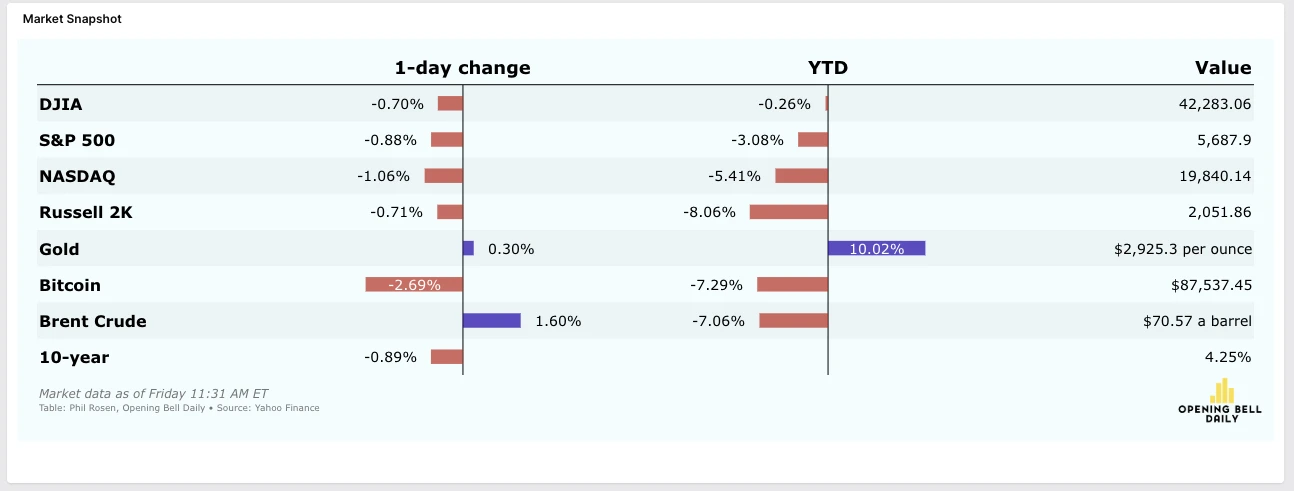
How I built a custom OpenBB widget to save my friend hours of manual work on his newsletter with 190,000+ subscribers.
The open source code is available here.

Building on OpenBB's presentation at the Anote AI Day Summit, this post explores how intelligent function calling serves as the cornerstone of our AI-native workspace for data analytics.
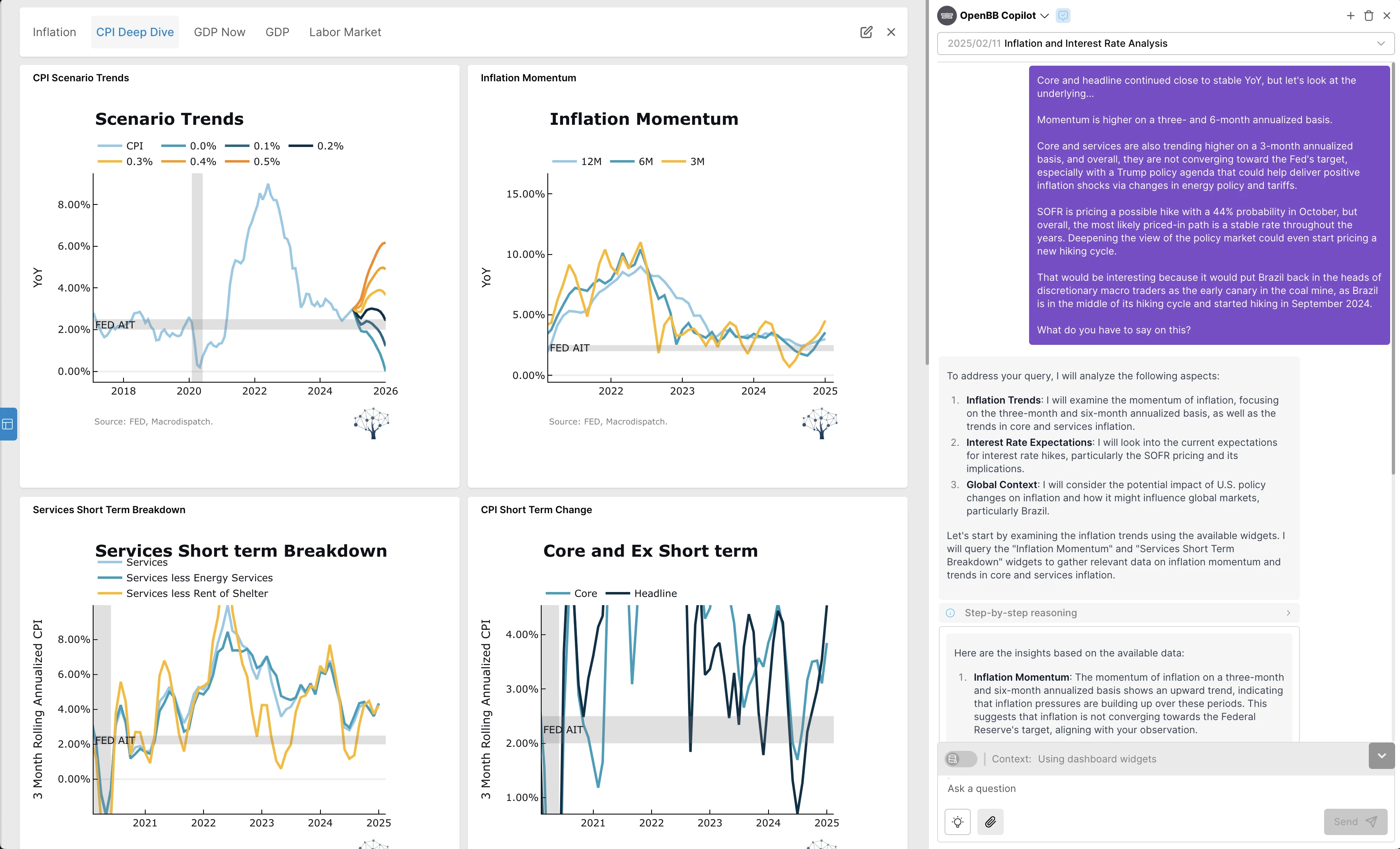
A deep dive into why the UI layer represents the next major frontier in financial technology.
While the industry has heavily invested in data, the user interface remains a critical yet overlooked bridge between raw information and actionable intelligence. This piece explores how OpenBB is leading the charge in revolutionizing how financial professionals interact with data.
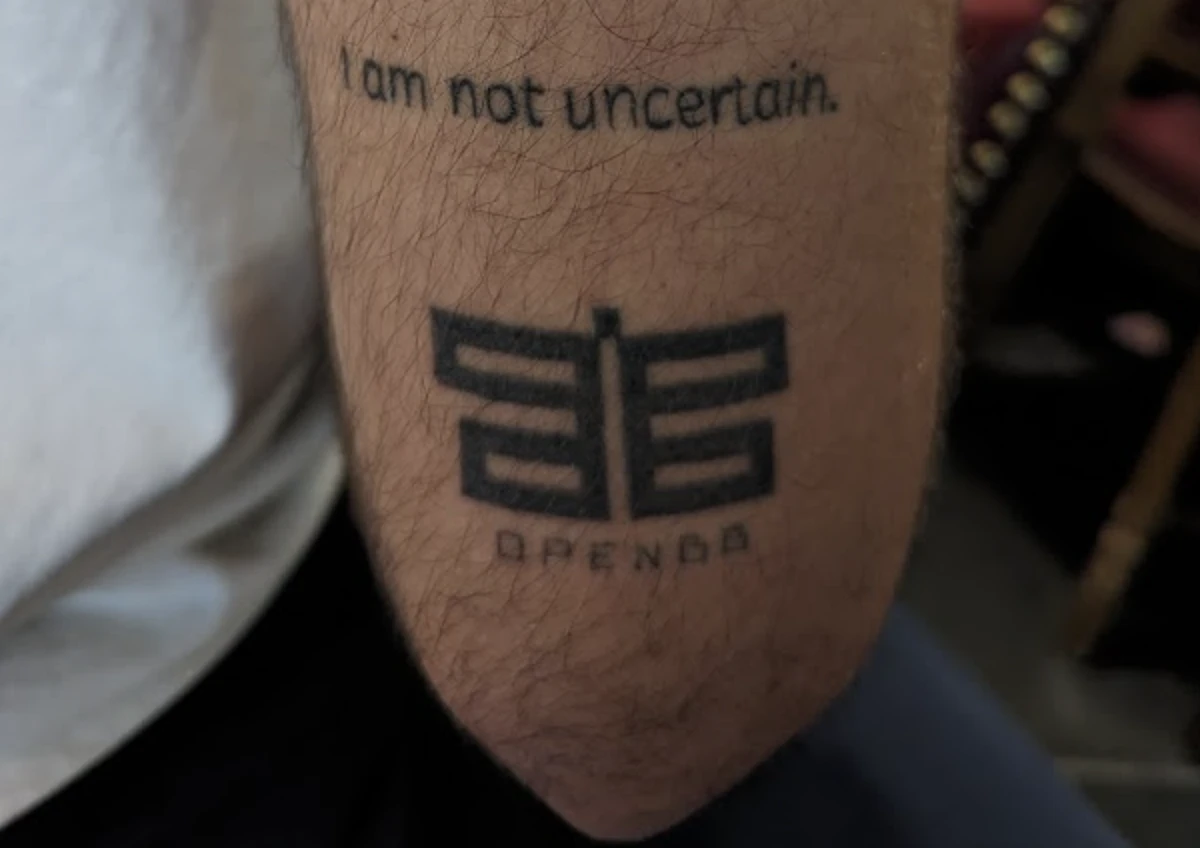
From getting the OpenBB logo tattooed to honoring a promise of a Bali trip, this is a personal reflection on what it truly means to have "skin in the game". It's not about reckless commitment, but about standing fully behind your words and actions - a principle that's shaped both my personal life and my approach to building OpenBB.
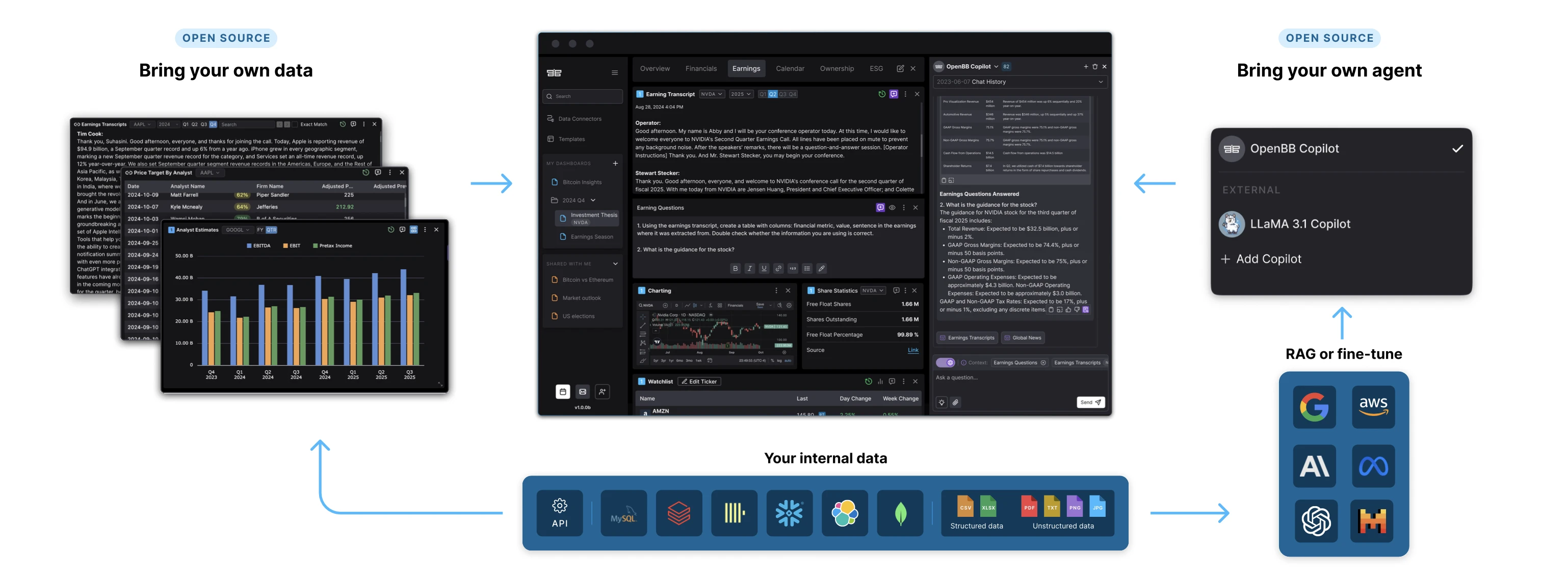
It's an open, AI-native application that unifies data, streamlines workflows, and delivers enterprise-grade collaboration and control for teams of all sizes
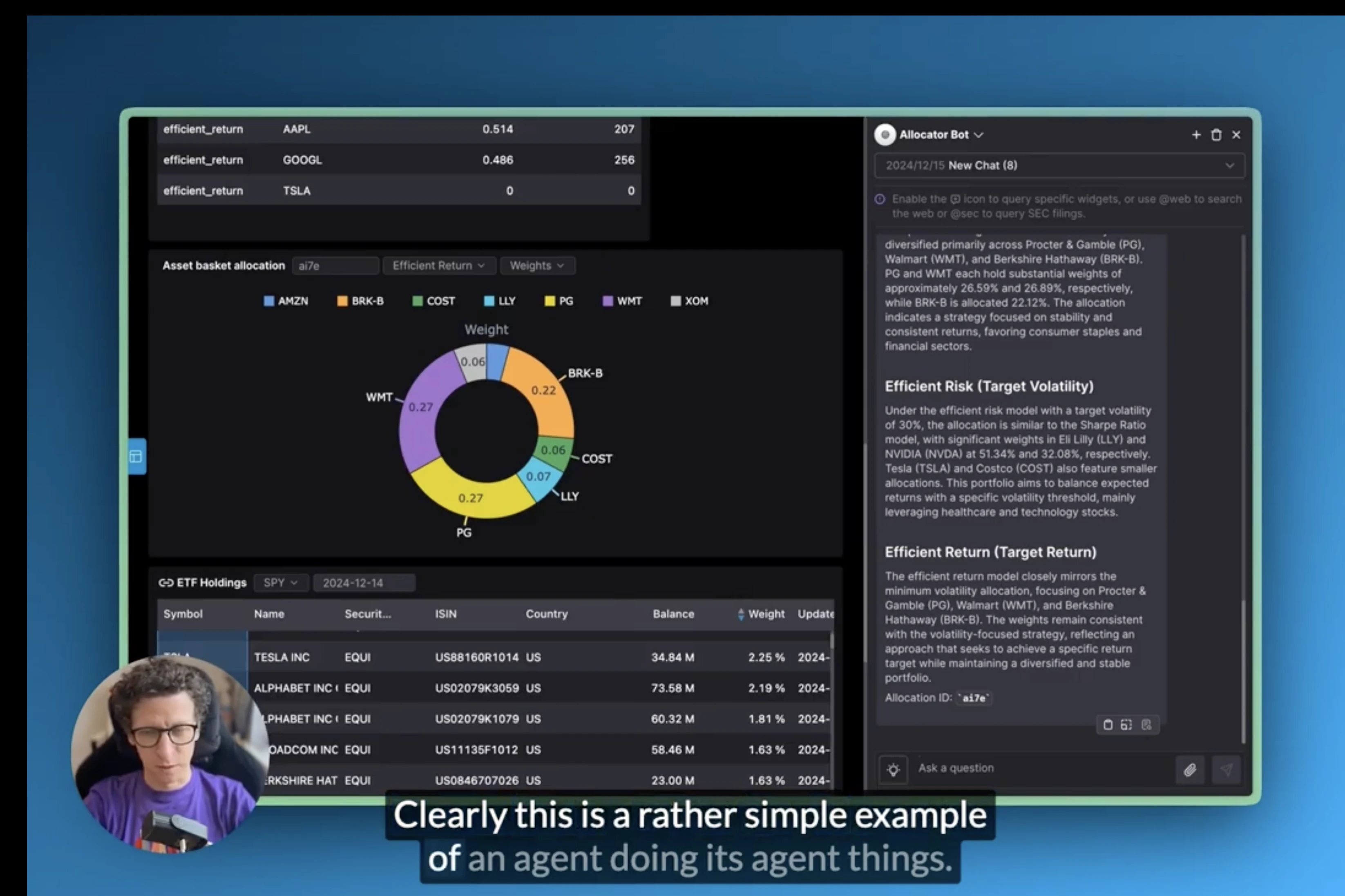
AI is revolutionizing software development costs and shifting value creation in the financial industry. I talk about the growing importance of data infrastructure, the rise of customizable solutions, and how OpenBB Workspace enables firms to build specialized AI-powered financial tools.
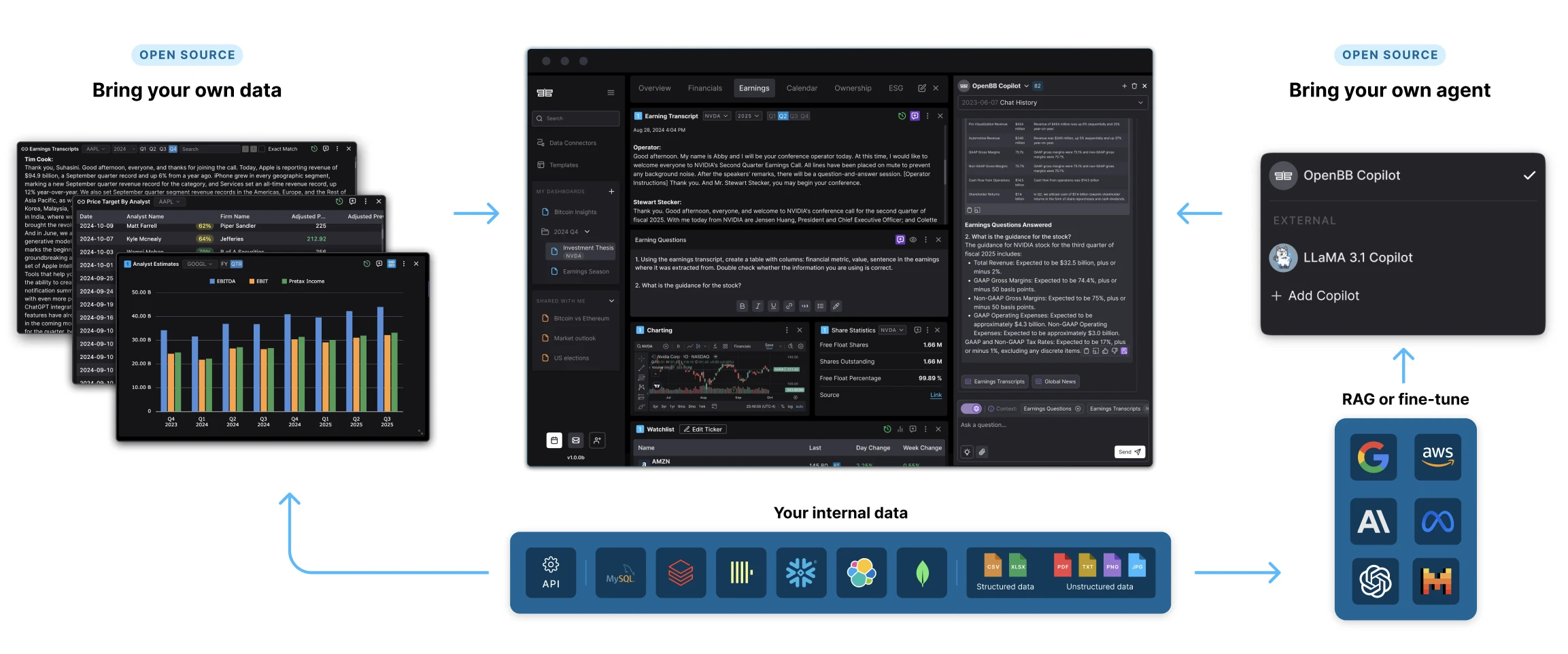
Why the future of financial analysis isn't about chatbots, but about intelligent workspaces that combine your data, tools, and AI exactly when you need them.
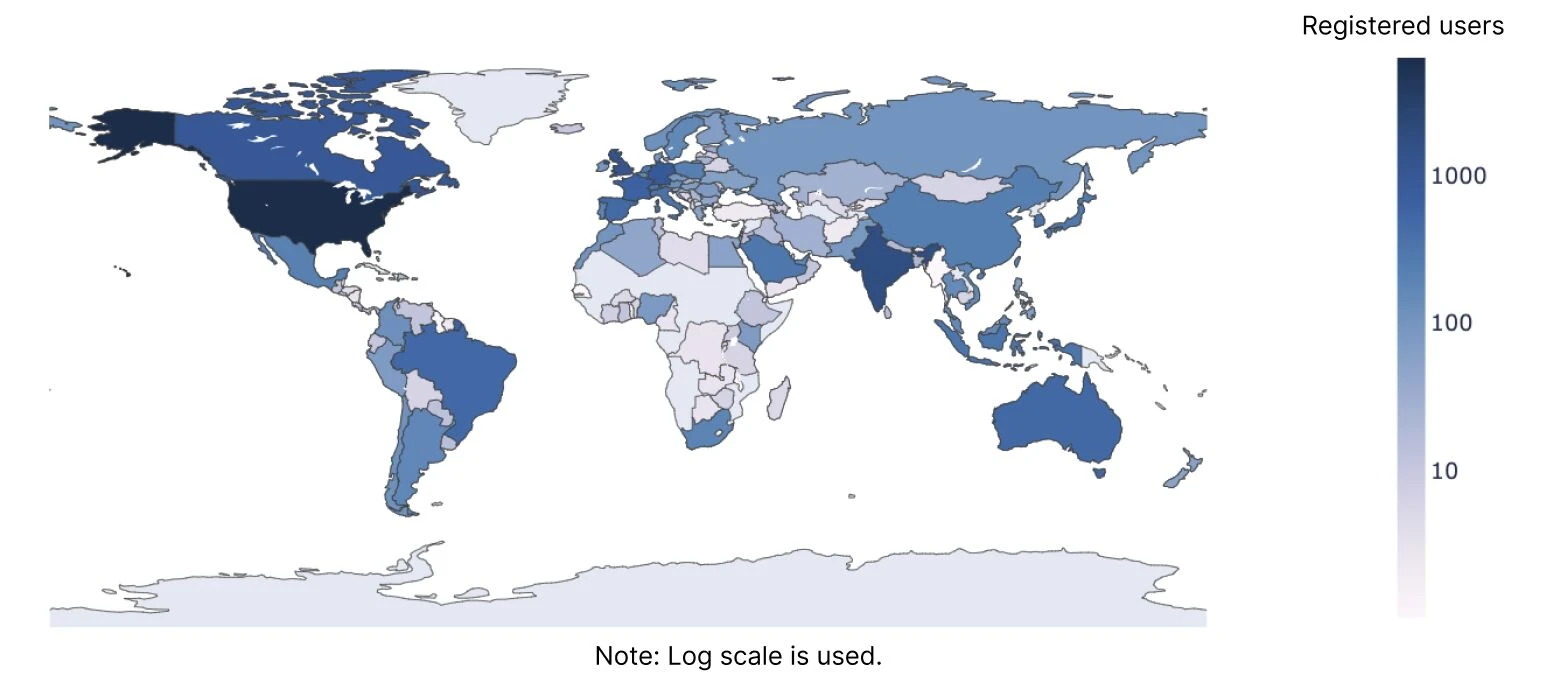
This is how OpenBB is reaching users worldwide with Chrome's translation features, making financial analytics accessible in multiple languages and expanding our presence across 84% of countries since launch.
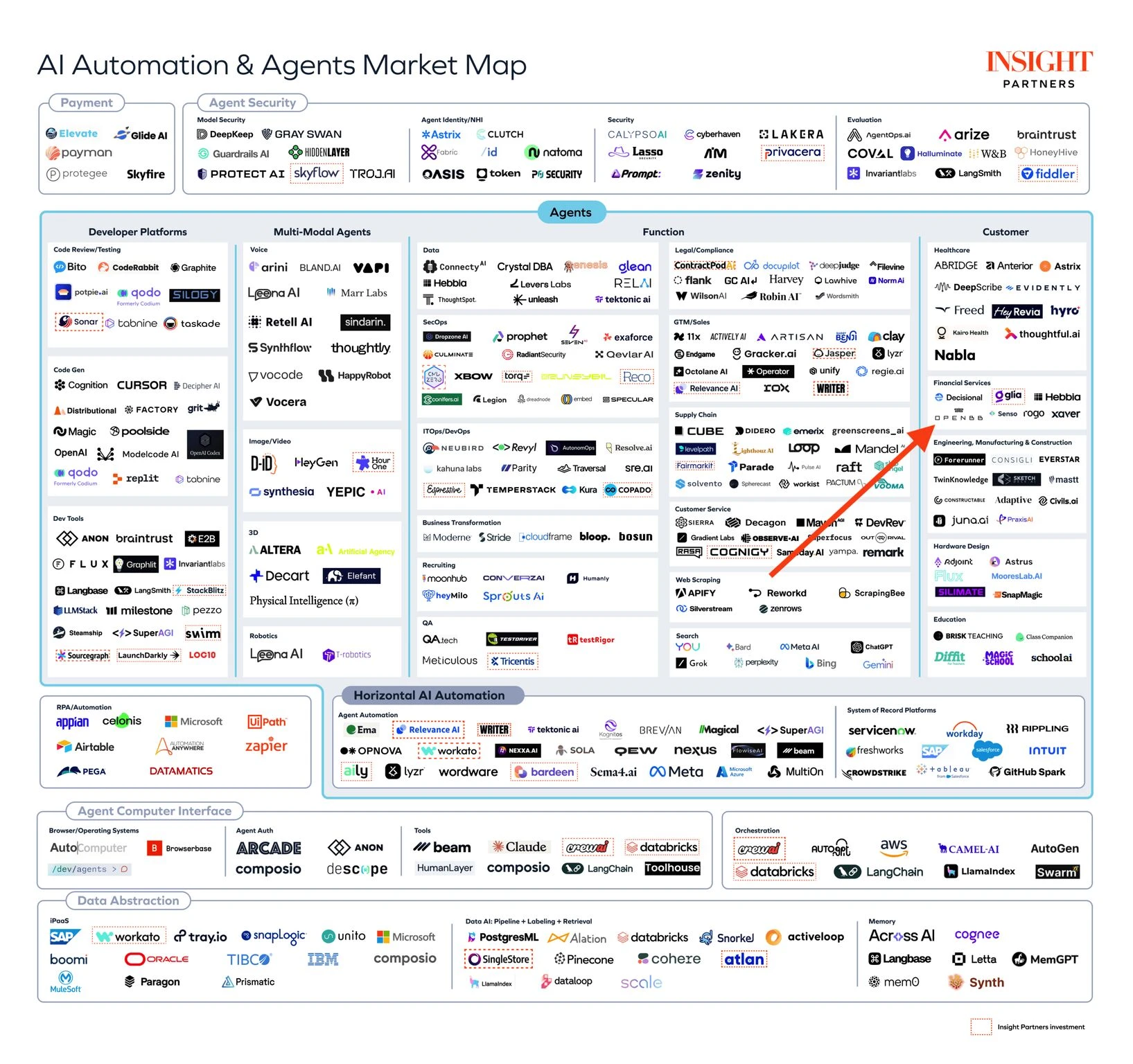
Why I believe AI agents need the same comprehensive workspace tools as human analysts, moving beyond simple chat interfaces to enable true financial research and analytics.
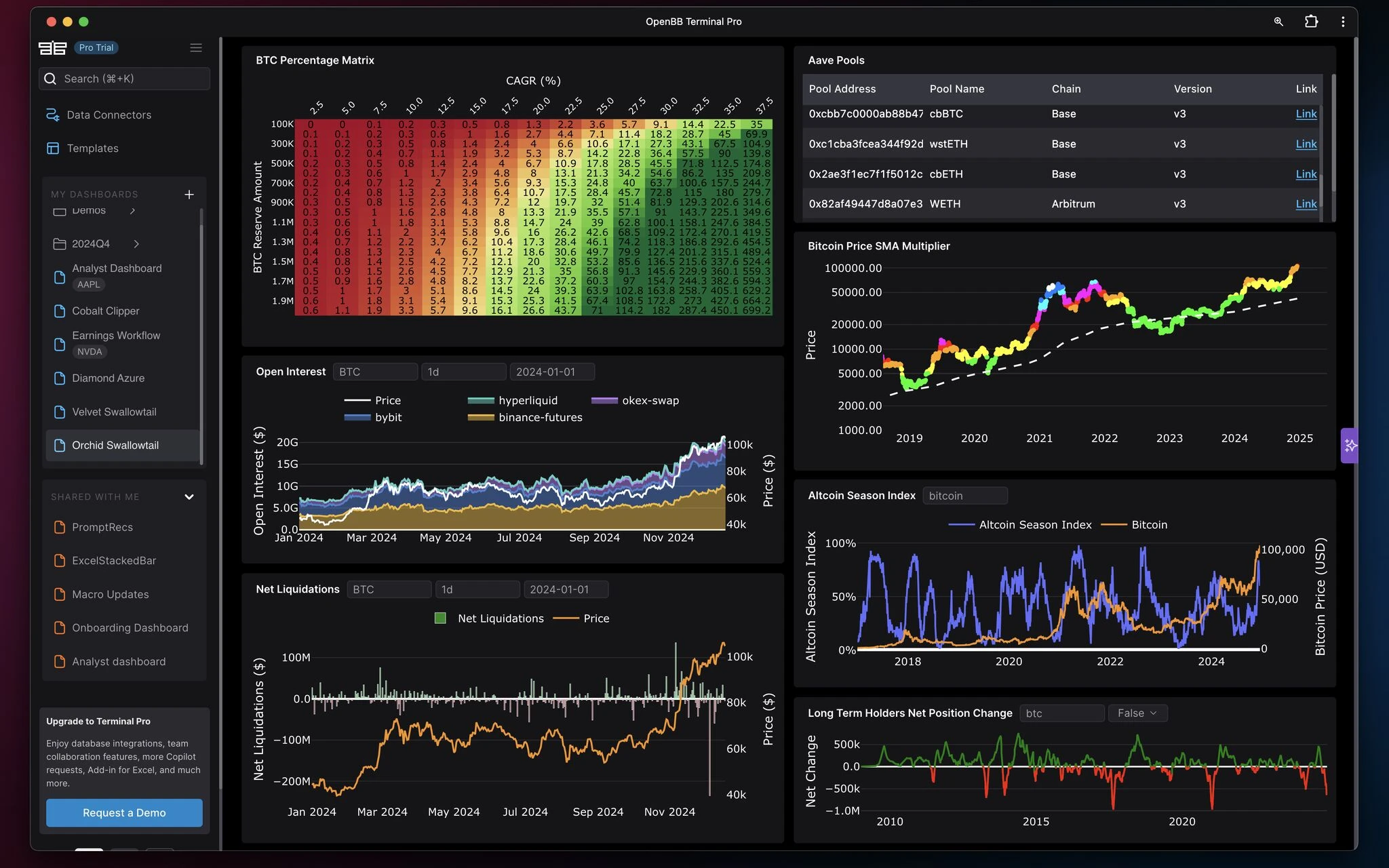
My friend Matt, from VanEck, built a backend with data from Coingecko, Velodata, Artemis, CCdata, Glassnode, MSTR Tracker, Telegram and Google - all in OpenBB.

At OpenBB, we removed Performance Improvement Plans (PIPs) in an attempt to increase the company's talent density pool rate.

Maximizing team transparency through focused feedback sessions.
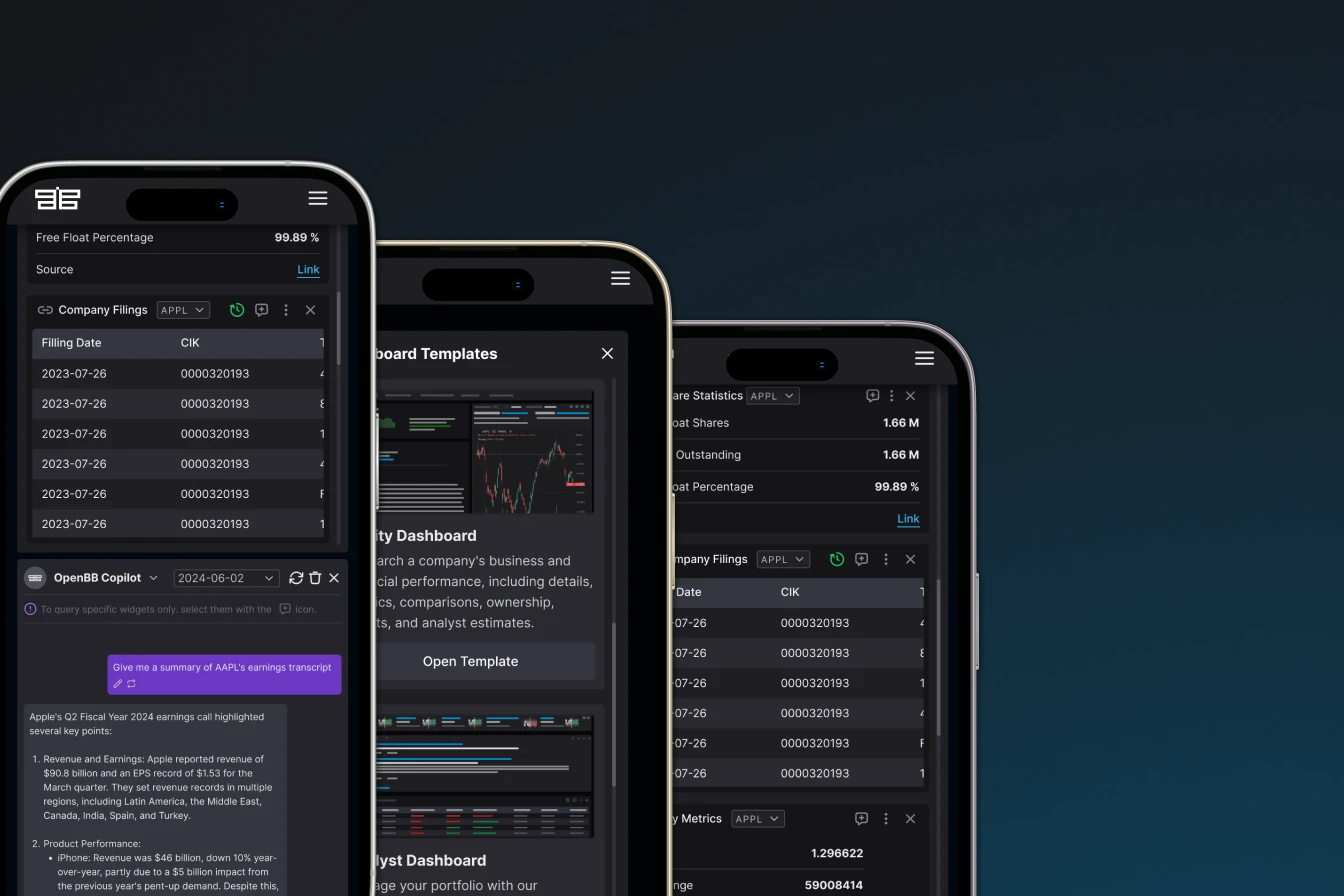
How we built a mobile app, in 1 evening, with 1 engineer.
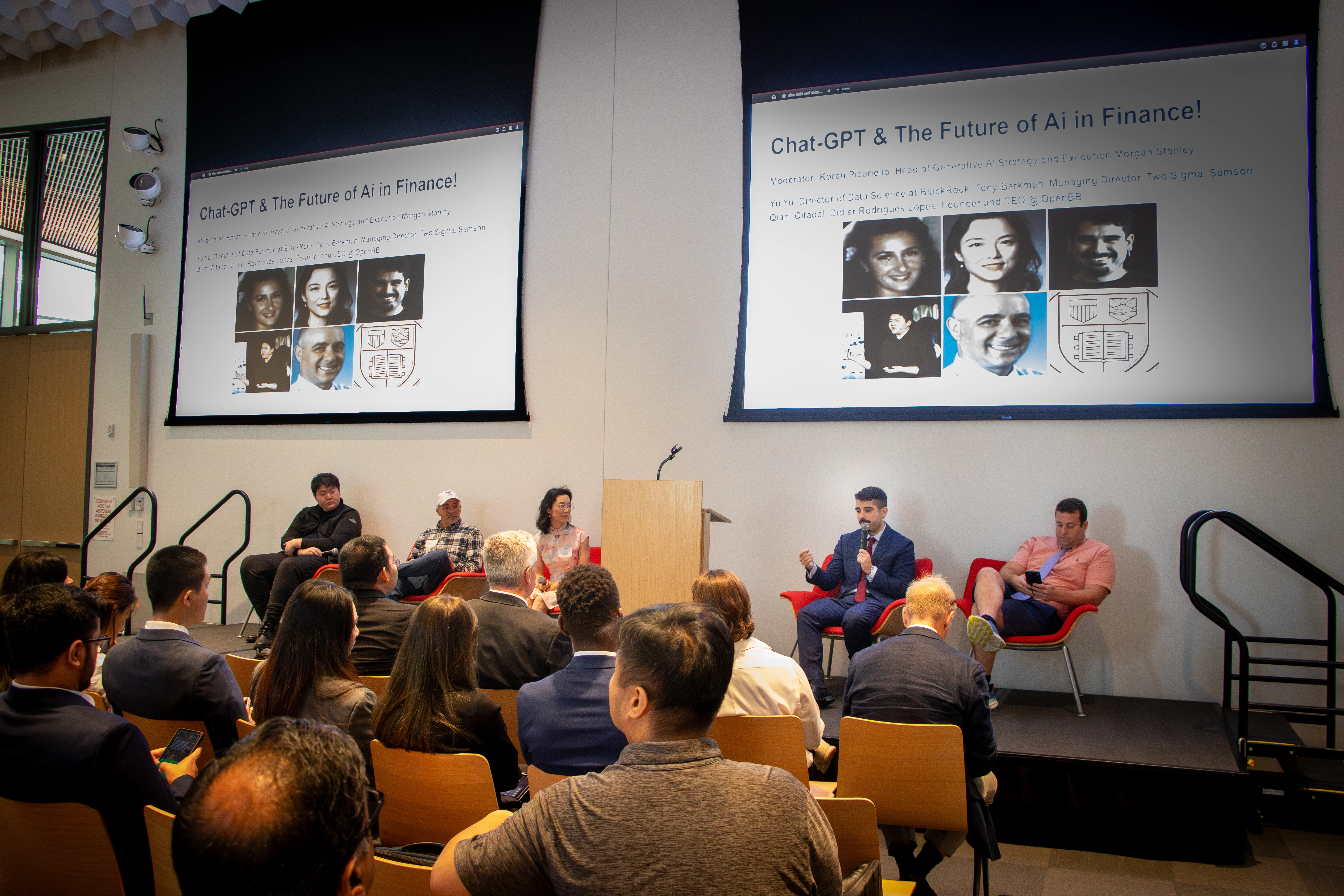
I took the stage at the Cornell Quant Conference alongside Yu Yu (BlackRock) Tony Berkman (Two Sigma), and Samson Qian (Citadel), to discuss ChatGPT & The Future of AI in Finance.
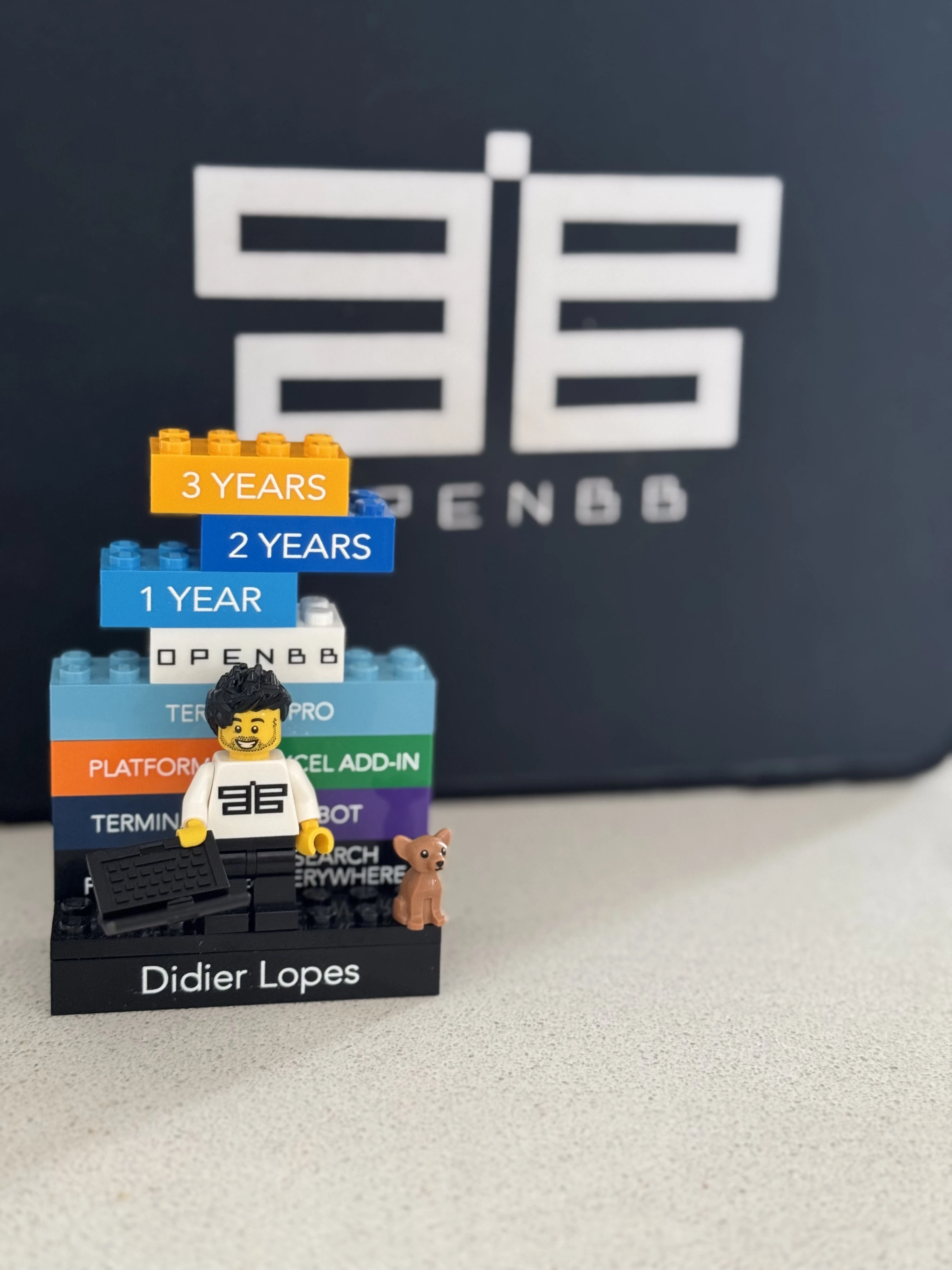
The OpenBB journey started officially 3 years ago.
So I want to celebrate it by sharing 36 lessons I learned over the past 36 months as a founder and CEO of a fintech company.
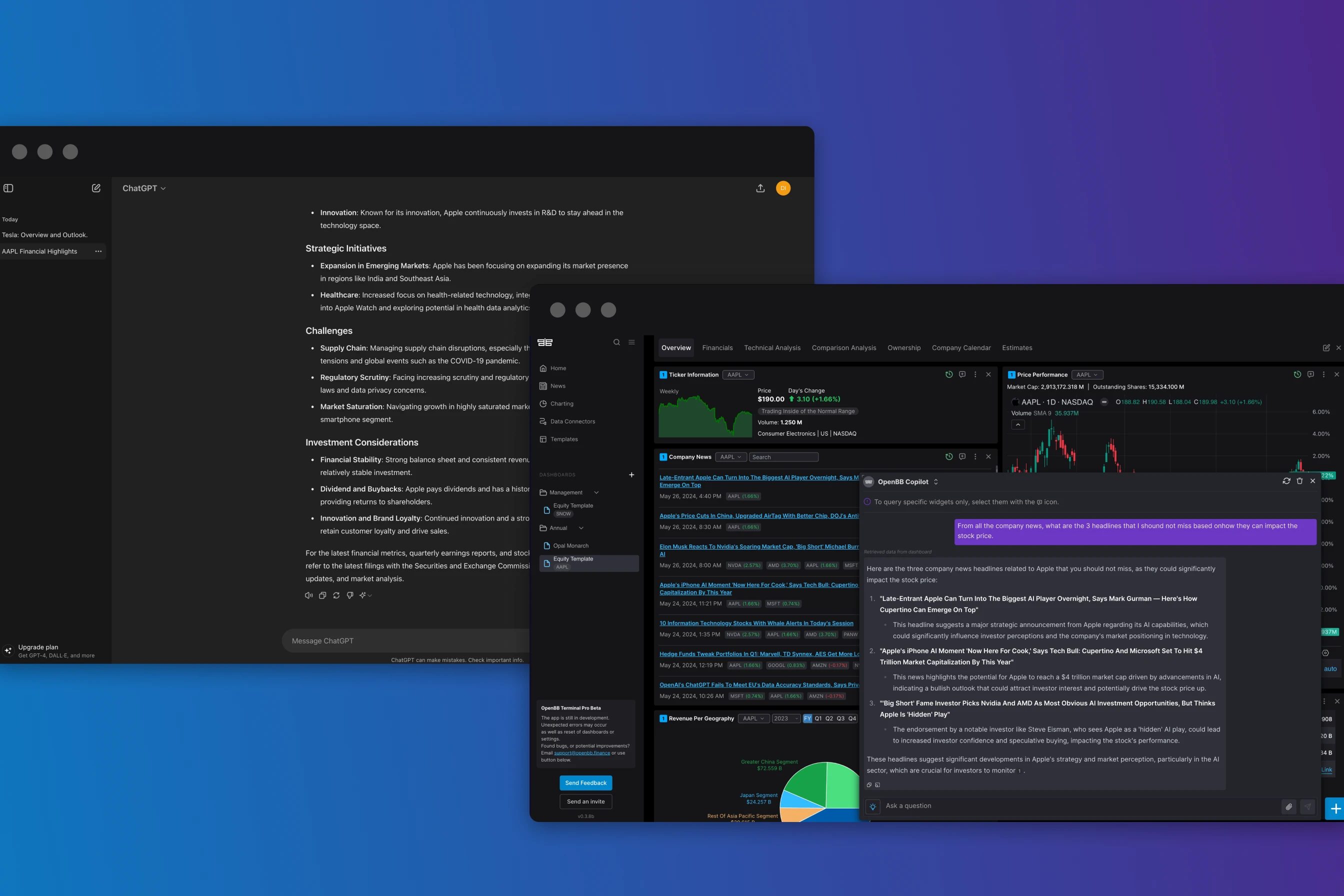
Financial assistants structured like ChatGPT are great for quick searches but fall short for comprehensive investment research. They are limited by their one-dimensional approach, which hinders efficient data retrieval and long-term usability. Read on to discover how OpenBB Terminal Pro addresses these issues with a three-dimensional solution.
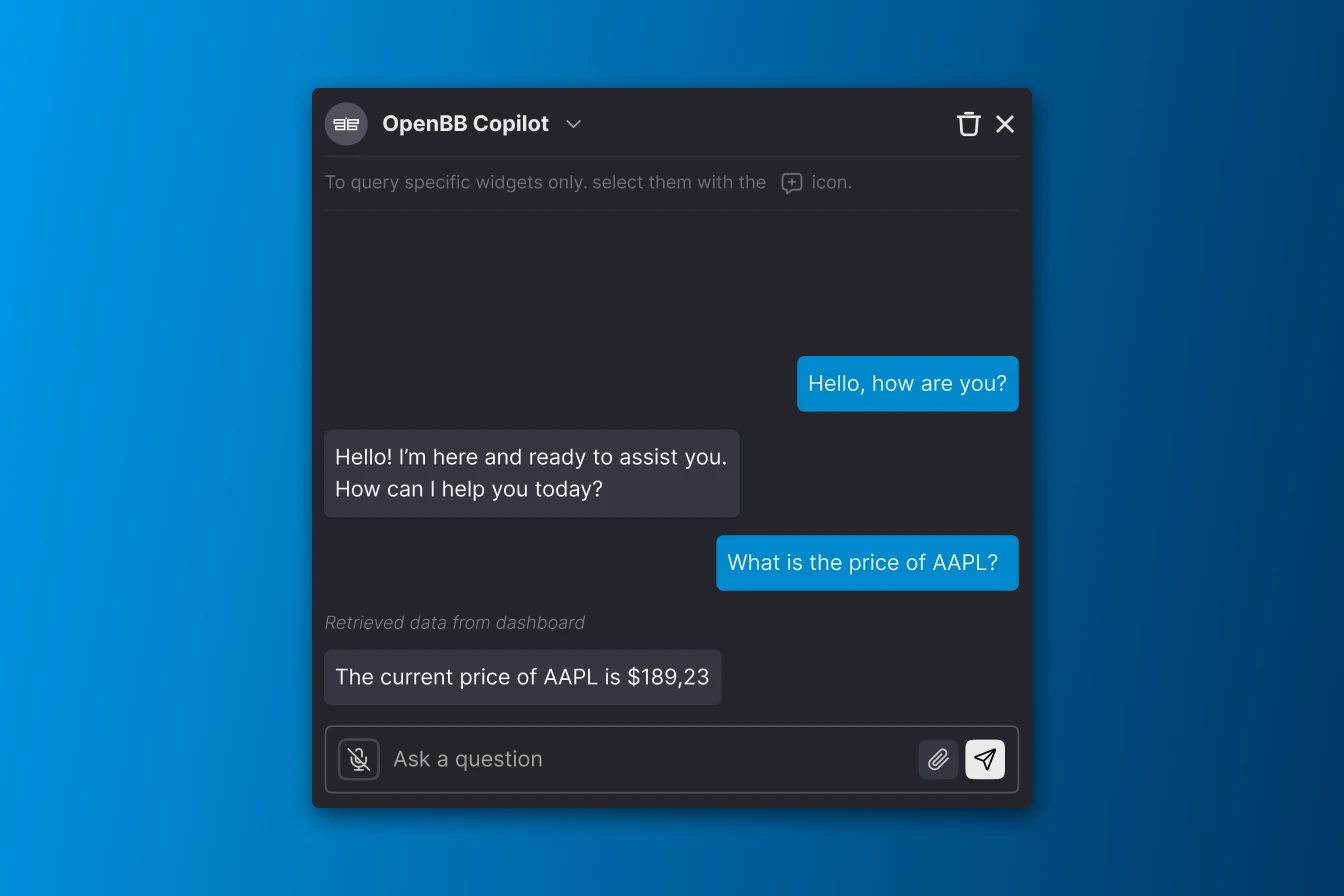
For the past few weeks, we’ve been working on the OpenBB Copilot, an ever-present financial analyst at your fingertips with the OpenBB Terminal Pro.
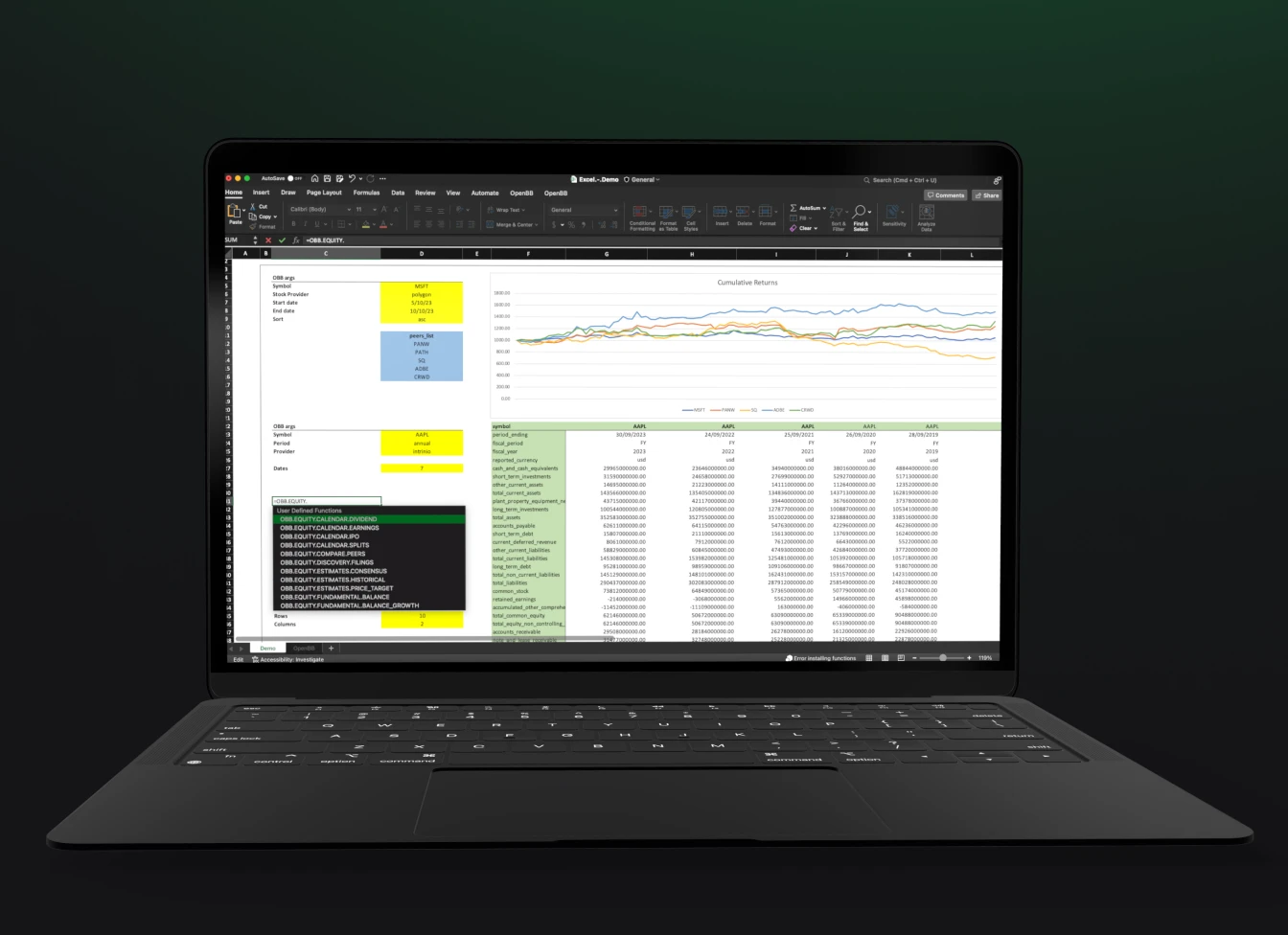
We acknowledged the enduring centrality of Excel in the financial sector, so we're now making data from the Terminal Pro readily available in Excel. We're also excitedly working to integrate the "Bring Your Own Data" feature into our Excel Add-in, a move we foresee as a transformative step in the financial data industry.
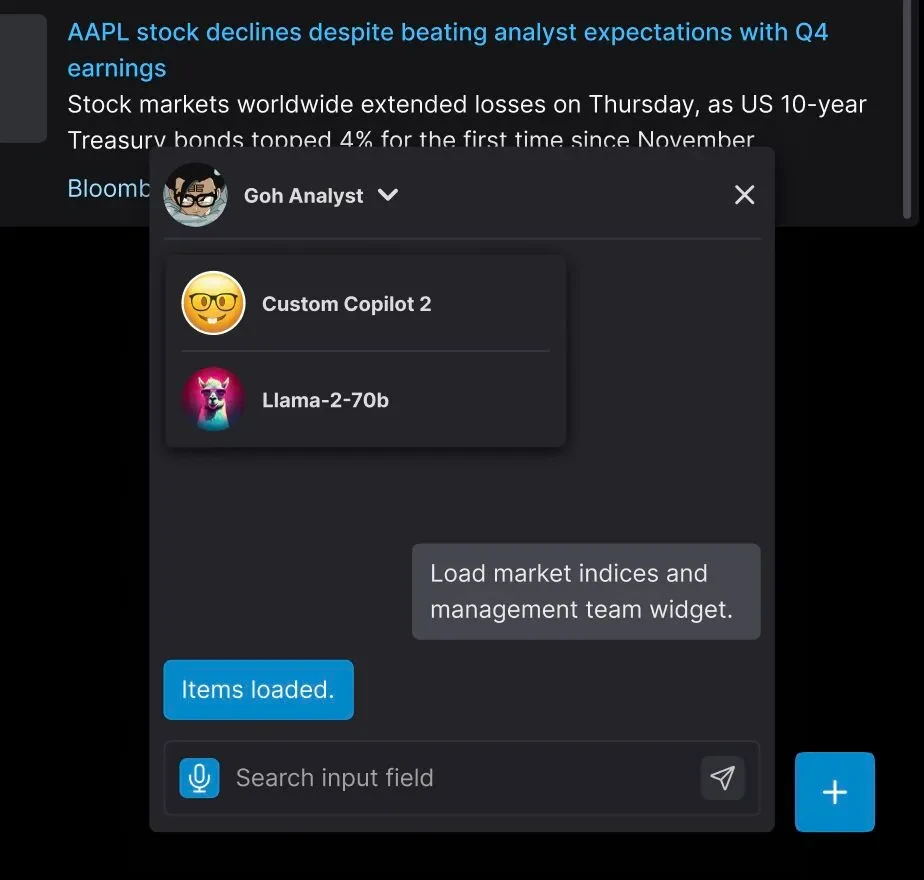
Companies will own multiple fine-tuned LLMs/SLMs for specific tasks.
Our Platform aims to empower the OpenBB Copilot, an AI-powered financial analyst, to perform tasks ranging from knowledge retrieval to fully autonomous analysis. The architecture involves task decomposition, tool retrieval, and subtask agents, showcasing impressive results in both deterministic and non-deterministic workflows. Read on to explore its capabilities and don't forget to watch the demos.
The open source code is available here.
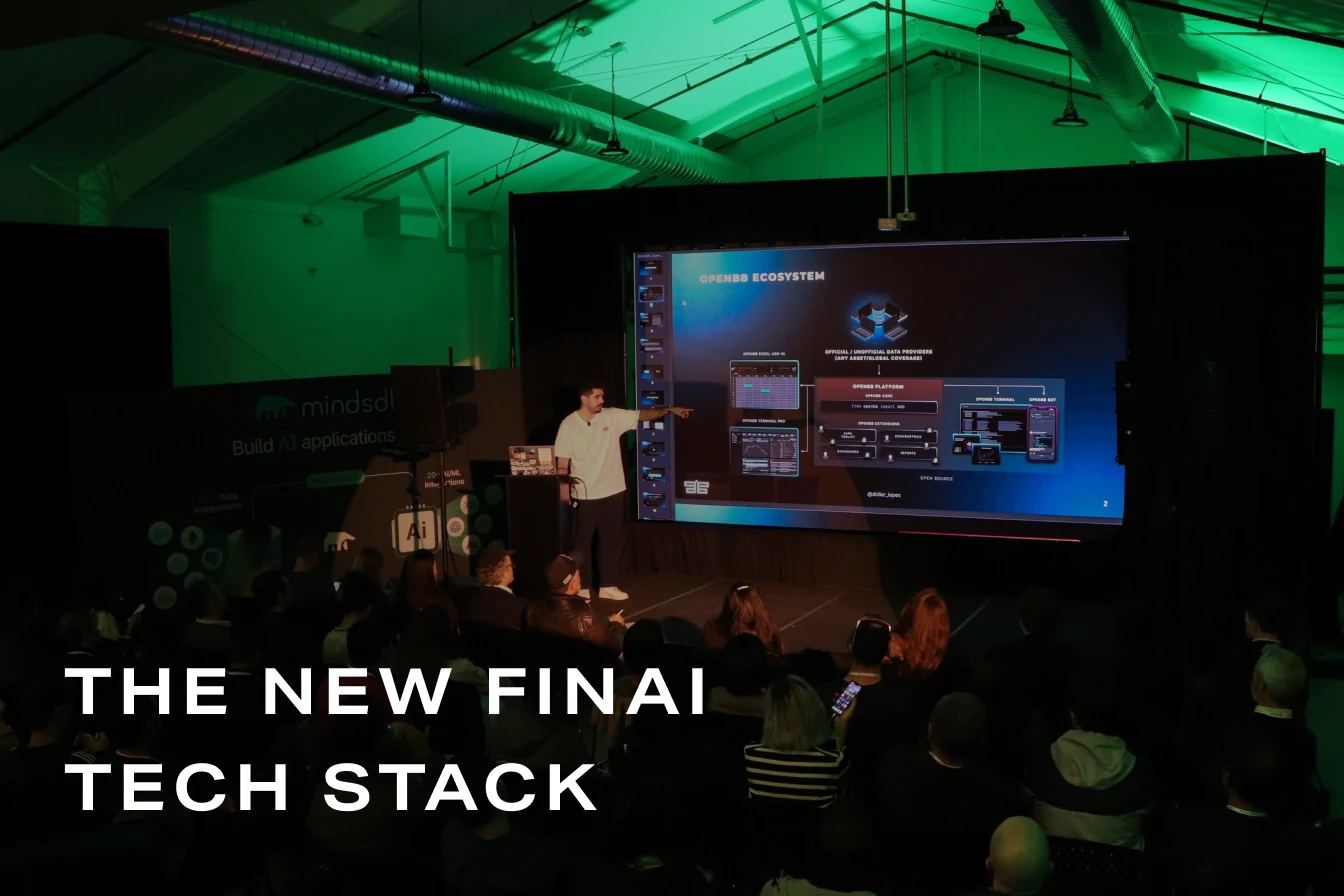
This blog post delves into how our collaboration with MindsDB, Nixtla, LlamaIndex, and Langchain is revolutionizing the financial world. Read on to learn all about the event "The New FinAI Tech Stack" held last week in SF, California.
Today, we are thrilled to announce the new OpenBB SDK, a game-changing platform that is now divided into the robustness of OpenBB Core and the limitless potential of OpenBB extensions.
The open source code is available here.
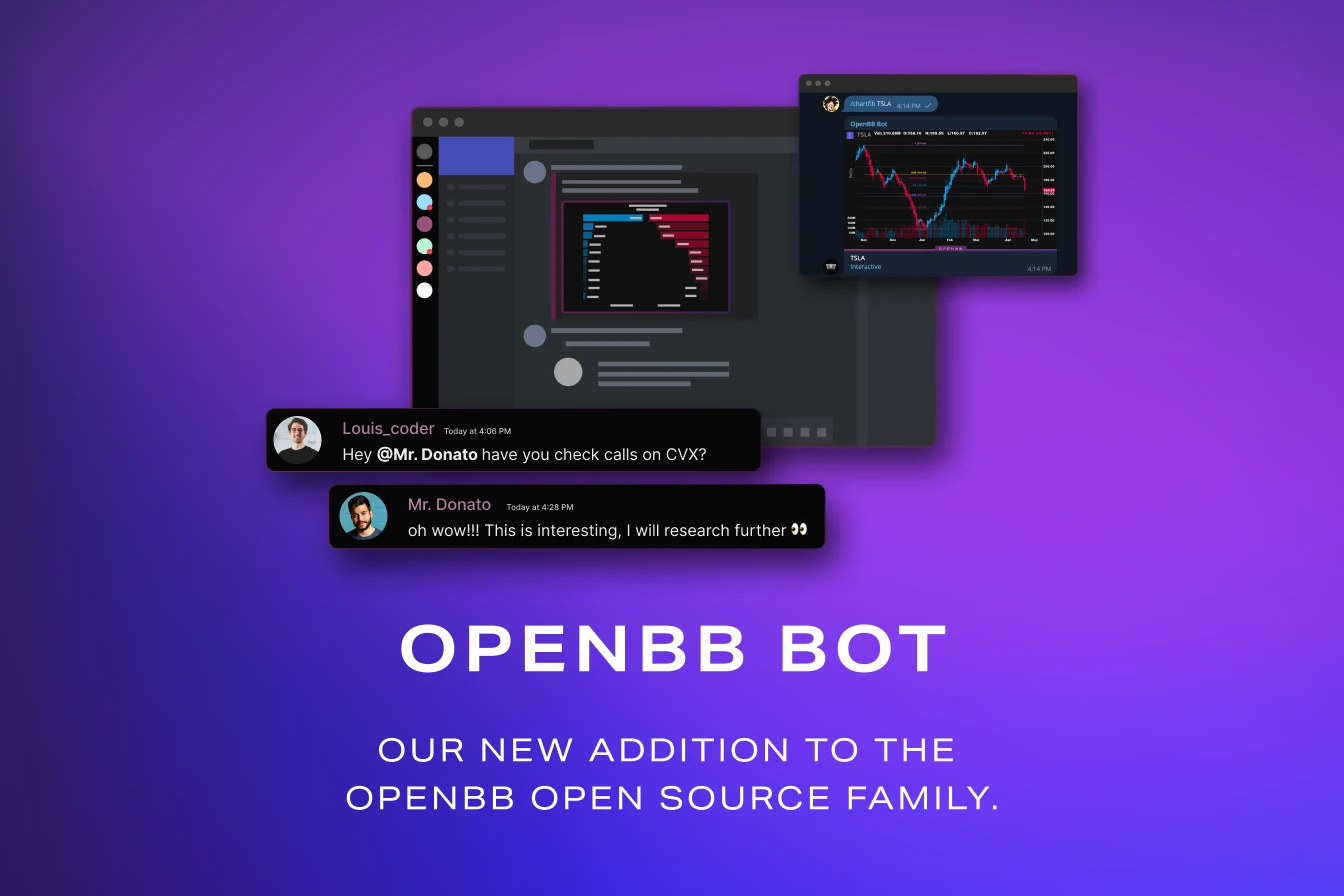
The OpenBB Bot is now open source. Check out our Discord Bot architecture now on GitHub.
The open source code is available here.
With the launch of the OpenBB Terminal Pro approaching, we're excited to announce the hiring of Michael Struwig, a Ph.D. with expertise in AI and quantitative finance. Michael will help us to further our AI capabilities, reinforcing our commitment to innovation in the open-source finance space.
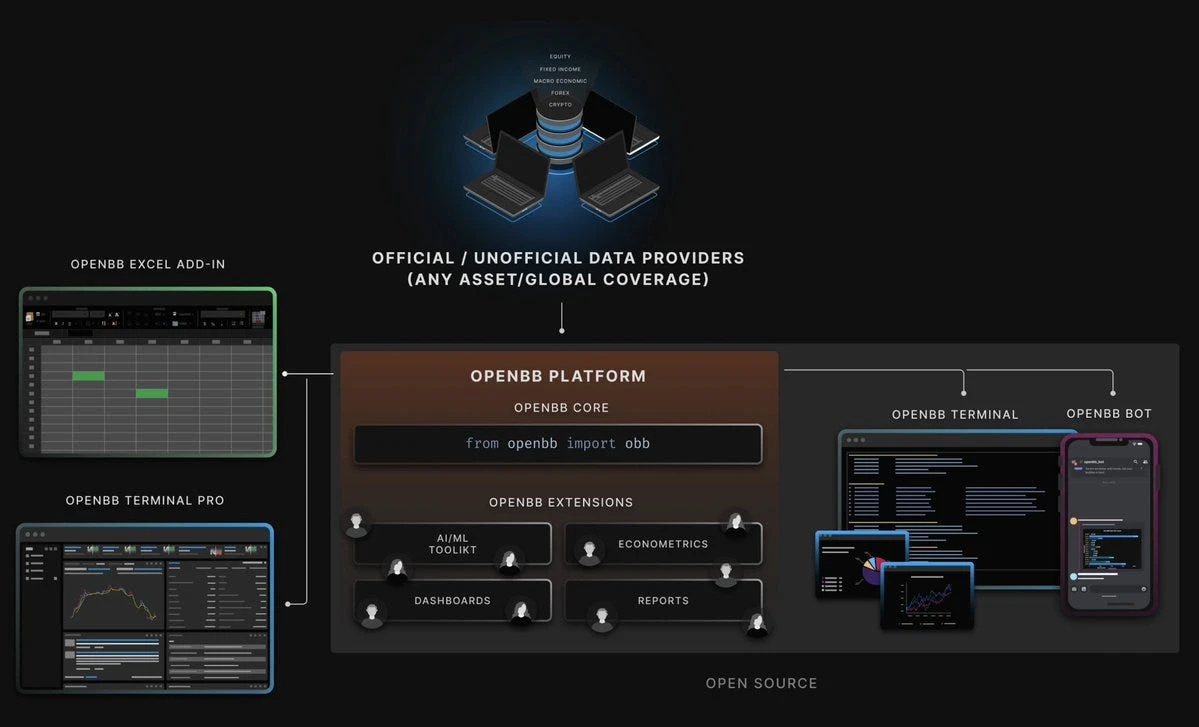
This blog post discusses the process and challenges of building the world's investment research infrastructure. It provides an insight into the products developed by the OpenBB team and their efficient operation.
The open source code is available here.
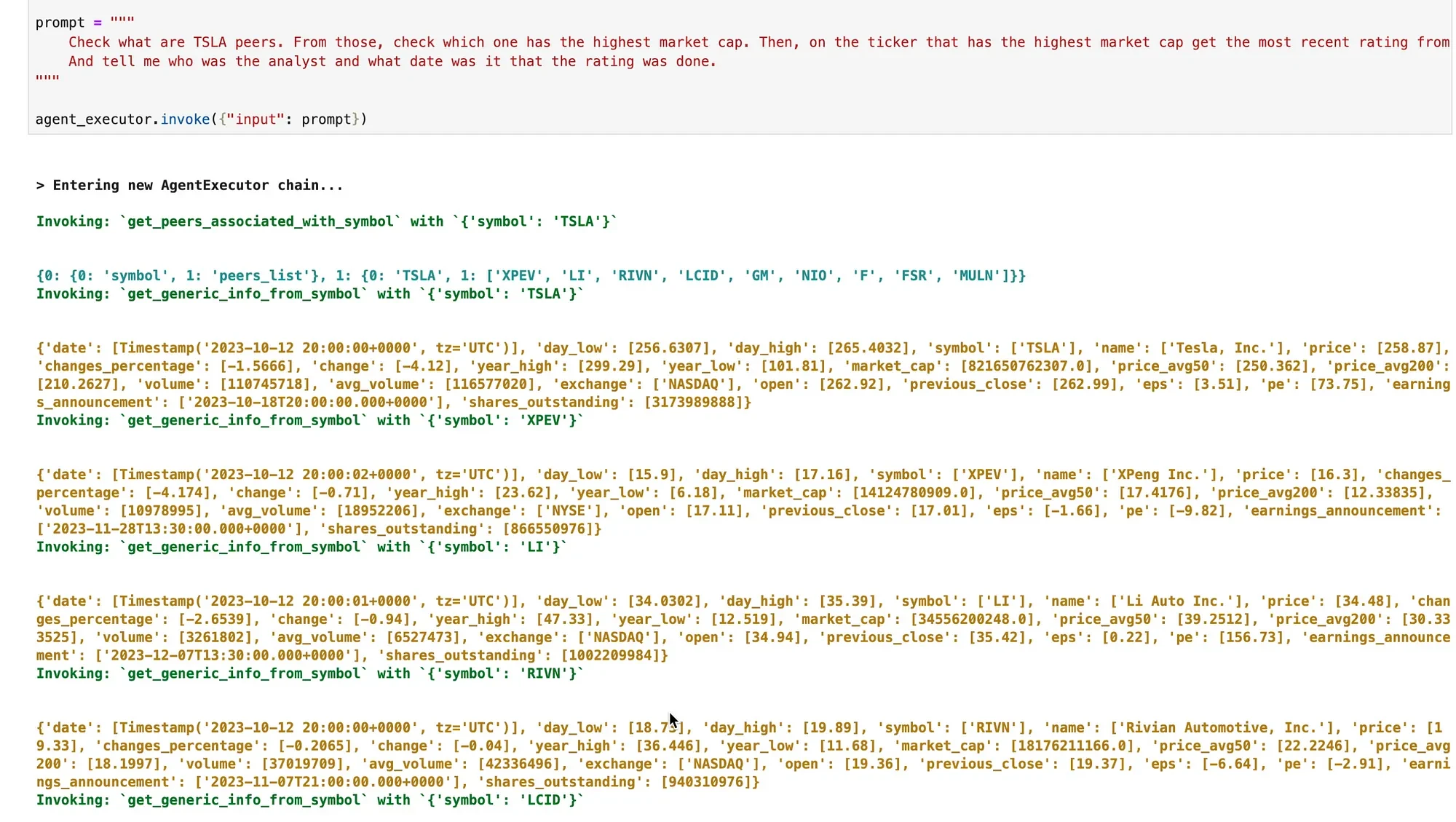
This blog post discusses our $500k investment in building the best platform for AI using financial data. We focus on the rebranding of OpenBB SDK to OpenBB Platform, its features, and the potential payoff of this bet in 2024.
The open source code is available here.
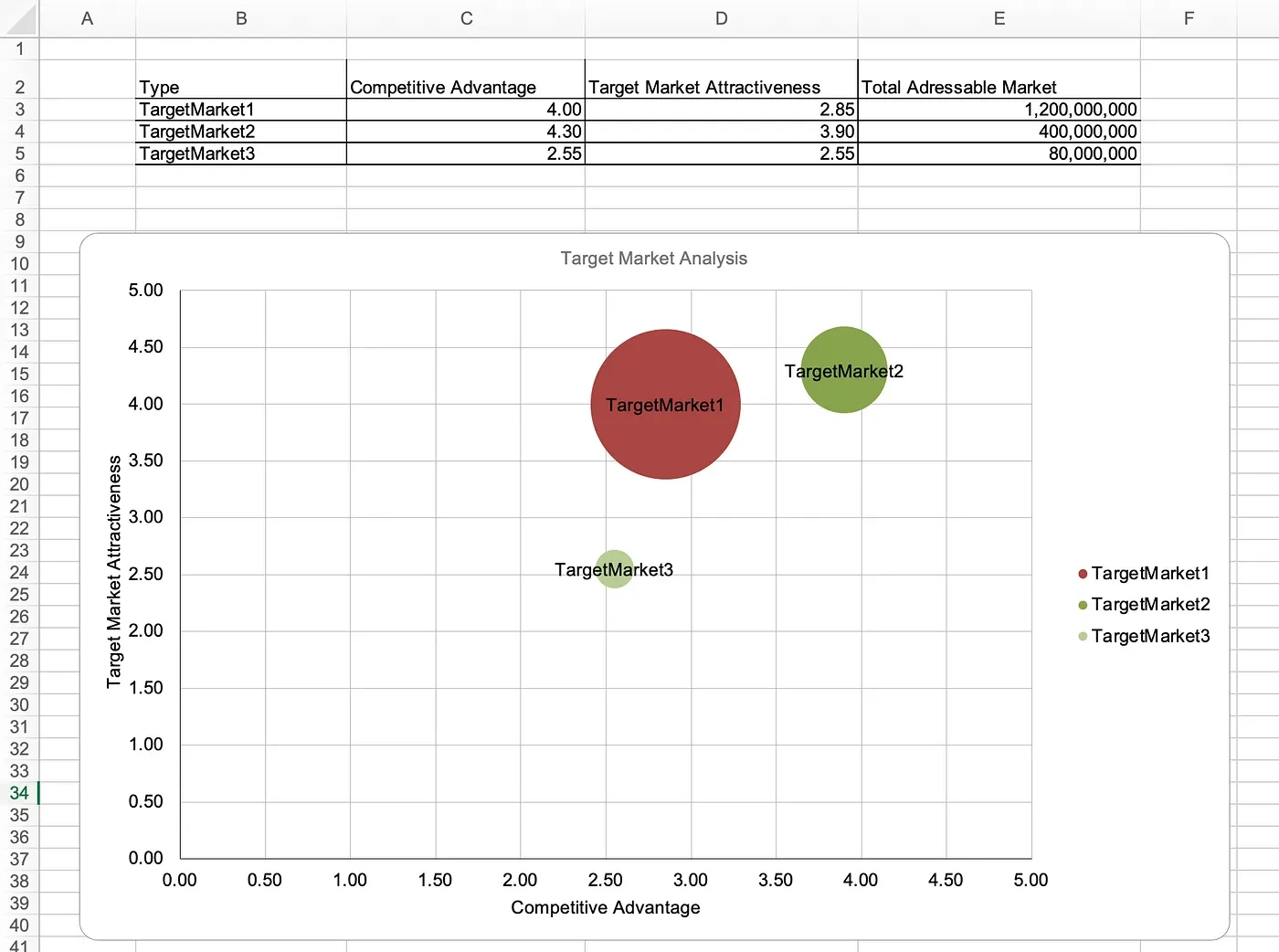
This blog post provides a comprehensive guide on how to perform target market analysis for your company using LLMs. It includes a detailed explanation of the BCG Matrix and the GE McKinsey Matrix, and how these frameworks can be used to determine market attractiveness and competitive advantage.
The open source code is available here.
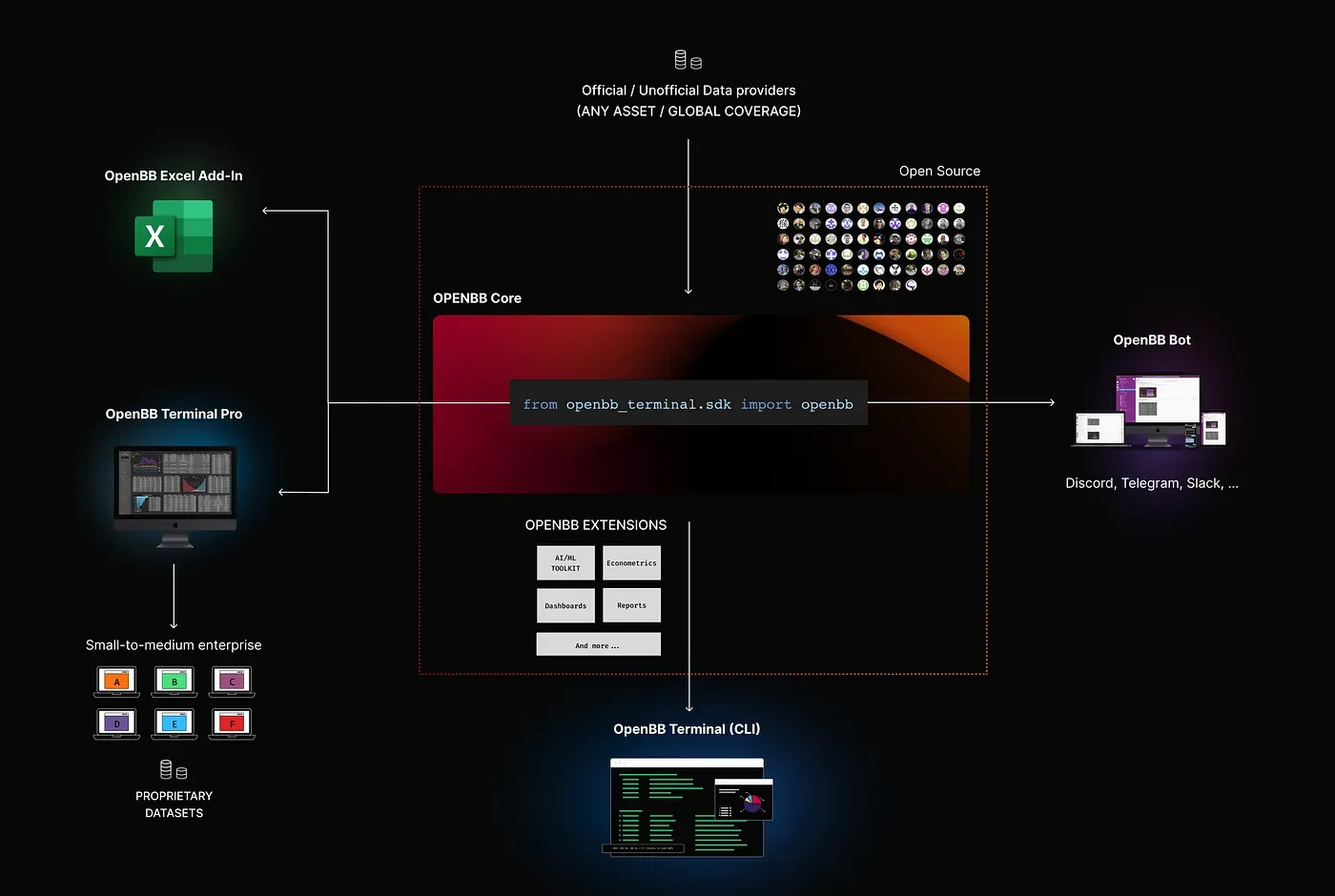
Two years of OpenBB: A look back at our achievements and growth in the world of open-source finance.
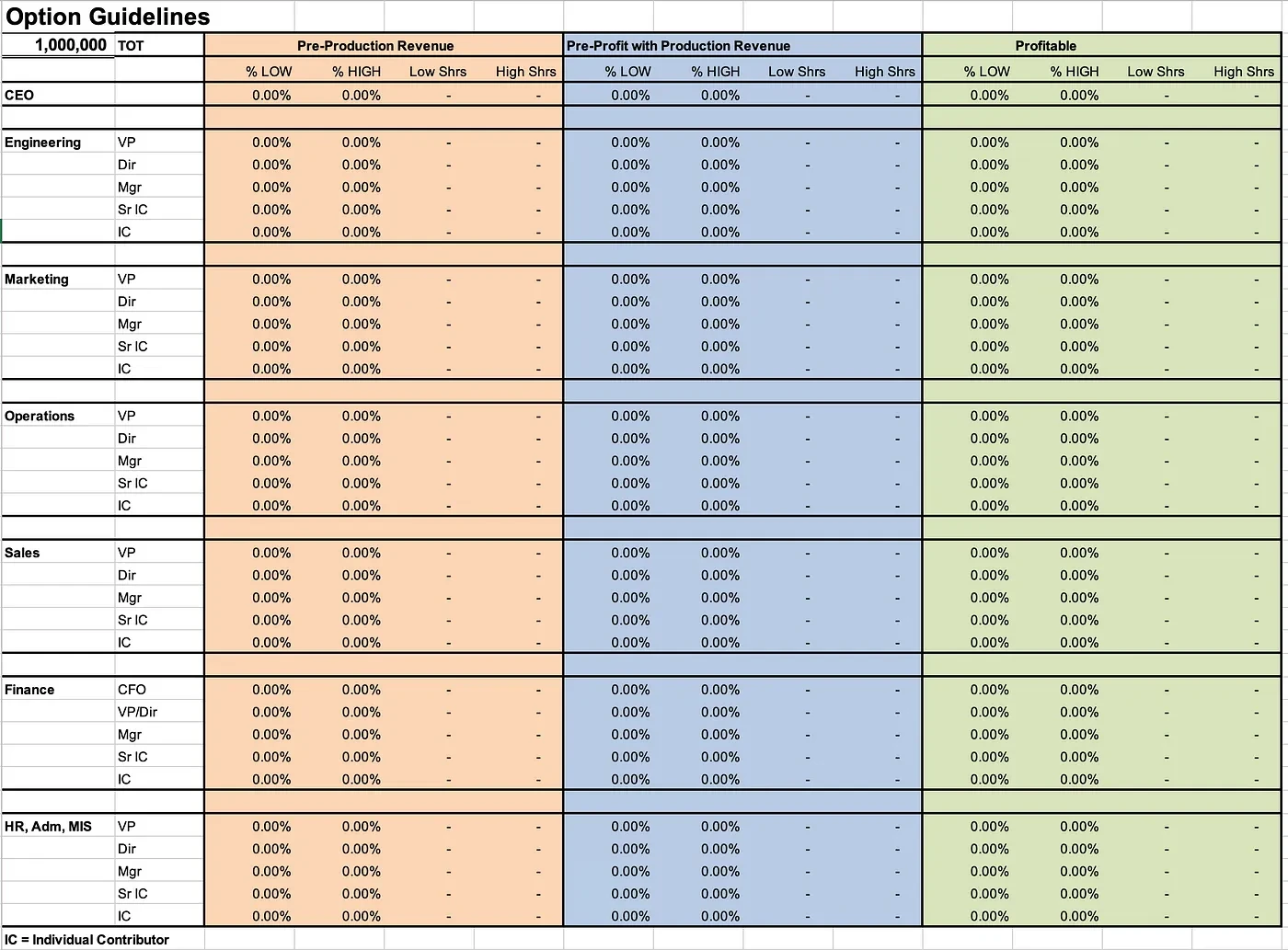
A step-by-step guide on how to handle equity at a seed-stage startup, using a fictional example from OpenBB.
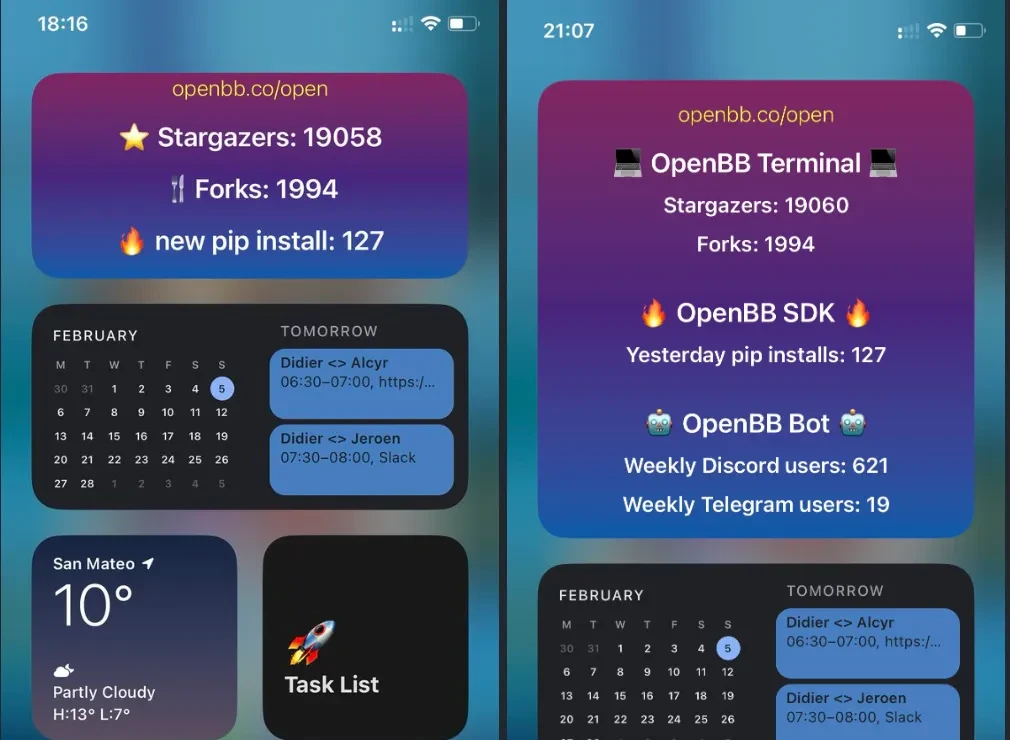
Keep track of your startup metrics using a custom iOS widget. This blog post will guide you on how to build a custom iOS widget that displays your startup metrics at all times. The entire code is open source and requires minimal coding skills.
The open source code is available here.

From Open Source to Open Startup: A journey of OpenBB towards transparency in the financial world.
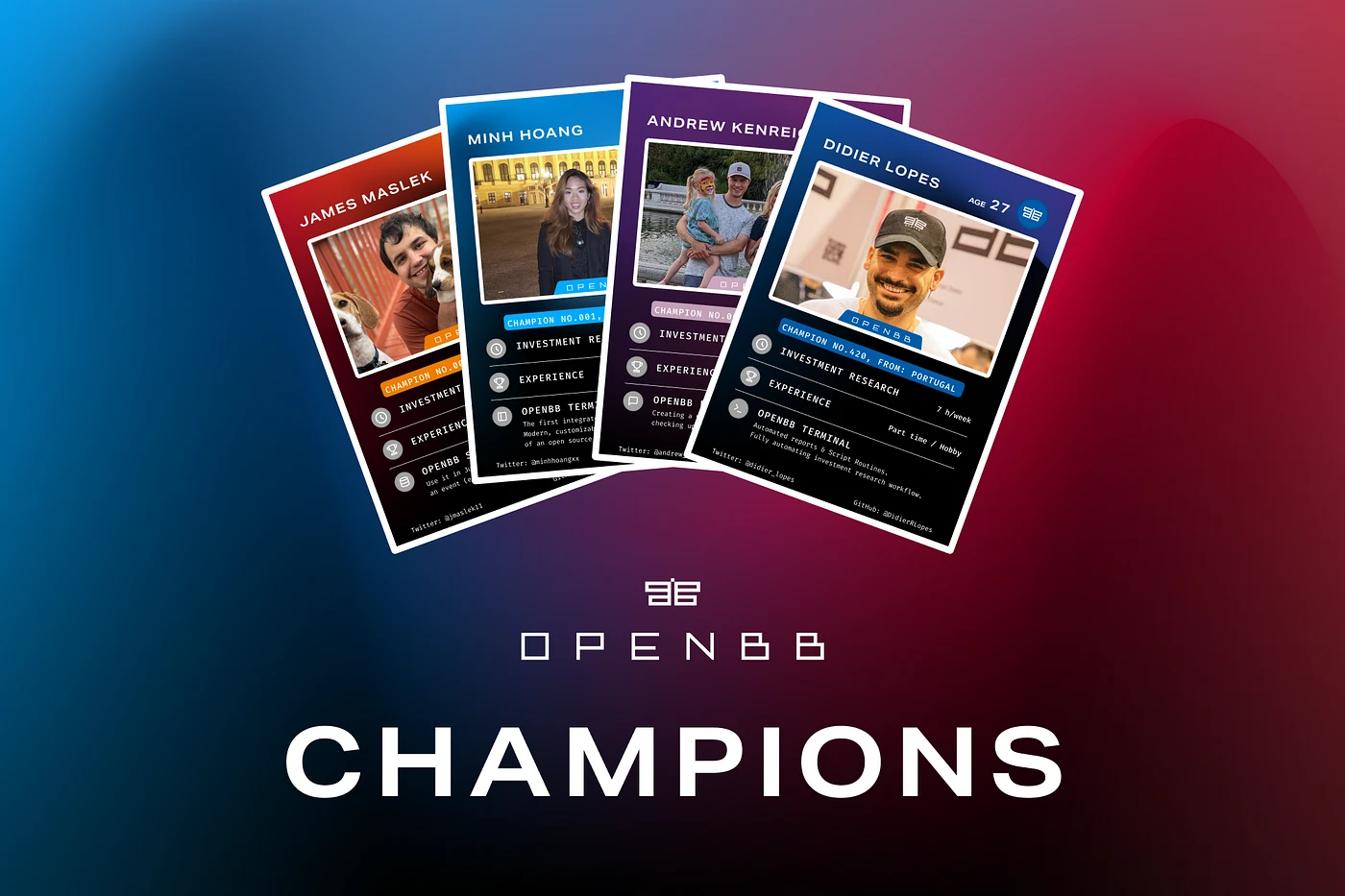
Become an OpenBB Champion and join our passionate community. Share your experiences with our innovative products and help us democratize investment research through an open source approach.
Streamline your OpenBB Terminal experience with OpenBB Hub. Learn about its key features, including API key management, data customization, personalization, and script management.
The open source code is available here.
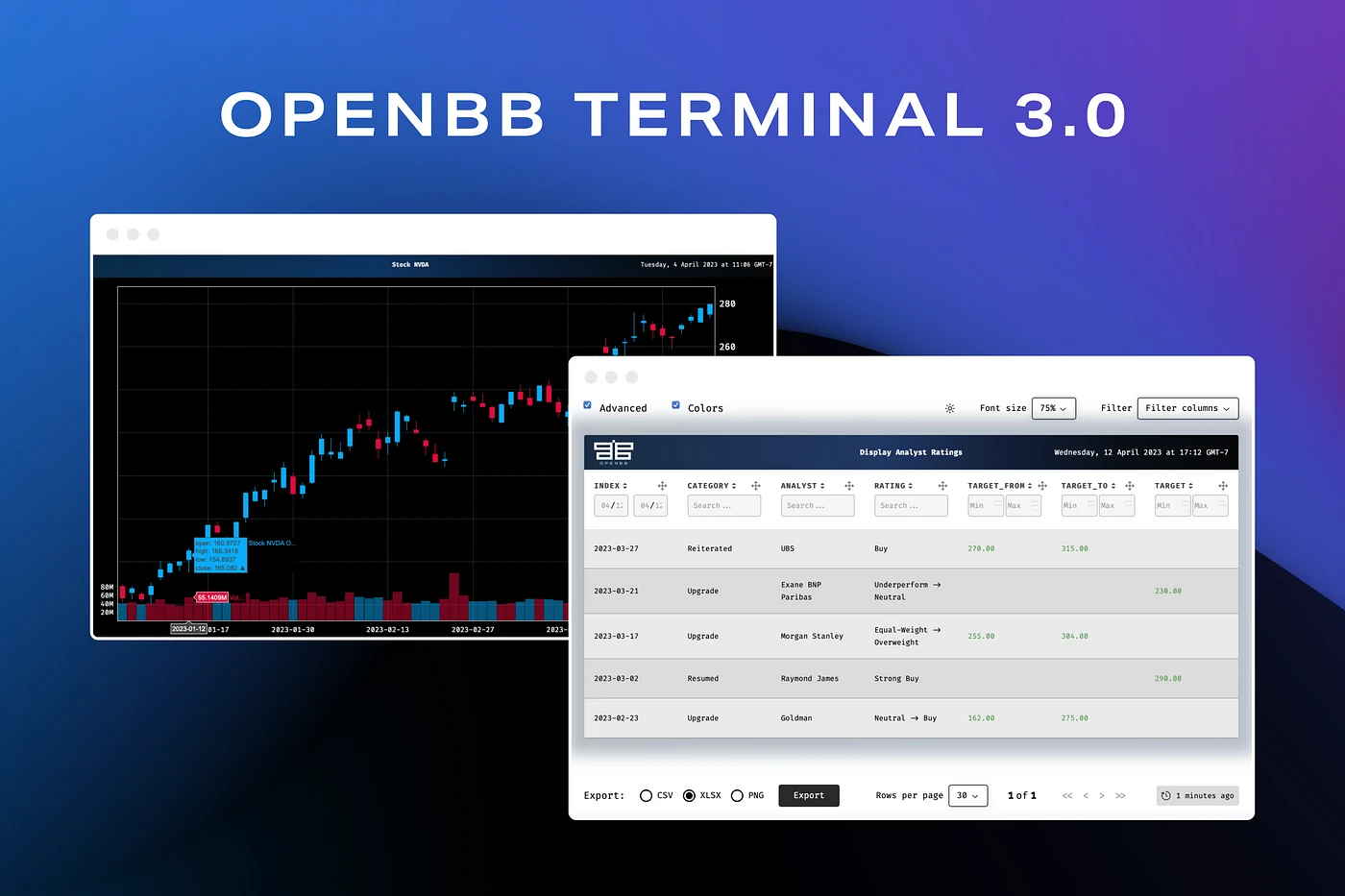
A game-changing update to OpenBB Terminal, introducing interactive charts and tables, empowering users with a new way to analyze data.
The open source code is available here.

Leaving London to live in San Francisco: A personal journey of relocating and starting a tech company in the heart of Silicon Valley.
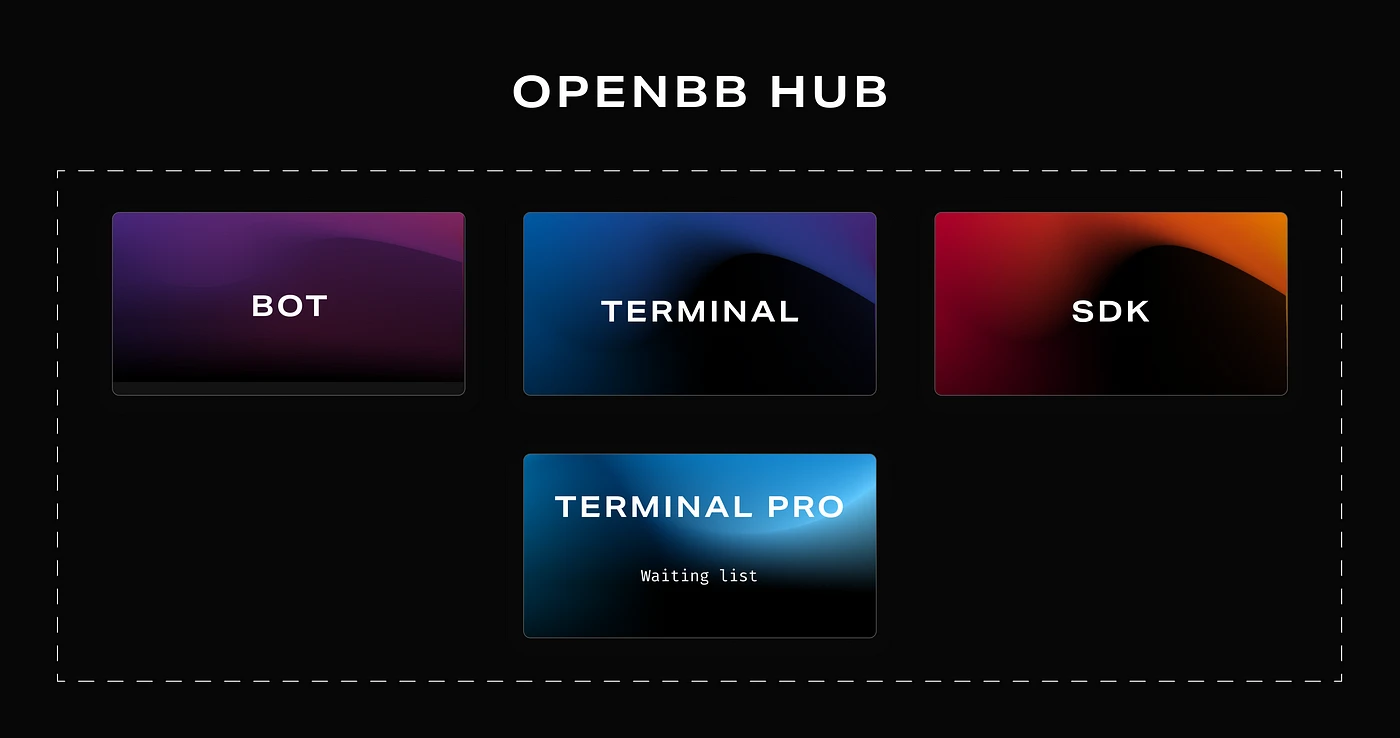
The OpenBB Hub is a comprehensive platform for managing all products, data, subscriptions, and content for users, aiming to empower investors globally with tools previously exclusive to institutions.
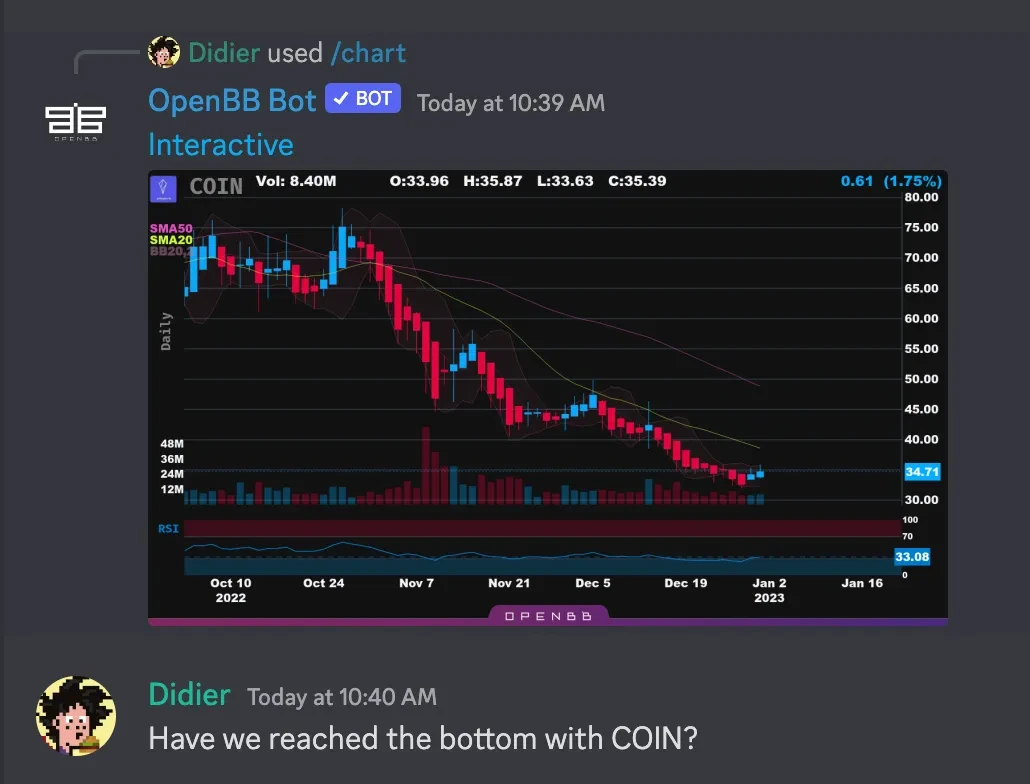
In this blog post, we discuss the underrated potential of financial chat bots, our collaboration with OptionsFamBot, and why chat bots are becoming increasingly popular.

Firing is tough. This blogpost discusses how to avoid it by hiring A players, improving the hiring process, and understanding the importance of a scorecard in recruitment.
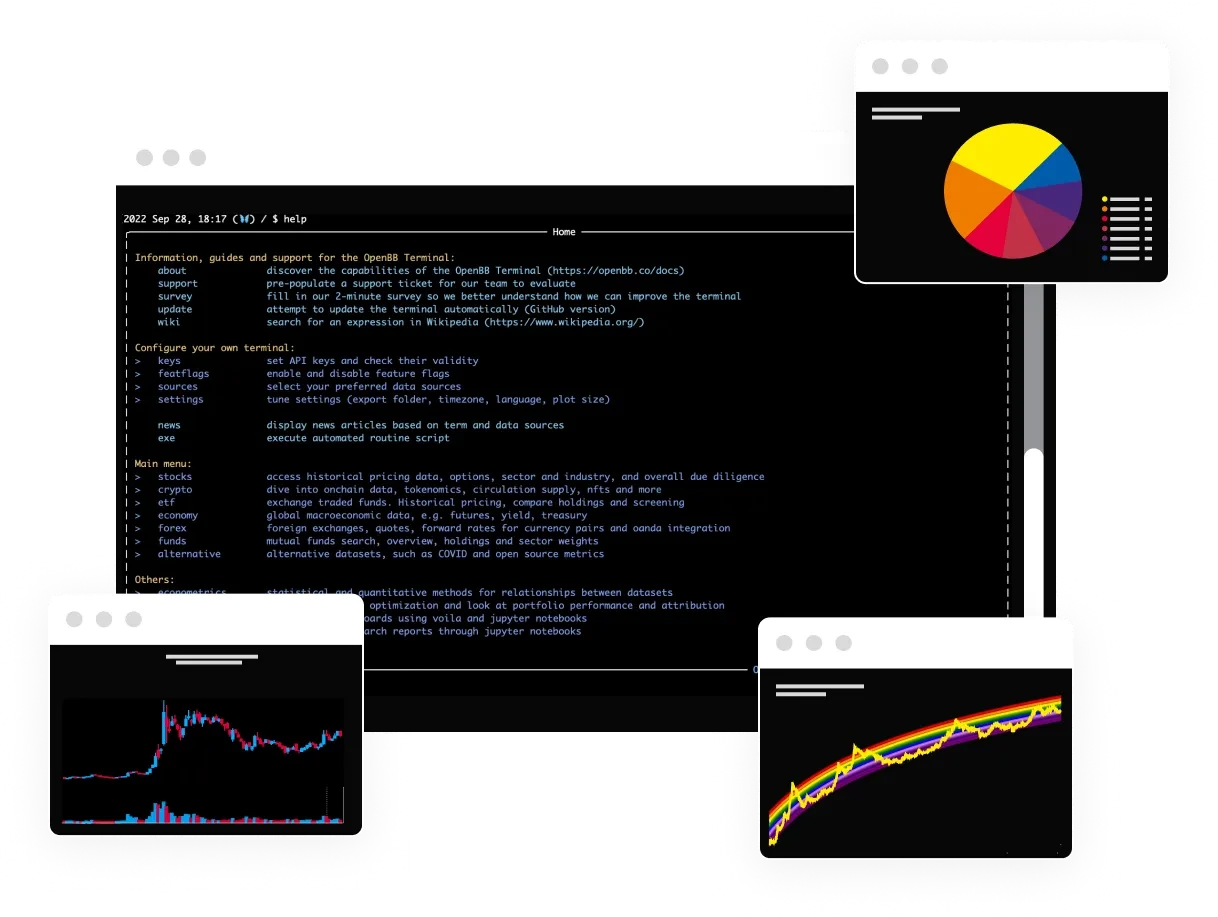
OpenBB Terminal 2.0 has been released. This blog post discusses the new features and improvements, including the release of OpenBB SDK, a state-of-the-art AI/ML toolkit for the financial industry, and the vision for a community-driven investment research platform.
The open source code is available here.
This post talks about my story of becoming the CEO of OpenBB, the company behind the fastest growing open source project in finance.

Exploring unconventional ways to increase brand visibility, OpenBB's co-founder gets a tattoo of the company logo. This blog post discusses the thought process behind this unique marketing strategy.